
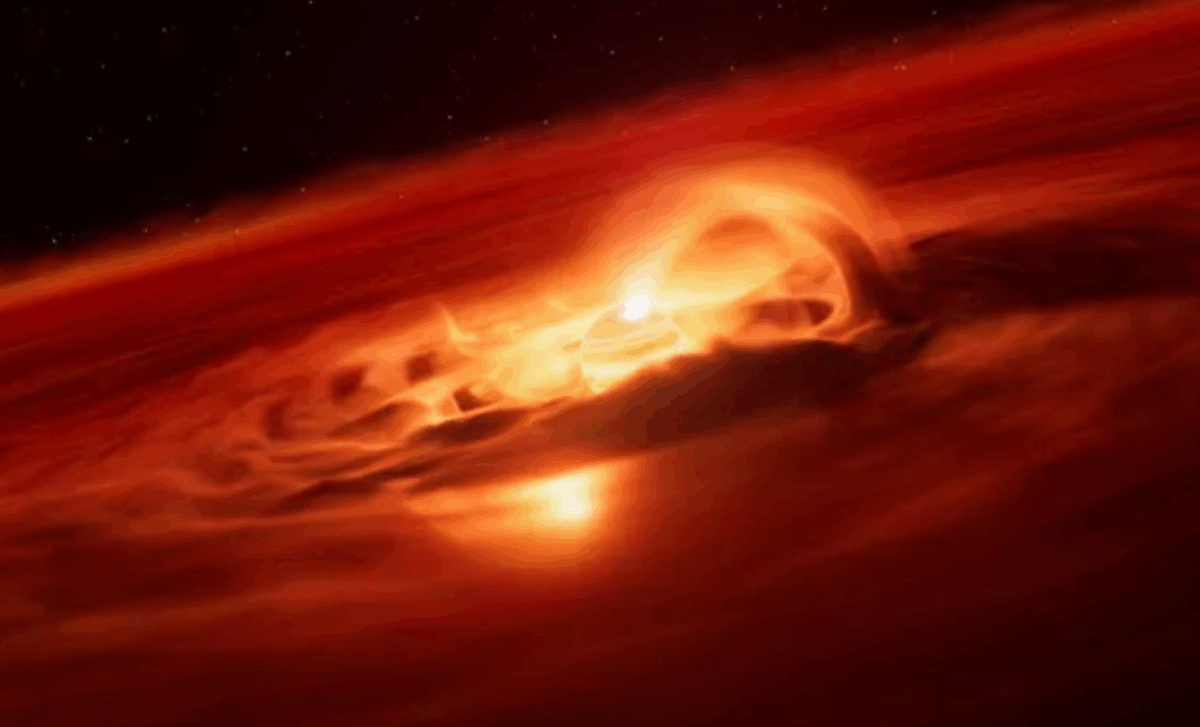
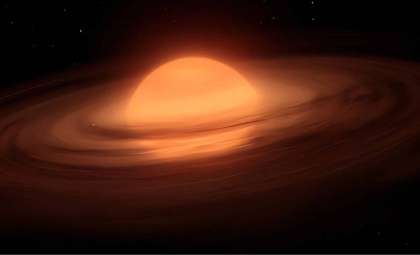
Recent findings published in The Astrophysical Journal Letters have transformed our perspective on rogue planets—celestial bodies roaming the galaxy without orbiting any star. Situated about 620 light-years away in the constellation Chamaeleon, Cha 1107-7626 stands out as an extraordinary example. Rather than drifting silently through space, this rogue planet is avidly accreting enormous quantities of gas and dust, a phenomenon usually linked with stars instead of planets.
Rogue Planets: Isolated Wanderers with Surprising Activity
Historically, rogue planets are envisioned as cold, solitary objects, cut off from the radiant influence of any star. They’re thought to form either independently or have been flung from their original solar systems. Yet, Cha 1107-7626 defies these expectations. While most astronomers previously believed rogue planets to be inert and unremarkable, Víctor Almendros-Abad stated,
“People may think of planets as quiet and stable worlds, but with this discovery we see that planetary-mass objects freely floating in space can be exciting places.”
Add Cosmo Herald as a Preferred Source

Cha 1107-7626 showcases an unexpectedly lively nature, demonstrating that rogue planets can be far more dynamic than once imagined.
What truly distinguishes Cha 1107-7626 is its impressive ability to draw in gas and dust rapidly despite lacking a host star. This accretion process—whereby a planet gains mass from its environment—is typically star-driven, relying on a star’s gravity to attract surrounding matter. Remarkably, this rogue planet is undergoing such growth solo, indicating that these phenomena might transpire even in starless voids.
Record-Breaking Accretion in a Planetary-Mass Object
The scale of Cha 1107-7626’s accretion surpasses previous observations of planetary bodies. At roughly six billion tons per second, this object is rapidly expanding in mass. Víctor Almendros-Abad described it as “the strongest accretion episode ever recorded for a planetary-mass object,” marking a pivotal advancement in our understanding of planetary evolution. This intense growth phase is providing scientists with unique data on how rogue planets might develop over time.
Researchers utilized observations from the European Southern Observatory’s Very Large Telescope (VLT) alongside images from NASA’s James Webb Space Telescope (JWST). They detected hallmark signs of accretion such as infrared emissions, silicate characteristics, and hydrocarbon signatures, confirming ongoing active processes akin to those within evolving star systems. These discoveries highlight the rich and complex activity occurring within the shadowy expanses of space and challenge prior assumptions that such planets are inert.
Magnetic Fields Driving Growth in a Planet
Even more extraordinary is that Cha 1107-7626’s mass accumulation appears to be fueled by its magnetic field, a mechanism once believed to exist only in stars. This groundbreaking finding broadens the scope of planetary science, revealing that magnetic field-driven accretion may also influence planetary bodies. Aleks Scholz, a co-author, explained,
“The origin of rogue planets remains an open question: are they the lowest-mass objects formed like stars, or giant planets ejected from their birth systems?”
This discovery hints that rogue planets might grow similarly to stars under specific circumstances, powered by processes beyond traditional planetary accretion. It paves the way for new models of planetary formation in starless regions and opens possibilities for identifying and analyzing free-floating planets via their magnetic signatures.
Blurring the Boundaries: Stars Versus Planets
The case of Cha 1107-7626 enriches our comprehension of rogue planets while raising fundamental questions about the distinction between stars and planets. Belinda Damian, an astronomer at the University of St. Andrews, emphasized that
“This discovery blurs the line between stars and planets and gives us a sneak peek into the earliest formation periods of rogue planets.”
The intense accretion and magnetic influences displayed by Cha 1107-7626 suggest these free-floating objects may exhibit star-like traits during their formative stages. Such findings could reshape the classification criteria for celestial objects, merging the conceptual space between planets, brown dwarfs, and stars.
ESO astronomer Amelia Bayo reflected, “The idea that a planetary object can behave like a star is awe-inspiring and invites us to wonder what worlds beyond our own could be like during their nascent stages.” If rogue planets such as Cha 1107-7626 continue to grow by star-like mechanisms, they could offer crucial insights into early universe planetary formation, especially where stars are absent.
- Categories:
- News






0 comments
Sign in to Comment