
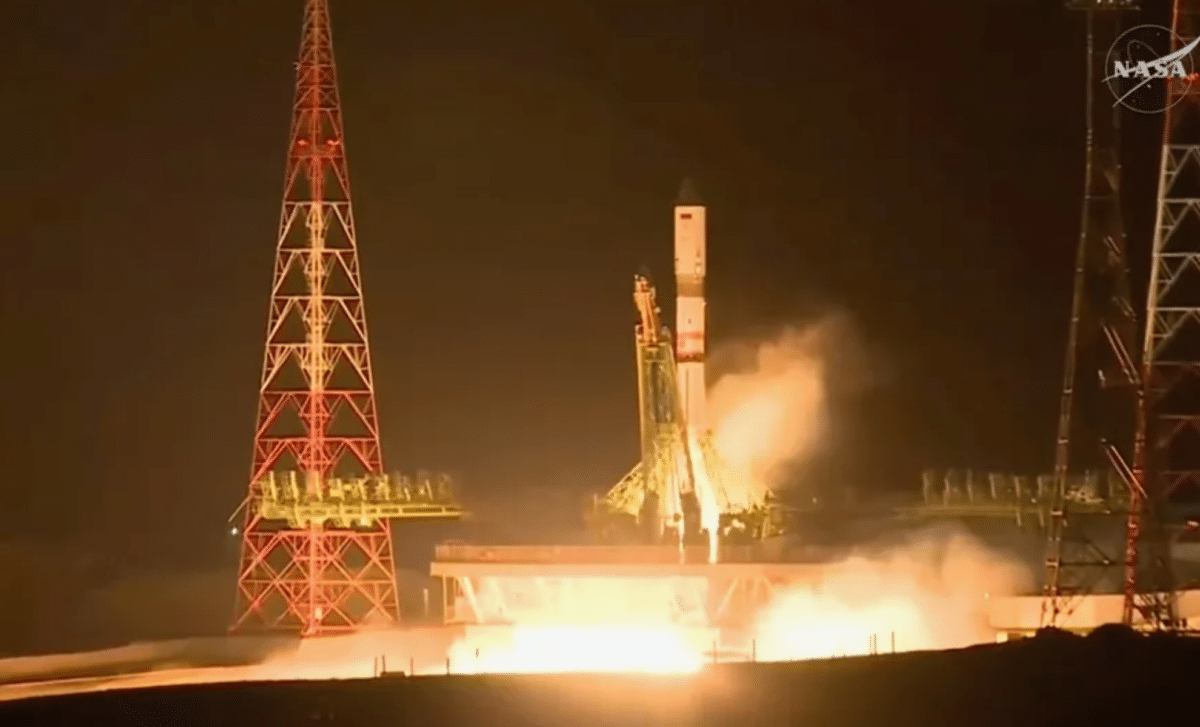
Russia has dispatched a new shipment of supplies heading swiftly to the International Space Station with the launch of its Progress 95 cargo vessel on April 25. This mission plays a key role in supporting ongoing life and research activities aboard the orbital laboratory.
Successful Liftoff From Baikonur Spaceport
The mission kicked off flawlessly from the famed Baikonur Cosmodrome located in Kazakhstan. A Soyuz rocket launched precisely at 6:21 p.m. EDT, embodying the high level of accuracy demanded by orbital supply missions to ensure a seamless rendezvous hundreds of kilometers above Earth.
Cargo aboard the unmanned Progress 95 includes nearly three tons of vital provisions such as food, fuel, and operational supplies. These shipments are essential lifelines that keep the station’s crew fed, fueled, and equipped to continue vital scientific and maintenance work.
Despite geopolitical challenges on the ground, these launches demonstrate the strength of international partnerships that maintain uninterrupted supply chains to the ISS.

Docking Procedure and Orbital Synchronization
Scheduled to berth at the ISS around 8 p.m. EDT on April 27, Progress 95 will use automated systems to approach the designated docking port recently vacated by Progress 93. This transition exemplifies the ongoing cycle of spacecraft arrivals and departures critical for station operations.
Coordinating this orbital traffic requires precise alignment of velocity and trajectory among international spacecraft to guarantee secure and smooth dockings.
A Progress 95 cargo spacecraft lifted off at 6:21 p.m. EDT on Satuday, April 25, from Kazakhstan carrying food, fuel, and supplies to resupply the Expedition 74 crew aboard the orbital outpost on Monday. More… https://t.co/ELQcxSU7Lm pic.twitter.com/AMrty7EVxt
— International Space Station (@Space_Station) April 25, 2026
As outlined by Space.com, this launch marks Russia’s second Progress delivery this year, reinforcing their continued commitment to ISS logistics. The preceding flight, Progress 94, reached the station successfully despite a minor issue with a docking antenna, highlighting system reliability.
The Single-Use Design of Progress Cargo Ships
Progress spacecraft operate on a one-time use basis. After completing their supply delivery, they are packed with station waste and intentionally deorbited to incinerate over remote ocean areas.
This planned disposal approach both efficiently removes waste and reduces orbital debris hazards. Following undocking on April 20, Progress 93 undertook such deorbiting, clearing a berth for its replacement, Progress 95.
The present mission will remain docked for roughly seven months before its own controlled descent. This structured lifecycle enables steady planning to keep support for station crews continuous.
Collaborative and Competitive Supply Vehicles
The ISS benefits from a variety of cargo transporters, each adding distinct advantages. In addition to Russia’s Progress ships, resupply missions involve Japan’s HTV-X, Northrop Grumman’s Cygnus, and SpaceX’s Dragon capsules. Notably, the Dragon spacecraft offers reusability and unique delivery and return capabilities, bringing cargo back to Earth with parachute-assisted splashdowns, enabling recovery of experiments and equipment.
This blend of expendable and reusable technology reflects an evolving approach to space logistics that balances cost-efficiency, reliability, and mission needs. As commercial and governmental space ventures grow, this multifaceted fleet will continue to advance station support strategies.
Continuing Vital Science and Human Presence in Orbit
Each delivery mission sustains astronauts aboard the ISS by providing essential materials needed for a wide array of scientific experiments conducted in microgravity. These studies ranging from biology to advanced manufacturing rely on a constant supply flow.
With these new provisions from Progress 95, research and daily activities aboard the station can continue seamlessly. As the ISS approaches the latter part of its mission span, ongoing resupply efforts underscore the lasting value of international partnerships and meticulous logistical coordination in humanity’s pursuit of space exploration.
- Categories:
- Space






0 comments
Sign in to Comment