
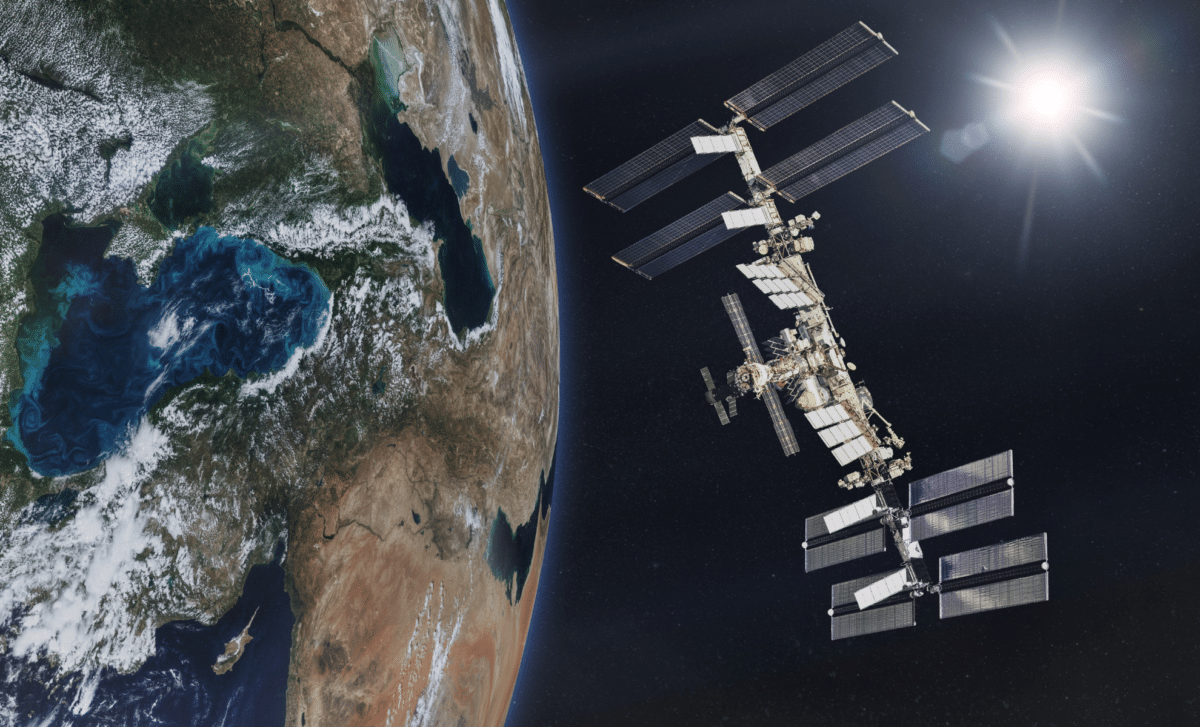
Following more than 20 years orbiting Earth, the International Space Station (ISS) is scheduled to conclude its mission with a controlled descent planned for late 2030. NASA and its collaborators will direct the spacecraft to reenter over the Pacific Ocean’s Point Nemo, a secluded region known as the spacecraft graveyard. This move closes a chapter on one of the most significant international efforts in space exploration.
Why Point Nemo Was Selected as the Last Destination
The chosen splashdown site for the ISS’s final plunge is far from arbitrary. Point Nemo, located in the South Pacific, is recognized as one of the planet’s most isolated oceanic areas. Over recent decades, this zone has served as a resting ground for many retired satellites and space vehicles. The National Oceanic and Atmospheric Administration (NOAA) outlines why this spot is ideal:
“Situated at coordinates 48°52.6′S 123°23.6′W, Point Nemo lies about 2,688 kilometers (1,670 miles) from the closest land sites — Ducie Island (part of the Pitcairn Islands) to the north, Motu Nui of the Easter Islands to the northeast, and Maher Island near Antarctica to the south,” NOAA officials stated in a concise Point Nemo overview.

Its extreme isolation greatly lowers the likelihood of debris endangering populated areas, vessels, or infrastructure. NASA’s plan follows previously successful reentry strategies, such as Russia’s 2001 controlled deorbit of the Mir space station. Although the ISS is the largest spacecraft ever intentionally deorbited, the approach remains similar: guiding it into a remote ocean sector to prioritize safety as the mission ends.
The Deorbit Plan: Safely Bringing Down the ISS
NASA has developed a detailed and practiced procedure to ensure the station’s safe destruction. The strategy includes deploying an enhanced version of SpaceX’s Dragon capsule redesigned to accommodate the ISS’s unique reentry challenges. According to Space.com, engineers anticipate the disintegration will unfold through a series of stages:
“NASA anticipates the breakup will proceed in three phases: initially, separation of solar arrays and radiators, then modules and truss segments breaking apart, followed by the fragmentation of individual modules and failure of the truss structure,” agency representatives explained in an FAQ outlining the ISS transition plan.
These steps aim to maximize the destruction of the station during reentry, ensuring most debris vaporizes. However, some components are expected to survive the fiery descent.
“Upon atmospheric reentry, the outer surfaces of modules will melt away, exposing internal parts to intense heating,” NASA noted. “While much of the ISS hardware will burn up or vaporize, sturdier elements like truss sections may endure reentry and fall into this uninhabited ocean region.“
Guided by lessons from earlier missions such as Skylab and Mir, this approach avoids risks encountered in the past. For instance, Skylab’s uncontrolled 1979 reentry scattered debris over Western Australia. Handling over 460 tons of structural mass, the ISS’s deorbit will be the largest controlled descent in history.
- Categories:
- Space





0 comments
Sign in to Comment