
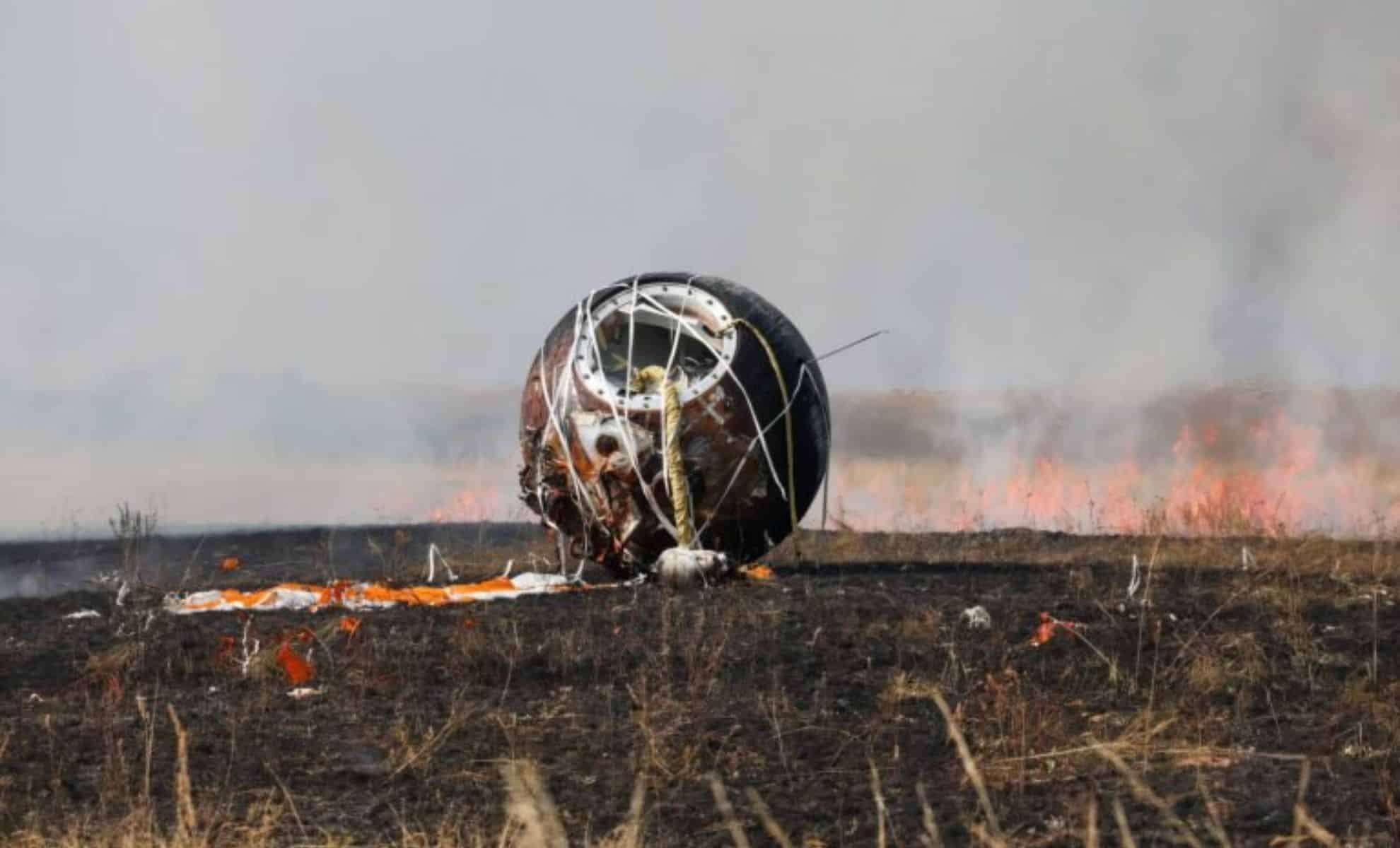
A Russian spacecraft has safely touched down on the expansive Orenburg steppes after a month-long space voyage, carrying a remarkable collection of living organisms. Nicknamed a “Noah’s Ark”, this vessel brought back a unique cargo including dozens of mice, thousands of fruit flies, seeds, and microbial life. The mission and its findings were covered in detail by Space.com, spotlighting Russia’s recent advances in extraterrestrial biology research.
Swift Examination Follows Capsule Touchdown
The descent vehicle, part of the Bion-M No. 2 initiative, landed on September 19 after orbiting Earth for 30 days. The landing area, located on a grassy plain in southern Russia, showed evidence of a minor brush fire likely ignited during atmospheric reentry and quickly extinguished by the recovery team.
Within moments, search helicopters deployed scientific personnel to immediately begin assessing the biological specimens. Initial investigations concentrated on the flight activity of the flies, offering valuable data on the impacts of microgravity and cosmic radiation on nervous system function.

A mobile medical tent was established at the landing zone to carry out preliminary tests. Subsequently, the specimens were transported to Moscow’s Institute of Biomedical Problems (IBMP) for comprehensive laboratory study.
Thirty Days Orbiting Earth on Bion-M No. 2
Launched on August 20 from the Baikonur Cosmodrome, the spacecraft reached orbit via a Soyuz-2.1b rocket. It followed a polar trajectory between 230 and 236 miles altitude at a 97-degree angle, maximizing its exposure to cosmic rays — a critical factor for many of the experiments inside.
Onboard were a diverse array of organisms: 75 mice, more than 1,500 flies, cell cultures, microbes, and seeds. Overall, the mission conducted over 30 biological studies, marking one of the most extensive research efforts led by Roscosmos in recent years.
Exploring Biological Limits in Space
The scientific agenda covered ten distinct research areas, spanning from the effects of microgravity on physiology to radiation impact assessment. The initial studies focused on how animal systems adapt to combined microgravity and radiation stresses. Other investigations targeted plant biology and microbial behavior to understand how space conditions influence life processes.
Additional projects probed biotechnological and physical phenomena occurring in orbit, while a section dedicated to radiobiology and dosimetry provided essential insights for future human spaceflight missions. A notable inclusion was educational experiments developed by students from Russia and Belarus, adding a valuable teaching dimension to the mission’s scientific scope.
#BionM2 biomedical satellite with mice, flies and other passengers will be back to Earth today after 30 days in space. The landing capsule already performed the deorbit burn, three helicopters are airborne to find the capsule immediately after landing in the Orenburg region. pic.twitter.com/b68M59lGj6
— Katya Pavlushchenko (@katlinegrey) September 19, 2025
Investigating the Origins of Life Beyond Earth
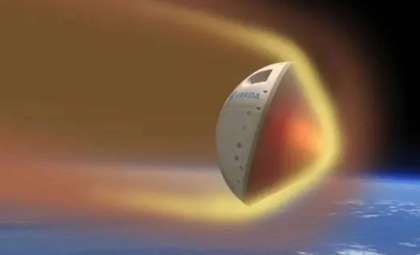
Among the mission’s most fascinating components was an experiment testing the panspermia theory, which proposes that life on Earth could have been seeded from space. The test, called “Meteorite,” placed basalt stones infused with microbes on the spacecraft’s exterior, exposing them to the intense heat of reentry — replicating the conditions meteorites endure when entering Earth’s atmosphere.
This experiment aims to assess if bacteria can survive such harsh thermal and pressure conditions, providing evidence about life's ability to be transported across planets via space debris.
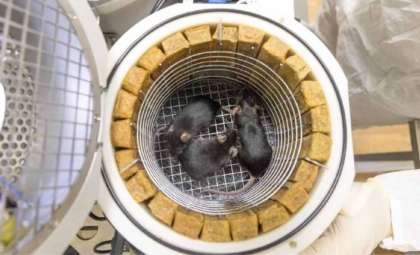
IBMP has also shared video footage depicting mice in microgravity, granting scientists valuable observations on mammalian behavior in low gravity environments — an important stride toward sustaining human life on long-duration space missions.
- Categories:
- News






0 comments
Sign in to Comment