
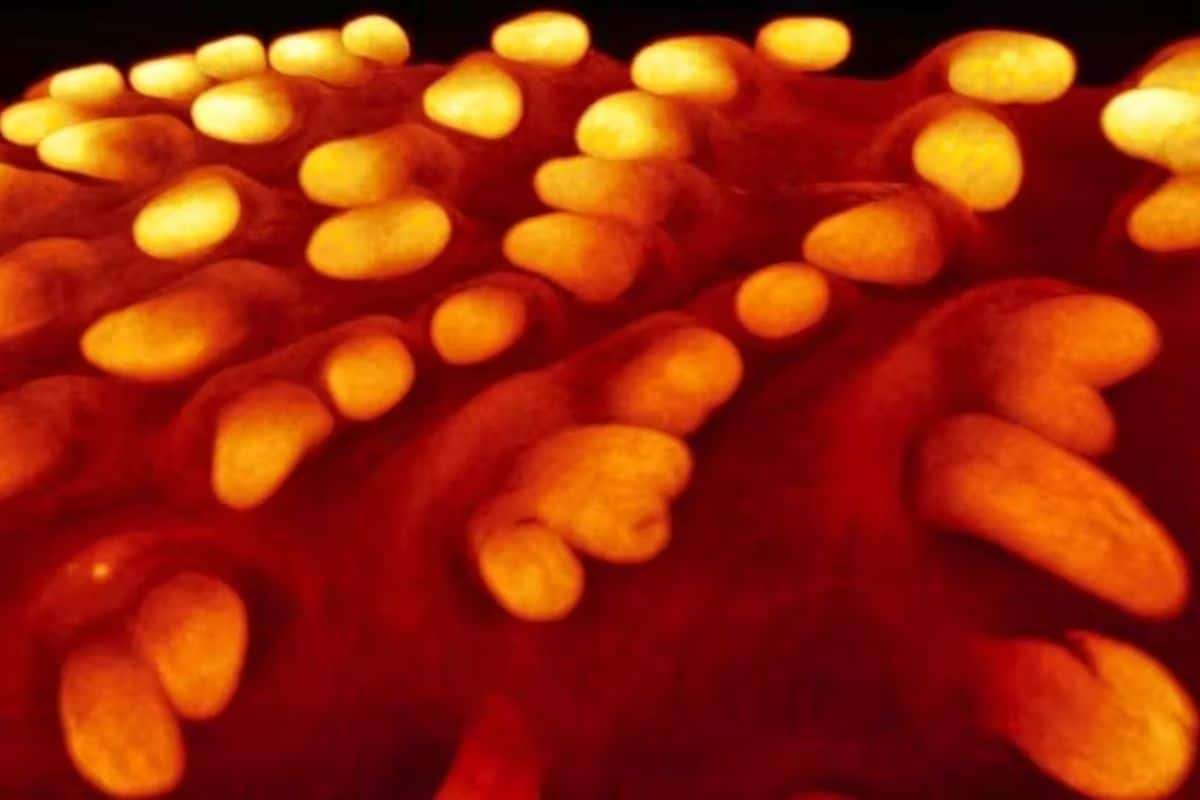
Modern birds are known for their feathers, but the origins of these structures trace back millions of years to prehistoric ancestors quite unlike today’s avians. A groundbreaking investigation has now recreated primitive feathers reminiscent of those seen in dinosaurs by altering a genetic switch in chicken embryos.
Rewinding Evolution Through Sonic Hedgehog Gene Modification
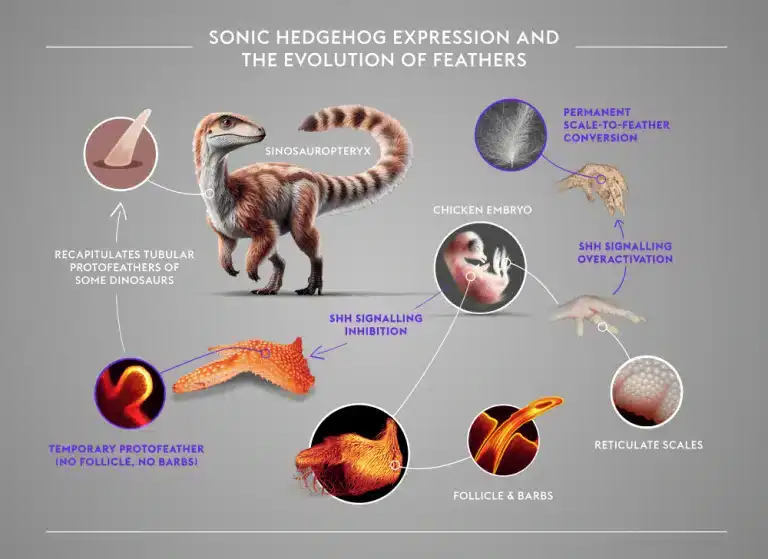
Researchers at the University of Geneva pushed the boundaries of developmental biology by intervening in a vital molecular signaling route during chicken embryo growth. By suppressing the Sonic Hedgehog (Shh) gene, they stimulated the formation of simple, tube-shaped feather structures similar to the early proto-feathers found on dinosaur ancestors.
These ancient feather precursors, dating back roughly 200 million years, were far less intricate than today’s feathers, missing elaborate barbs and hooks. Their primary functions were likely insulation and visual display rather than flight. This engineered genetic shift provides a remarkable glimpse into evolutionary history.

Feather Development Fights Back
Shortly after the gene alteration, embryo development showed signs of disruption, but around day 14 of incubation, dormant feather follicles resumed activity. Most chicks eventually developed typical plumage patterns, although a few exhibited patches of sparse feathering.
This rebound effect underlines the innate resilience embedded in avian genetics. Rather than being permanently altered, the pathway controlling feather formation reinstated itself, demonstrating deep evolutionary strength. “It is much harder to permanently disrupt feather development itself,’’ remarked Rory Cooper, co-author of the study.
From Scales to Feathers and Back
Earlier studies revealed that activating the Shh gene could convert reptile scales into feather-like structures. Conversely, the current research shows that turning off the same gene induces a reversal toward ancient filamentous feather forms.
This duality cements the gene’s pivotal role in feather evolution. By switching the Shh pathway on or off, scientists not only unveil the molecular basis of evolutionary shifts but also demonstrate how prehistoric characteristics can resurface under specific conditions.
Insights into Evolution’s Genetic Strategy
The findings published in PLOS Biology extend beyond rediscovering ancient anatomy. They raise intriguing questions about how gene networks have adapted to maintain both stability and adaptability. The feather development pathway’s ability to restore itself after intervention highlights the genetic durability crafted by evolution.
"Through evolutionary time, these gene interactions have become highly robust," explained Michel Milinkovitch, principal investigator. Understanding how these networks evolve to generate new features like proto-feathers remains a major scientific goal.
Exploring Evolutionary Blueprints in Chickens
Deciphering these genetic mechanisms could provide applications beyond evolutionary research. Each experiment reveals how modern DNA contains latent evolutionary designs. This knowledge may one day enable the revival of extinct traits or inspire breakthroughs in regenerative medicine and biotechnology.
Tracing the path from dinosaur filaments to the refined feathers of today, scientists are unraveling the complex story of avian evolution one gene at a time. With every discovery, we inch closer to understanding how form and function evolved over the ages.
- Categories:
- Science









0 comments
Sign in to Comment