
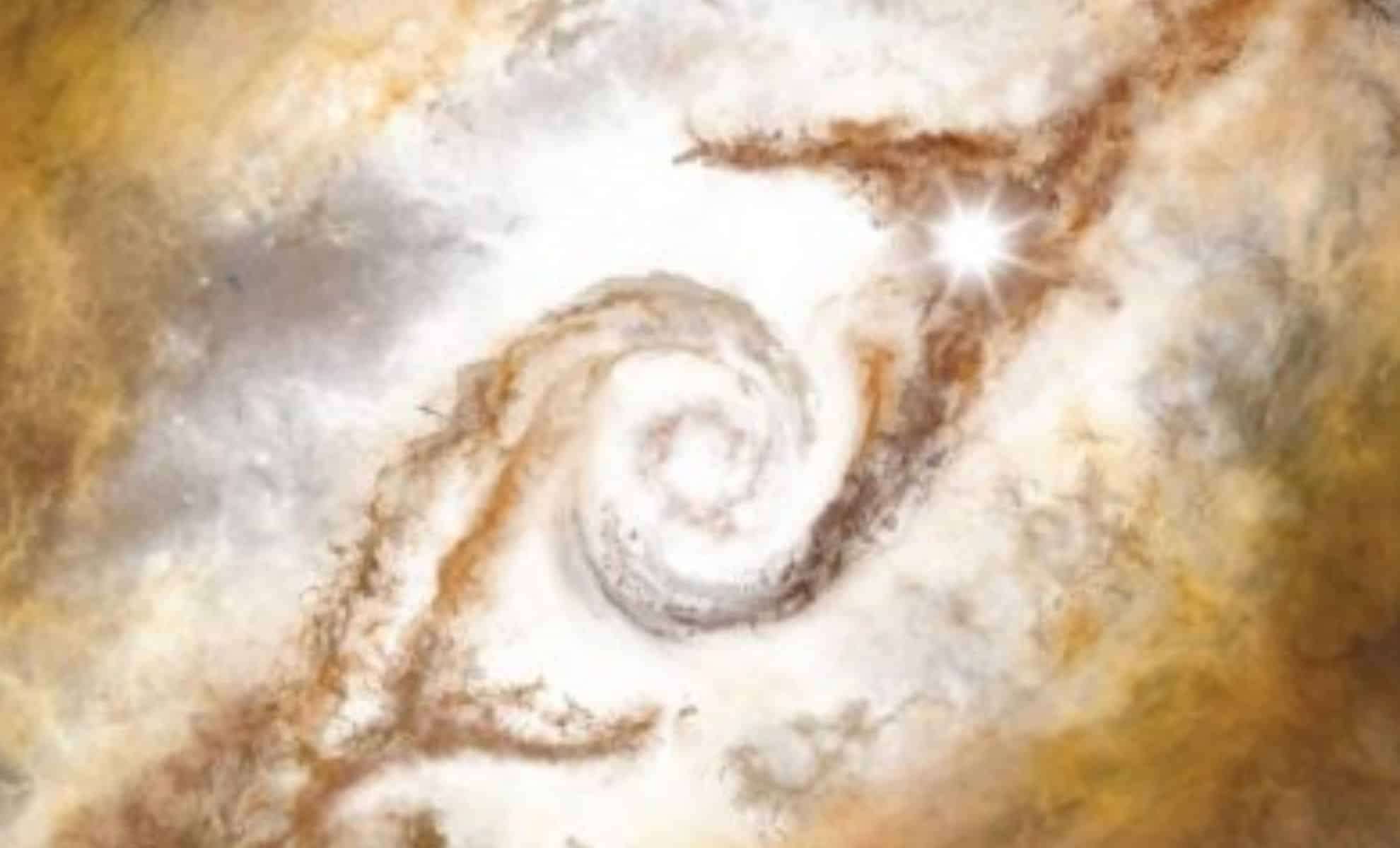
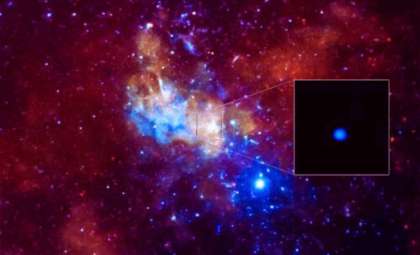
A global team of astronomers has uncovered a colossal gas and dust cloud within the Milky Way, revealing new aspects of the galaxy's inner workings and growth. Their research, published in the Astrophysical Journal, identifies a previously unseen structure, the Midpoint cloud, stretching over 200 light-years. This massive molecular cloud provides crucial clues about the flow of interstellar material toward the galactic center and the intense conditions that trigger star formation near the heart of our galaxy. Using observations from the NSF Green Bank Telescope, the study illuminates how matter spirals in from the Milky Way’s disk to its core.
Unveiling a Giant Molecular Cloud Concealed in the Milky Way
The discovery of the Midpoint cloud marks a significant milestone in astrophysics. Natalie Butterfield of the NSF NRAO, who led the investigation, emphasized its importance by noting, “This giant molecular cloud was completely unknown until we examined this portion of the sky and detected dense gas. By analyzing its size, density, and mass, we confirmed it as a GMC.” Also called M4.7-0.8, the cloud belongs to the Giant Molecular Cloud category and is a key to understanding how gas accumulates and moves within the Milky Way. Spanning roughly 60 parsecs, or about 200 light-years, the cloud reveals the vastness and complexity of galactic structures in this region.
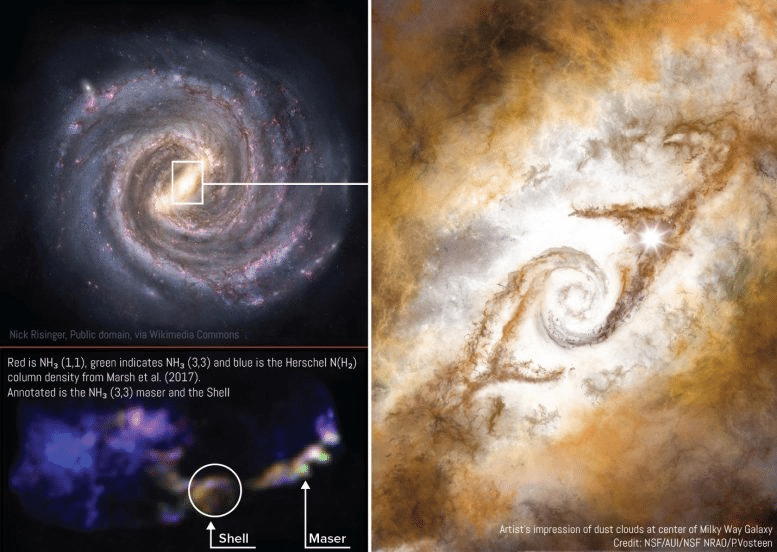
What distinguishes the Midpoint cloud is its unique position along one of the galaxy’s dust lanes—channels funneling matter toward the central bulge. Its revelation grants researchers a rare opportunity to observe early star formation activities and track how gas and dust transition from the galaxy’s disk toward the extreme environment at the center. This breakthrough sheds light on the accretion mechanisms fueling the evolution of the Milky Way over billions of years.

Galactic Dust Lanes: Pathways Shaping Galaxy Evolution
Dust lanes are vital arteries guiding gas and dust toward the bustling centers of galaxies like the Milky Way, where star births and other dynamic processes unfold. Butterfield described these lanes as “hidden rivers of gas and dust channeling material into the galaxy’s core.” The Midpoint cloud emphasizes how these lanes facilitate the migration of matter from the calmer outer disk inward, aiding star formation and structural development of the galactic center. It acts as a bridge, allowing scientists to examine the shift between the outer regions and the more turbulent galactic nucleus.
This intermediate zone is crucial since conditions near the center differ drastically from the disk, with elevated temperatures and densities influencing unique modes of star formation. Investigating the Midpoint cloud offers valuable insights into the behavior of gas as it journeys toward the active heart of the Milky Way, capturing a key stage in the galaxy’s lifecycle.
Understanding Star Birth in Intense Galactic Zones
Star formation within the Milky Way’s bar-shaped central regions has long puzzled astronomers. These areas are dominated by powerful gravitational forces and dense molecular gas that can hinder star creation. Larry Morgan from the NSF Green Bank Observatory explained, “While galactic bars can suppress star formation due to strong forces, their leading edges—like where the Midpoint cloud lies—accumulate gas dense enough to spark new stars.” The Midpoint cloud is one such reservoir, suggesting active star formation despite the otherwise unfavorable environment.
Identifying the Midpoint cloud as a likely site of ongoing star formation enriches our comprehension of how stars emerge amid extreme galactic conditions. This knowledge is essential for piecing together how galaxies, particularly the Milky Way, develop their innermost regions and sustain stellar populations even where formation is limited.
Significance of Maser Discovery Within the Midpoint Cloud
A highlight of the research is the uncovering of a previously unknown maser within the Midpoint cloud. Masers—natural microwave amplifiers found in star-forming zones—indicate energetic processes shaping young stars. This newly discovered ammonia-based maser provides compelling evidence that the cloud harbors active stellar births. Its presence confirms the dense, dynamic environment needed for star formation.
Maser emissions typically pinpoint early star-forming stages, making this detection a vital clue to where stars are currently forming in our galaxy. The maser adds an important piece to understanding the Midpoint cloud’s role as a nursery for new stars in the Milky Way.
Intense Turbulence Driving Activity in the Midpoint Cloud
The Midpoint cloud exhibits pronounced turbulence, showcasing chaotic motions characteristic of regions near the galactic center. This turbulence likely arises from the flow of gas through dust lanes, interactions with adjacent clouds, and gravitational influences from the core. Such vigorous motion may also trigger star formation by compressing gas and dust sufficiently to induce collapse and birth new stars.
This turbulent behavior not only informs studies of star formation but also enhances understanding of how matter circulates within our galaxy. It offers valuable context for the complex processes moving material from the galaxy’s outer disk inward to the core.
- Categories:
- News



0 comments
Sign in to Comment