
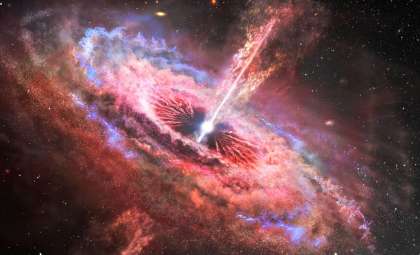
For years, the mysterious nature of black holes has captivated astronomers worldwide. Known primarily for their intense gravitational force that pulls in stars and gas, black holes were considered passive consumers of cosmic material. However, fresh research backed by observations from NASA’s Chandra X-ray Observatory and the Very Large Telescope (VLT) reveals a surprising twist: black holes may actively manage their own nourishment, creating a self-perpetuating cycle to maintain their growth.
Black Holes’ Active Role in Sustaining Their Fuel
While traditionally viewed as simple cosmic vacuum cleaners, black holes may actually manipulate the gas around them to guarantee a steady supply of matter. Studies of galaxy clusters indicate that the bursts of energy released by black holes don’t solely push gas away but play a crucial part in cooling it. This cooling enables gas to condense into filaments that circle back and feed the black holes, turning what seemed a one-way process into a continuous dynamic cycle.
This breakthrough offers profound insights into how black holes remain active over billions of years, ensuring they can continuously attract the matter they need by effectively “cooking” their own fuel through the cooling and recycling of nearby gas.

Observing Hot and Cool Gas Filaments in Galaxy Clusters
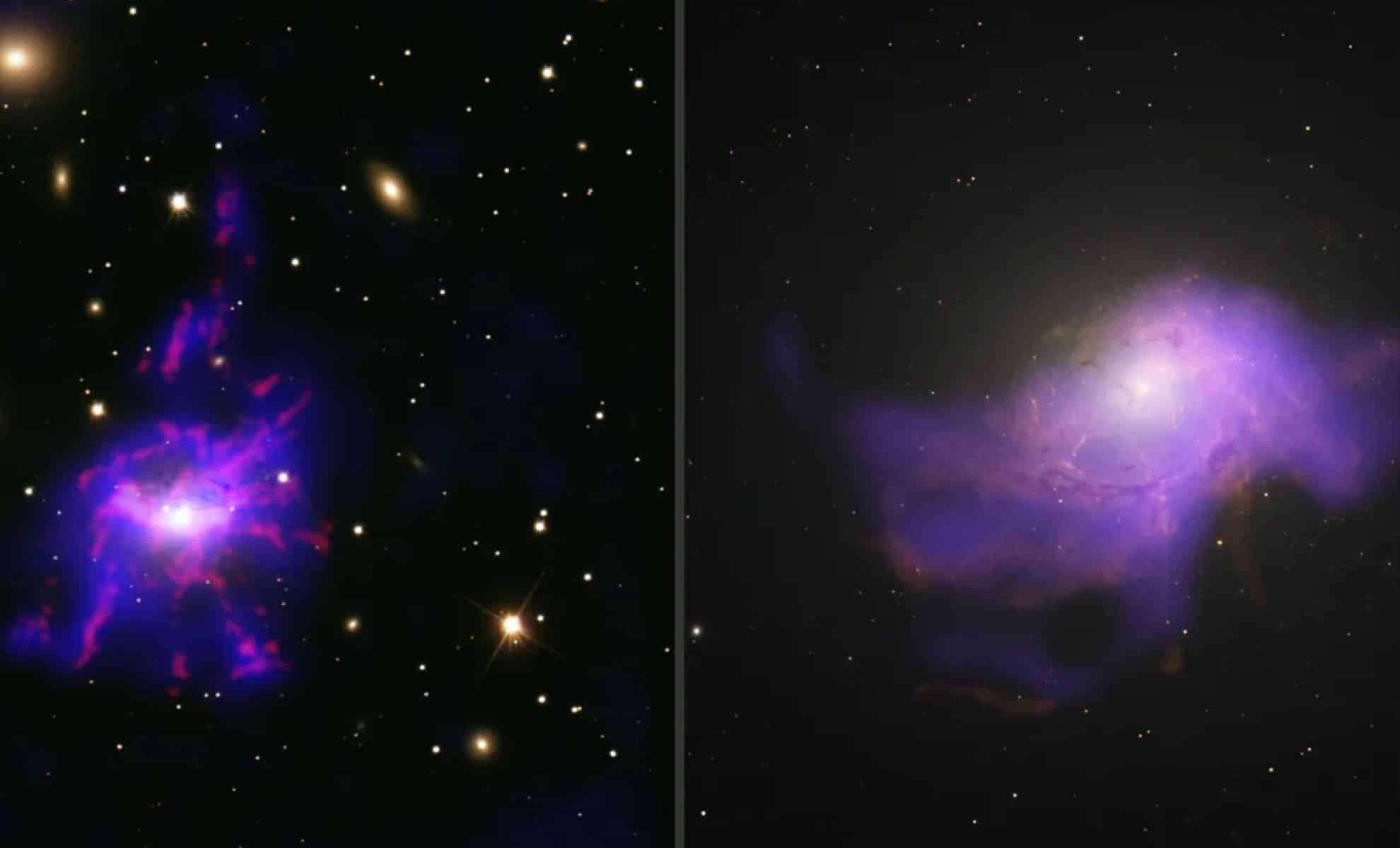
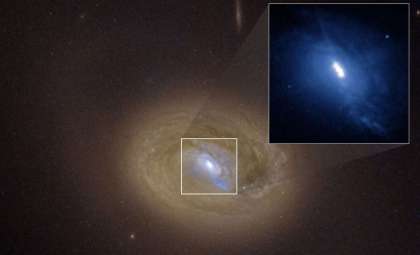
The research focused on seven massive galaxy clusters hosting gigantic black holes, unveiling visual data that displays this self-feeding phenomenon. Utilizing images captured by the Chandra X-ray Observatory and VLT, scientists distinguished two forms of gas filaments: hotter filaments glowing blue and cooler ones shining red.
The hot filaments emerge from energetic black hole emissions and gradually cool to become dense, cold filaments. These cooler strands funnel gas back toward the black hole for consumption, thereby reinforcing the link between the energetic outbursts and the replenishment of the black hole’s fuel source.
Particularly compelling evidence came from the Perseus Cluster and the Centaurus Cluster, where astronomers visually tracked cool gas condensing and being drawn in by the black holes, directly supporting the idea that black holes actively help regulate their intake.
The Impact of Turbulence in the Feeding Process
Central to this model is the turbulence caused by black hole outbursts, which stirs surrounding gases and encourages the cooling necessary for filament formation. This turbulent activity allows hot gas to condense into thin, cool strands that then spiral back inward.
The process forms an ongoing feedback loop: with each eruption pushing gas outward and triggering cooling, setting up the conditions for the next gas inflow. Intriguingly, the very energy emitted from black holes paradoxically plays a pivotal role in cooling the gas around them, sustaining this active feeding cycle.
The Broader Influence on Star Formation and Galactic Evolution
These cooling gas filaments are not only vital for feeding black holes but also contribute to star creation within surrounding galaxies. Some of the condensed gas avoids being pulled into black holes, instead remaining in the galaxy where it seeds new stars, underscoring an intricate connection between black hole activity and broader galactic development.
Moreover, the study found striking resemblances between the gas filaments and features found in jellyfish galaxies, which trail extended gas tails as they move through space. The similarity hints that like mechanisms might operate across different cosmic contexts, shedding light on universal processes affecting galaxy evolution.
Advanced Instruments and Techniques Behind the Discovery
This landmark research, spearheaded by Valeria Olivares of the University of Santiago de Chile, involved an international collaboration of specialists in optical and X-ray astronomy. A vital component was the utilization of the MUSE (Multi Unit Spectroscopic Explorer) instrument on the VLT, enabling the team to construct intricate three-dimensional images of distant cosmic phenomena, revealing the interactions between black holes and their gaseous surroundings with unrivaled clarity.
Complementing the observations, computer simulations were employed to model the black hole-gas interplay, predicting how gas filaments develop and feed the black holes. These computational tools validated the findings and enhanced understanding of the complexities behind black hole accretion.
Future Perspectives on Black Hole Research
This study opens up new pathways for exploring black hole behavior, demonstrating that these cosmic giants do more than just suck in matter — they actively influence their feeding environments. This challenges previous views and highlights black holes as dynamic participants in shaping their surroundings.
The interplay between black hole activity, gas filament formation, and star birth also emphasizes their importance in the grand cosmic narrative of galaxy formation and evolution. Ongoing investigations promise to uncover even more about these captivating phenomena and deepen our grasp of the universe’s most powerful objects.
- Categories:
- News






0 comments
Sign in to Comment