
Researchers have identified a massive continent, roughly the size of Greenland, concealed beneath Southern Europe. This finding fundamentally alters current perspectives on the area's geological evolution. The breakthrough, outlined in a pivotal Gondwana Research paper from 2019, was the result of more than ten years of detailed reconstruction led by Professor Douwe van Hinsbergen of Utrecht University.
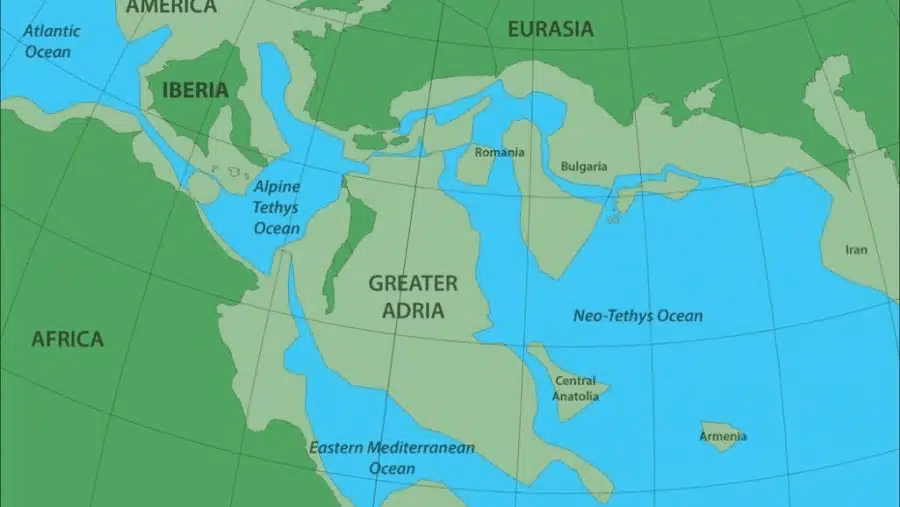
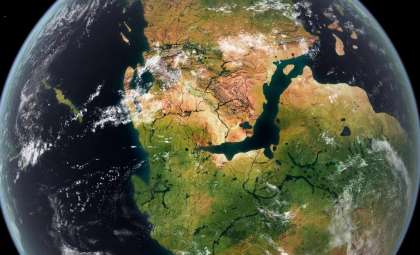
Named Greater Adria, this prehistoric landmass existed between the ancient supercontinents Gondwana and Eurasia before being gradually overridden by tectonic activity over 100 million years ago. Unlike mythical legends such as Atlantis, Greater Adria left definitive geological traces, many now found beneath the Alps, Apennines, and Balkan Mountains.
The Disappearance of a Continent
The research team’s models indicate that Greater Adria detached from north Africa approximately 220 million years ago and slowly migrated northwards. When colliding with Eurasia, most of its mass was subducted beneath the European tectonic plate. However, the upper crust was stripped off and twisted into new formations that continue to shape today’s southern European terrain.

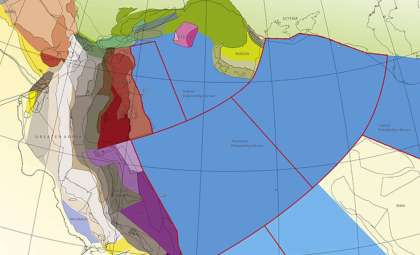
To unravel this complex tectonic evolution, van Hinsbergen’s group examined more than 2,300 magnetic rock samples across 30 nations, integrating seismic analyses with plate reconstruction tools like GPlates to trace shifts since the Triassic era. The Mediterranean, a region known by geologists as a “tectonic jumble,” provided abundant although complicated data.
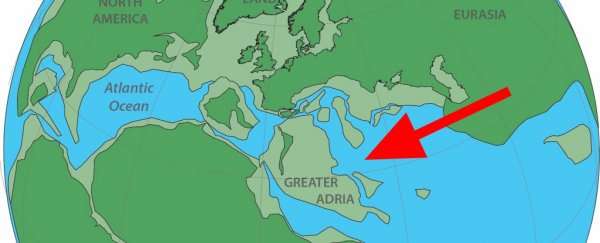
One remarkable outcome is how deeply Greater Adria’s remnants have sunk—some now reside nearly 1,500 kilometers beneath Greece, detectable via tomographic imaging of the mantle.
Reevaluating Europe’s Geological Landscape
This investigation has prompted a reassessment of continental genesis, revealing that present-day stable continents often consist of merged fragments from ancient tectonic events. Many such relics influence ongoing seismic activity. Fault lines formed during Greater Adria’s subduction still contribute to earthquake zones spanning Italy, Turkey, and Iran.
Published in Gondwana Research, this work also enhances knowledge of mineral deposits. Elements like copper, rare earth metals, and zinc often accumulate along ancient plate boundaries, making this research valuable for locating natural resources.
“Everything that’s not wood or plastic came out of a rock,” van Hinsbergen told National Geographic. “If you want to find the next mine, you need to understand where these rocks came from.”
A Fresh Perspective on Earth’s Ancient Past
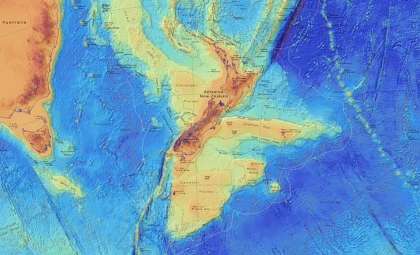
The saga of Greater Adria is not only about dramatic tectonic changes but also illustrates Earth’s dynamic surface history. Researchers believe the continent once consisted of scattered islands, comparable to today’s mostly submerged microcontinent Zealandia located beneath New Zealand. At its highest point, perhaps only around 7% of the land was above water.
Though largely consumed by the mantle, parts of Greater Adria persist above ground, including areas such as Italy’s Po Valley, Venice, Turin, and Croatia’s Istria region. These are tangible sites visitors can explore firsthand.
The discovery has far-reaching implications beyond geology. With the challenges of climate change and resource limitations, understanding ancient continental structures like Greater Adria offers critical insights into Earth’s past and the essential materials that impact our future.



0 comments
Sign in to Comment