
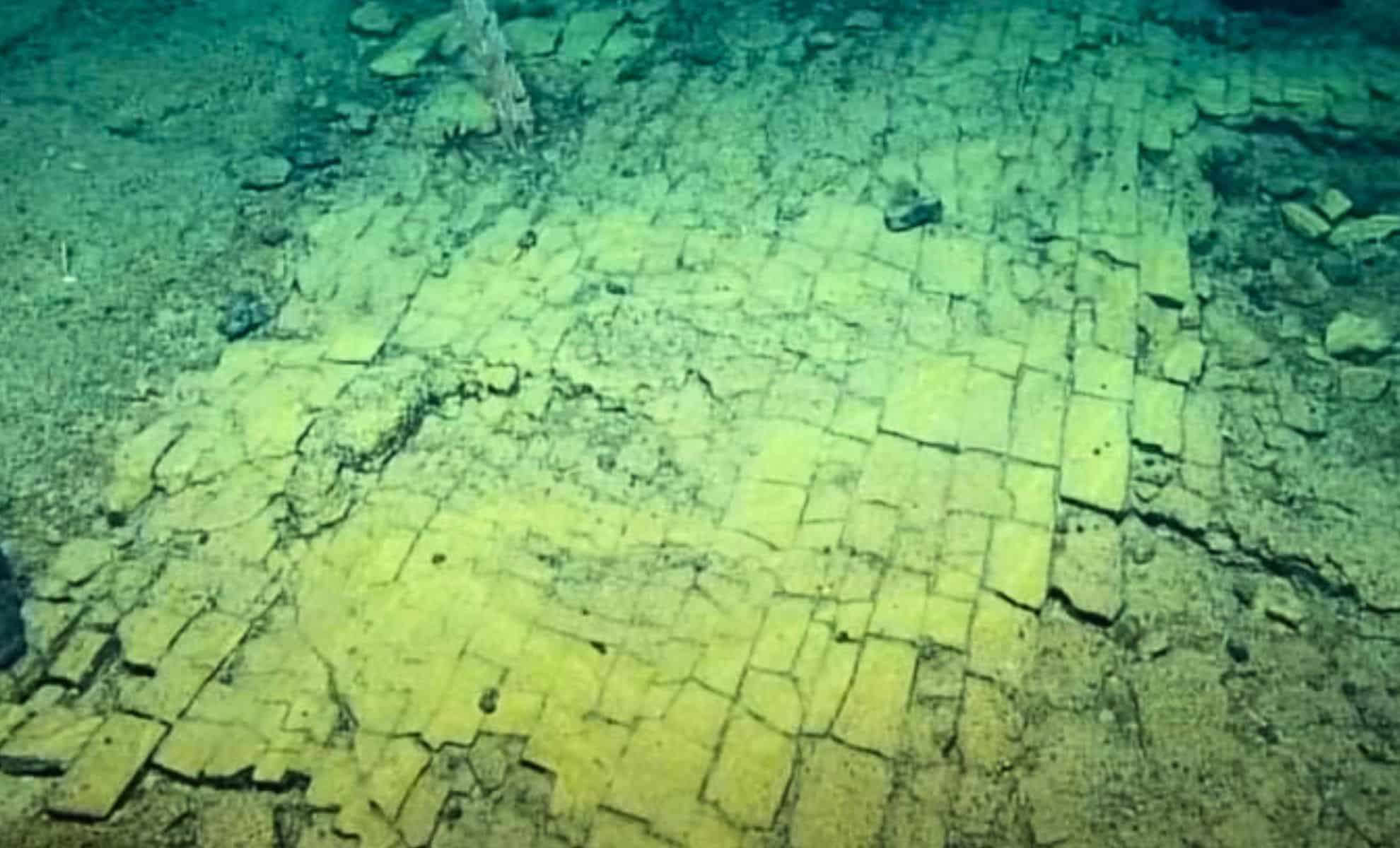
During a live broadcast of a deep-sea expedition near Hawaii, marine scientists aboard the E/V Nautilus encountered a startling natural formation: a vivid, cracked feature that resembled a yellow brick road stretching across the ocean bed. This extraordinary structure, appearing to belong more to a storybook than an underwater reserve, captivated global observers. Yet, its intriguing appearance reveals a fascinating geological phenomenon.
Nature’s Pathway Sculpted by Volcanic Activity
The exploration took place within the vast Papahānaumokuākea Marine National Monument (PMNM), a protected marine area exceeding the combined size of all U.S. national parks. Despite its enormous scale, less than 3 percent of its seabed has been surveyed, notes the Ocean Exploration Trust, which organizes research on the Nautilus.
The expedition focused on the Liliʻuokalani Ridge, a deep marine geological feature situated northwest of Hawaii. Utilizing remotely operated vehicles (ROVs), the team descended over 3,000 meters (more than 9,800 feet) down to document this scarcely explored underwater realm.

The unexpected find led one scientist to label it “the road to Atlantis,” while another immediately joked, “The yellow brick road?” Their genuine surprise was captured in a YouTube highlight video that conveyed the excitement of the moment.
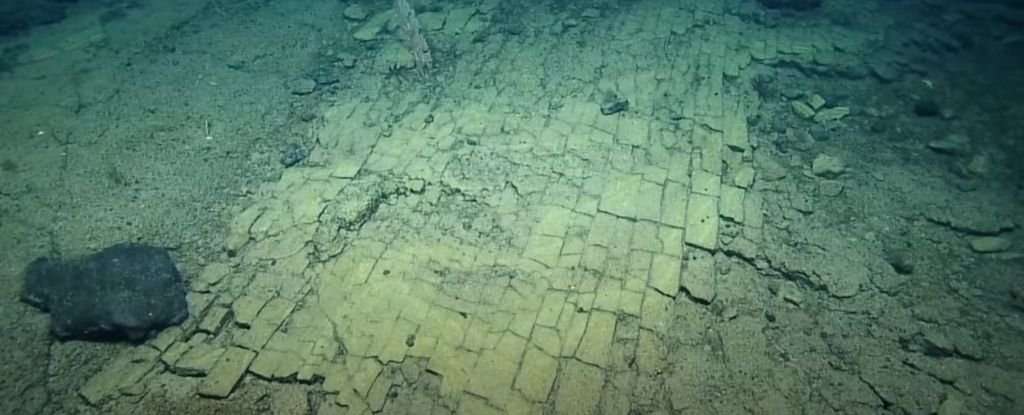
Although the formation’s grid-like pattern echoed man-made constructions, researchers confirmed it was actually a product of volcanic fractured rock. Such patterns result from geological processes known but rarely observed in such pristine conditions.
Per the Ocean Exploration Trust, this striking network likely originated from numerous lava flows on the Nootka Seamount, an inactive underwater volcano. As the lava cooled and shrank, it cracked into nearly perfect 90-degree angular sections, producing geometric slabs that mimic paving stones. Certain areas featured fractures so uniform it almost appeared artificially arranged, although their creation was entirely natural.
The formation’s surface seemed “dry” despite lying beneath nearly 1,000 meters of ocean water; this illusion was caused by the light coloration and flaky texture of the solidified rock. Researchers commented that the crust appeared to be peelable, adding to the surreal impression.
Polygonal cracking patterns like these are familiar to geologists and found in terrestrial lava fields—such as those in Iceland or Northern Ireland’s Giant’s Causeway. Yet observing them in deep ocean settings, especially in a remote, underexplored area, offers fresh scientific insights.
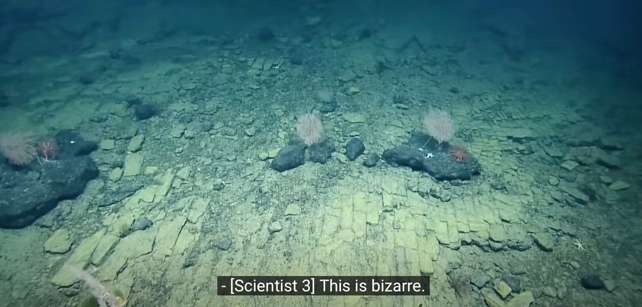
This particular structure was identified near the peak of the Nootka Seamount along the Liliʻuokalani Ridge. The site holds significance beyond its unusual look—it provides valuable data on the volcanic character of Pacific Ocean crust, an area still poorly understood due to difficulties in exploration.
As of 2022, less than 0.001% of the deep-sea floor worldwide has been visually examined, according to a study highlighted in ScienceAlert. Discoveries of this kind, even when geological rather than biological, contribute to unraveling Earth’s volcanic and tectonic past, especially in remote regions like the PMNM.
Stunning Natural Phenomenon Inspires Curiosity Worldwide
The eerie resemblance to a “yellow brick road” captivated social media, amplified by the lively remarks of the scientists during the dive. Yet beyond its novelty, this find underscores the urgency of expanding deep ocean research.
The PMNM harbors a rich variety of deep-sea creatures, volcanic landforms, and ancient geological records, much of which remains unexplored. Efforts led by the Ocean Exploration Trust, with real-time streaming, seek to narrow this knowledge gap.
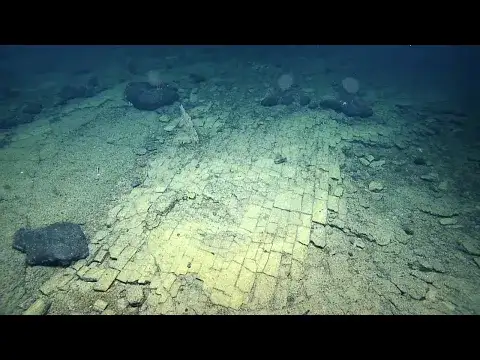
These missions not only catalog biodiversity but also uncover geological structures that shed light on seismic behavior, tectonic dynamics, and Pacific Basin evolution. In essence, what may seem like fantasy helps scientists decode Earth’s authentic history.
The Nautilus continues to spearhead Pacific expeditions, offering public access that allows viewers to witness discoveries firsthand. The recorded 2022 encounter with the “yellow brick road” enriches a growing archive dedicated to engaging audiences and advancing scientific understanding.
- Categories:
- Science




0 comments
Sign in to Comment