
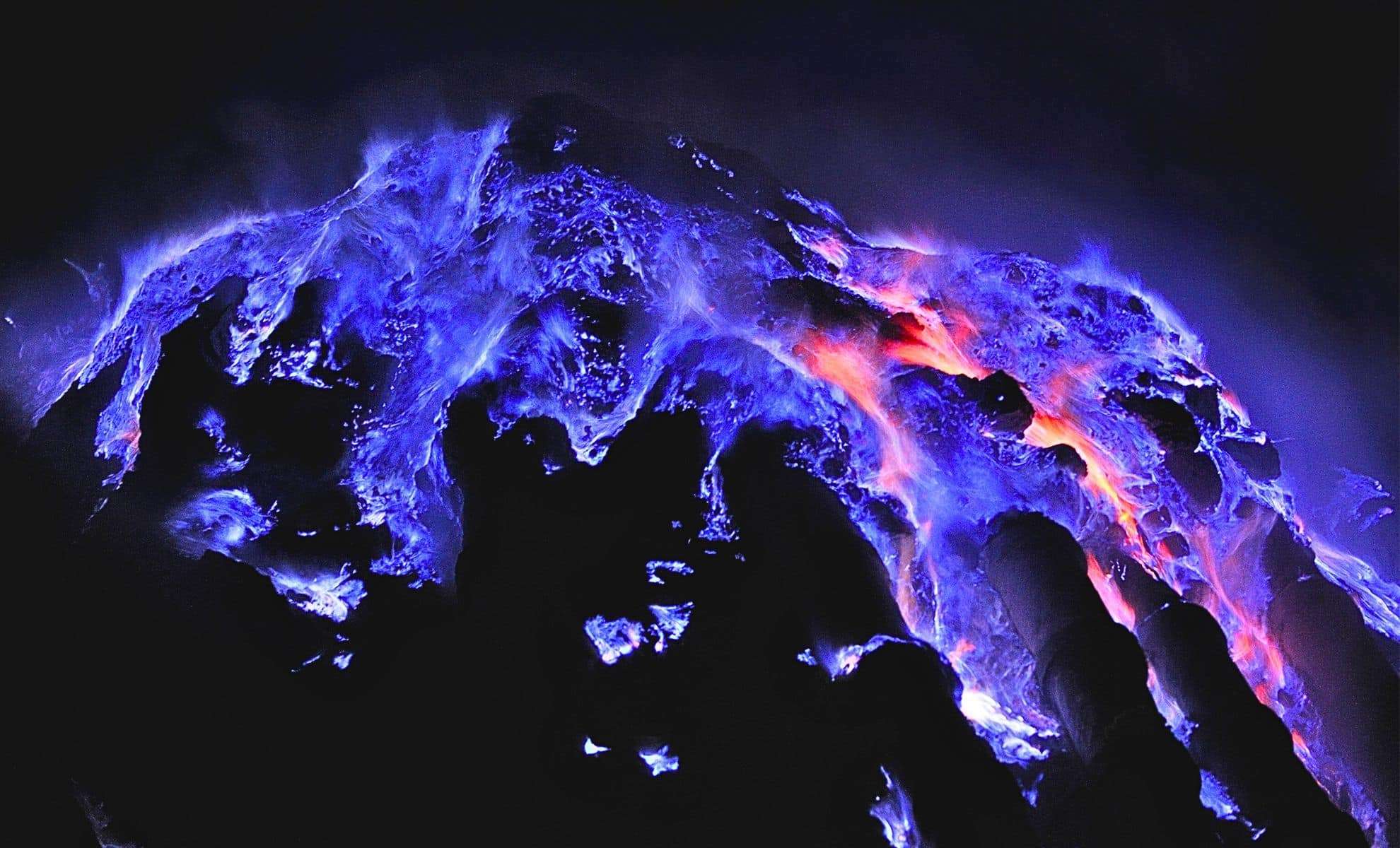
In the eastern part of Java, Indonesia, the Kawah Ijen volcano captivates observers with a stunning display of bright blue flames flickering across its crater after dark. Though it seems as if the volcano is erupting blue lava, the actual cause is even more intriguing. This uncommon spectacle, coupled with one of the planet’s most acidic crater lakes and a demanding sulfur mining industry, makes Kawah Ijen a unique and hazardous site.
What Causes the Blue Flames?
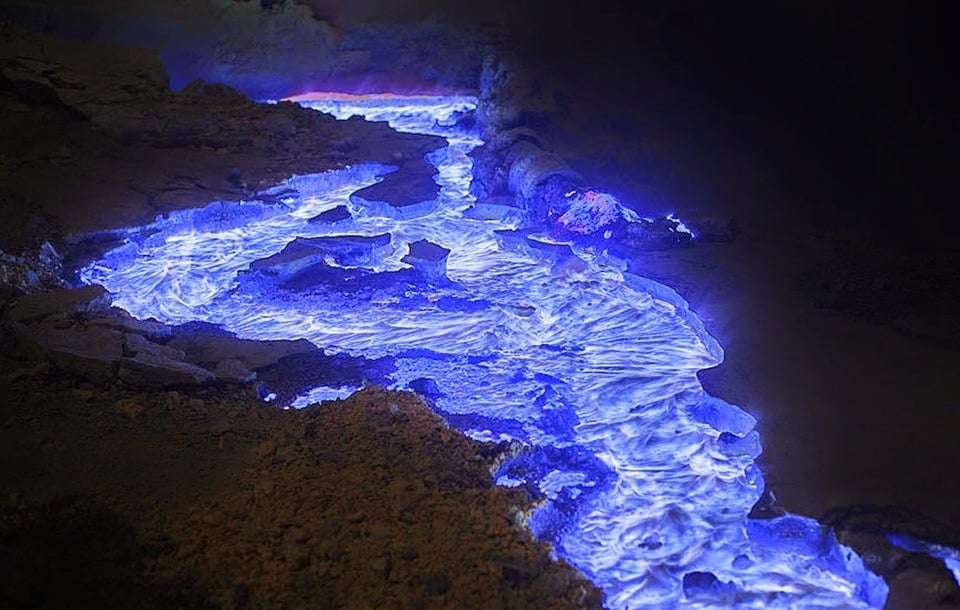
The striking blue light observed at Kawah Ijen is not molten rock, according to Smithsonianmag. Instead, it results from the ignition of sulfur gases released from volcanic vents. When sulfur-rich vapors escape the volcano at scorching temperatures near 600°C (1,112°F), they ignite upon meeting oxygen, producing vivid blue flames.
Occasionally, molten sulfur burns as it flows down the mountain slopes, giving rise to the illusion of glowing blue streams. This phenomenon is only visible at night since daylight masks the bioluminescent effect. Though sulfur gases emerge from various volcanoes worldwide, Kawah Ijen exhibits unusually high concentrations and specific chemical reactions, intensifying this captivating glow.

Home to Earth's Most Acidic Volcanic Lake
Perched atop Kawah Ijen is a striking turquoise-colored crater lake, renowned as the globe’s largest acidic lake. Its extreme acidity stems from elevated amounts of sulfuric and hydrochloric acid, resulting in a pH as low as 0.13 at its core—so corrosive it can corrode metals.
Beyond its scientific allure, this lake raises ecological concerns. The Banyupahit River, which flows from the crater, transports acidic waters downstream, impacting nearby ecosystems, including aquatic species and surrounding plants.
Though visually breathtaking, the lake poses serious dangers; exposure to its acidic gases can lead to significant health problems.
The Grueling Life of Sulfur Miners
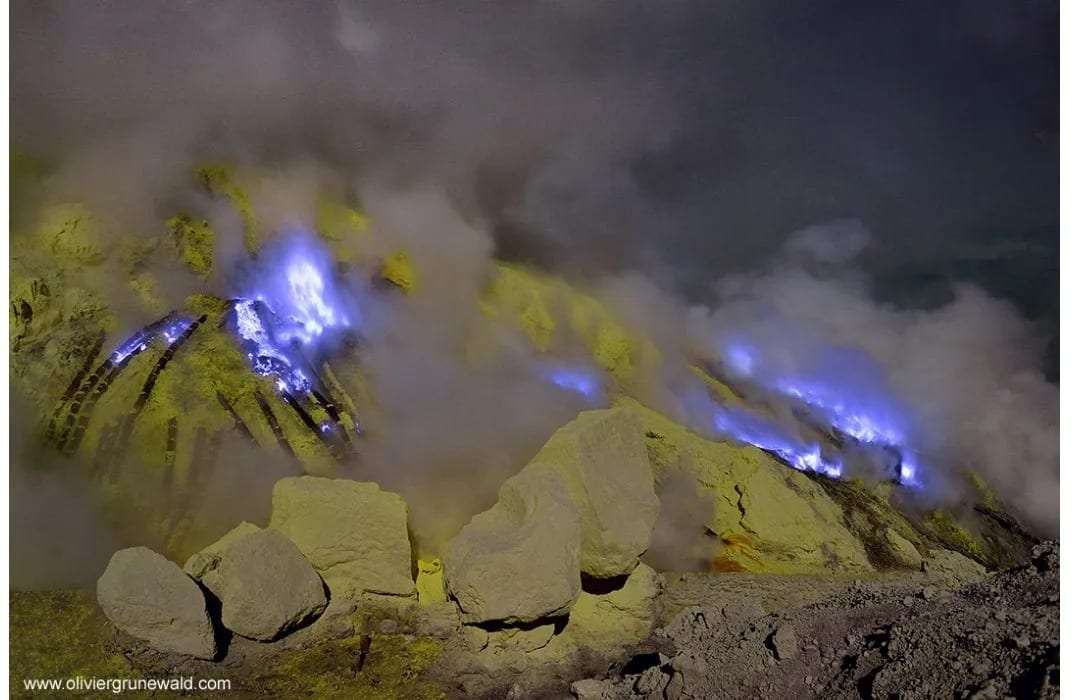
Aside from its natural wonders, Kawah Ijen serves as a workplace for hundreds of sulfur miners who face extreme risks daily. The volcano’s vents release dense clouds of harmful gases, and miners utilize rudimentary piping systems to channel and cool sulfur vapor, which then solidifies into bright yellow chunks.
These miners manually break the sulfur and transport heavy loads weighing up to 90 kilograms (200 lbs) down the steep crater slopes, sometimes repeating this trek multiple times daily. Without adequate protective gear, many suffer from lung diseases due to prolonged inhalation of hydrogen sulfide and sulfur dioxide.
Living conditions are harsh, with an average lifespan around 40 years, underscoring the extreme challenges faced by workers in this unique volcanic environment.
Tourism’s Impact and Environmental Preservation
The rare phenomenon of blue flames has turned Kawah Ijen into a sought-after destination for travelers worldwide. Early morning guided hikes enable visitors to witness the ethereal blue glow before dawn.
However, increased tourism introduces environmental and safety risks. Uncontrolled visitor access threatens the sensitive ecosystem of the acidic lake and sulfur deposits, while tourists venturing too close without appropriate respiratory protection risk serious health hazards from toxic fumes.
Ongoing efforts aim to balance environmental conservation with sustainable tourism, though achieving this equilibrium continues to be a complex task.
An Intersection of Beauty and Danger
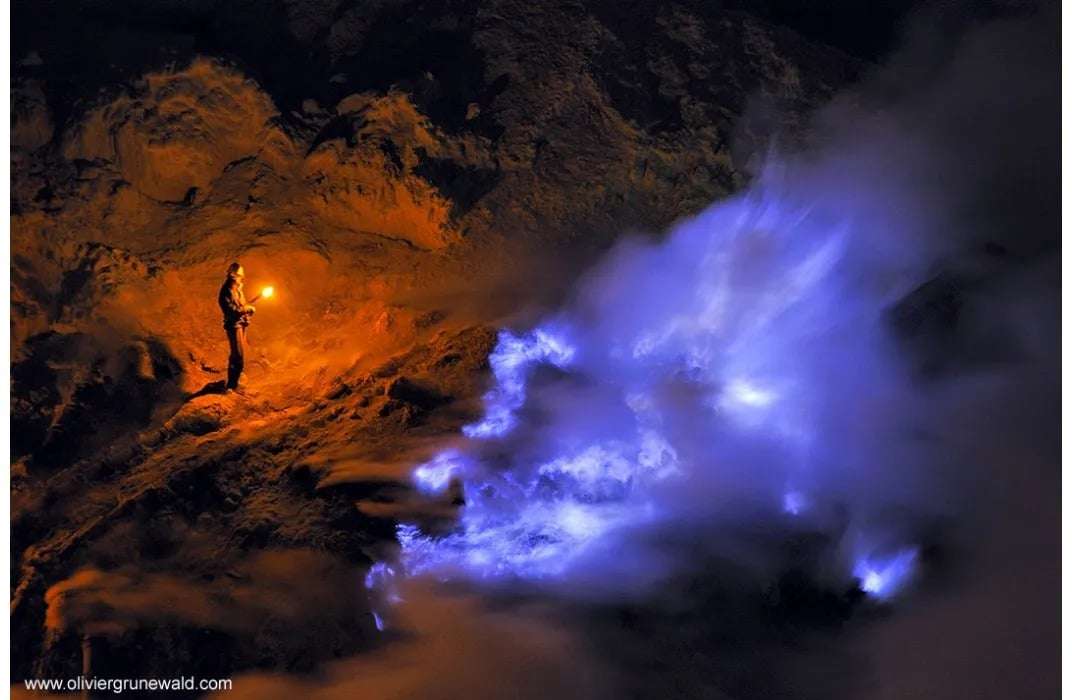
Kawah Ijen represents a convergence of extremes, where blue fire flickers, water is corrosive, and miners confront deadly volcanic gases daily. This captivating volcano, with its extraordinary glow and hazardous conditions, embodies the delicate and often perilous interplay between nature’s spectacular beauty and destructive power.
Whether admired as a geological marvel, a challenging workplace, or a photographer’s dream, Kawah Ijen remains among Earth’s most remarkable volcanoes—a site where intense geological and chemical processes meet enduring human courage.
- Categories:
- Science






0 comments
Sign in to Comment