
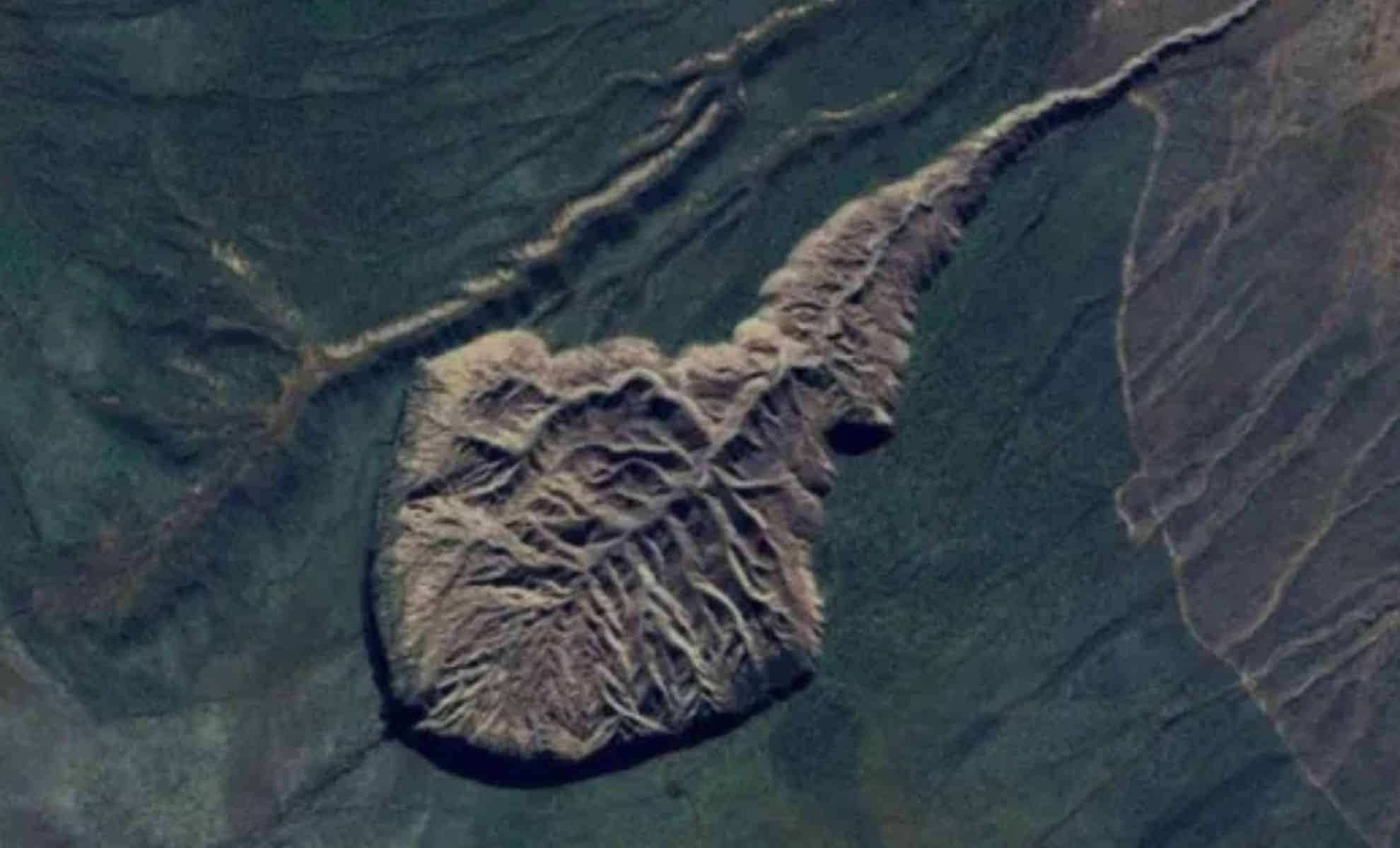
The Batagay megaslump, often dubbed the “portal to the underworld,” is rapidly enlarging within Siberia’s permafrost, providing researchers with unprecedented access to ancient environmental archives. First documented in the 1970s, this massive terrain collapse has steadily grown, exposing permafrost layers dating back as far as 650,000 years. A recent publication on ScienceDirect (2024) emphasizes the megaslump’s expanding nature and its importance in understanding how permafrost degradation is reshaping Arctic landscapes and revealing remnants of ancient ecosystems. This thawing phenomenon holds the potential to inform us about Earth’s climatic past and the increasing influence of climate change on these fragile environments.
A Growing Portal to Ancient Worlds
The ever-expanding Batagay megaslump is a treasure trove for paleoclimatologists eager to examine exposed frozen strata that chronicle Earth’s climatic history. Thomas Opel, a paleoclimatologist at Germany’s Alfred Wegener Institute, describes the location as a dynamic research site where ancient DNA along with preserved fauna and flora can be studied in detail.
Among remarkable discoveries, a 42,000-year-old foal from the Pleistocene epoch was unearthed in 2018, perfectly preserved within the permafrost. Such findings suggest that the Batagay site will likely reveal further pristine specimens and genetic materials as the megaslump continues its growth. “There is certainly more to come,” Opel told LiveScience, hinting at numerous potential breakthroughs hidden beneath frozen layers.

Climate Change Drives Ongoing Expansion
The scientific value of these discoveries comes with a concerning backdrop: the megaslump’s expansion is primarily fueled by climate change, which accelerates permafrost thawing. Soil erosion, exacerbated by deforestation, exposes the frozen ground to faster melting, further destabilizing the site’s structure. Historically forested with larch and birch, the region has suffered from increasing human interference, destabilizing the permafrost and perpetuating the slump’s growth.
Because permafrost contains about 80% ice, the slump’s collapse releases vast amounts of sediment and water into the Batagay River valley, changing the landscape while accelerating erosion. Opel stressed that this thaw is causing profound environmental transformations locally, with far-reaching repercussions for ecosystems. These developments illustrate the tangible consequences of human-driven climate change on once stable Arctic environments.
A Glimpse into Siberia’s Deep History
As the planet’s largest megaslump, Batagay offers scientists an extraordinary window into the ancient Siberian environment and its evolution over hundreds of millennia. The site’s continually exposed permafrost layers are invaluable for reconstructing historic climates, biodiversity, and the cascading effects of climate change.
The discoveries emerging from Batagay underscore the urgency of tackling climate change to safeguard the delicate ecosystems preserved beneath frozen terrain. As this “portal to the underworld” further unfolds, it promises to yield even more extraordinary evidence about our planet’s long and complex history.
- Categories:
- News









0 comments
Sign in to Comment