
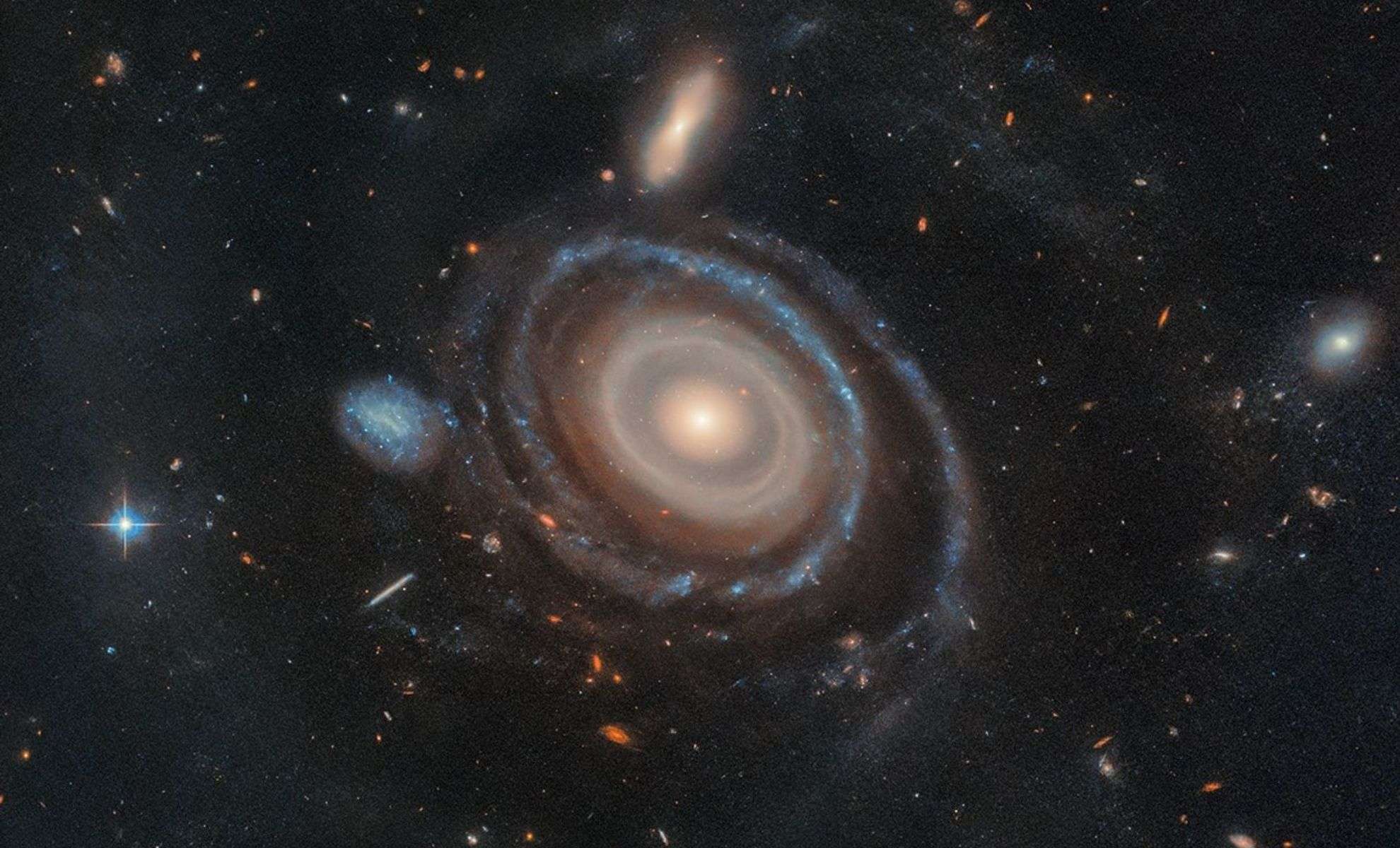
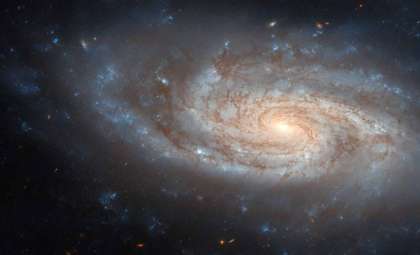
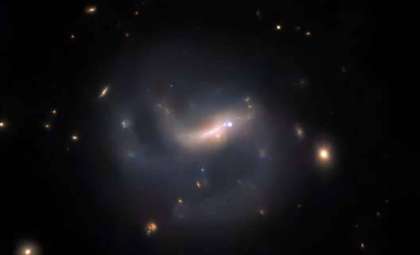
The Hubble Space Telescope has revealed an extraordinary phenomenon deep in space—a galaxy adorned with nine expanding rings that together create a striking cosmic target-like appearance. This unique structure, known as LEDA 1313424, has amazed astronomers with its unprecedented number of concentric rings, far beyond what has been seen before.
Spanning about 250,000 light-years in diameter, LEDA 1313424 is over twice as large as our Milky Way. Located in the distant reaches of the universe, it features waves of young stars expanding outward, much like ripples spreading across a pond's surface. This exceptional formation resulted from a direct collision with a smaller blue dwarf galaxy, which passed straight through its core. The impact generated shockwaves that compressed gas and dust, sparking bursts of star formation that created the nine distinct rings.
Before this observation, galaxies with such collisions typically exhibited only two or three rings. The finding that LEDA 1313424 hosts as many as nine rings has significantly reshaped our understanding of how galaxies respond to collisions. This discovery also aligns perfectly with long-standing theoretical predictions about ring formation in galactic interactions.

An Unexpected Find That Excited Researchers
The uncovering of the Bullseye Galaxy was a chance happenstance that quickly gained scientific importance. Imad Pasha, a Yale University doctoral candidate, was examining ground-based survey data when he spotted the remarkable galaxy.
“It was a serendipitous moment,” said Pasha. “Noticing the galaxy's multiple clear rings immediately drew my attention, and I had to explore it further.”
Motivated by the unusual number of rings, Pasha and his colleagues utilized Hubble's superior imaging for a closer examination. They identified eight rings in the high-resolution images and later validated the presence of a ninth ring with observations from the W. M. Keck Observatory in Hawaii.
Recognizing the galaxy’s distinctive pattern of concentric rings, the team affectionately dubbed it the “Bullseye Galaxy.” Its layered rings bear a striking resemblance to a target, fading gradually as they spread outward.
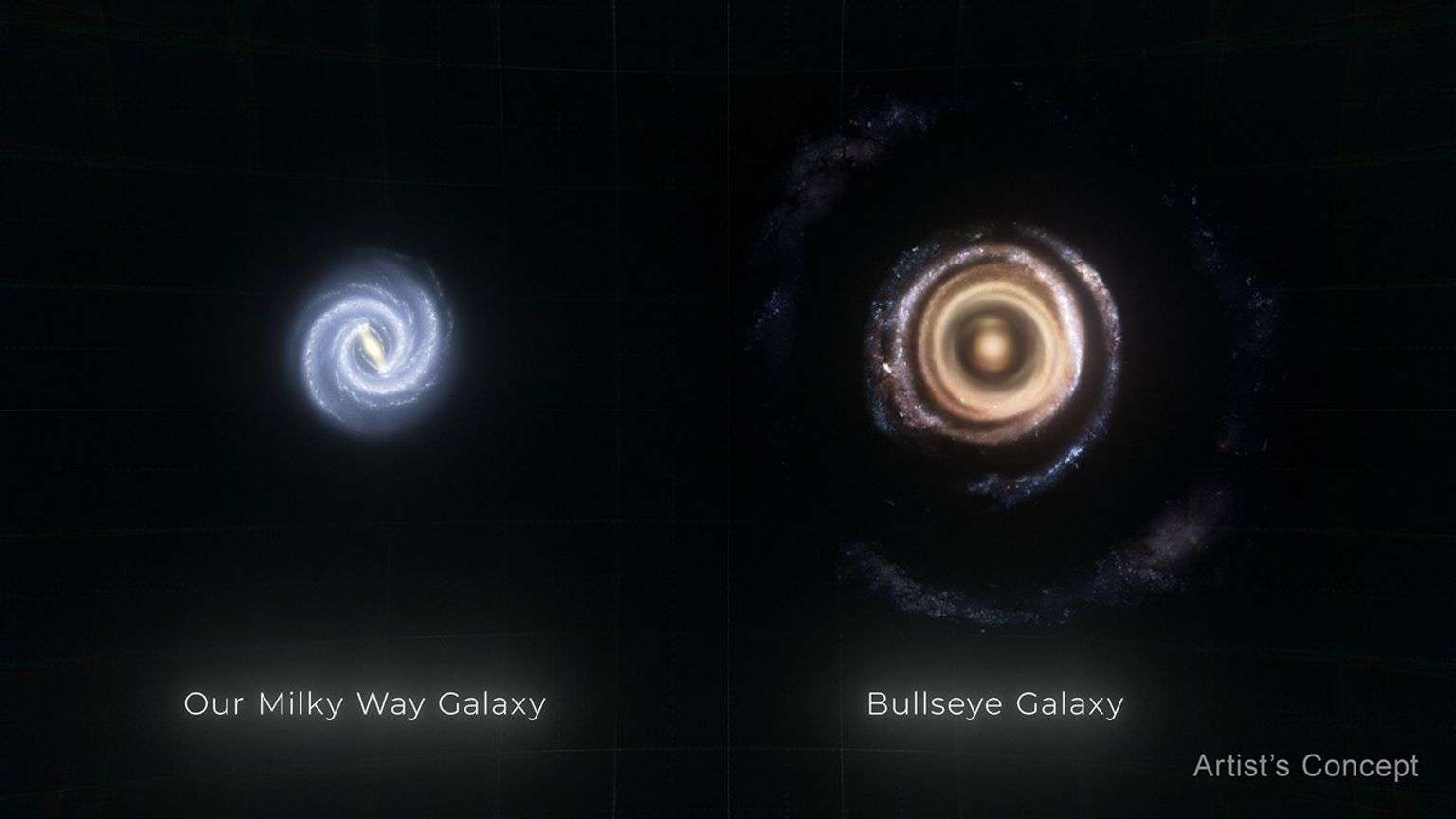
Unraveling the Origin of the Nine Expanding Rings
While galactic encounters are common, direct, head-on crashes such as the one that created the Bullseye are extraordinarily uncommon. In this event, the blue dwarf galaxy passed clean through LEDA 1313424's center, profoundly transforming its appearance.
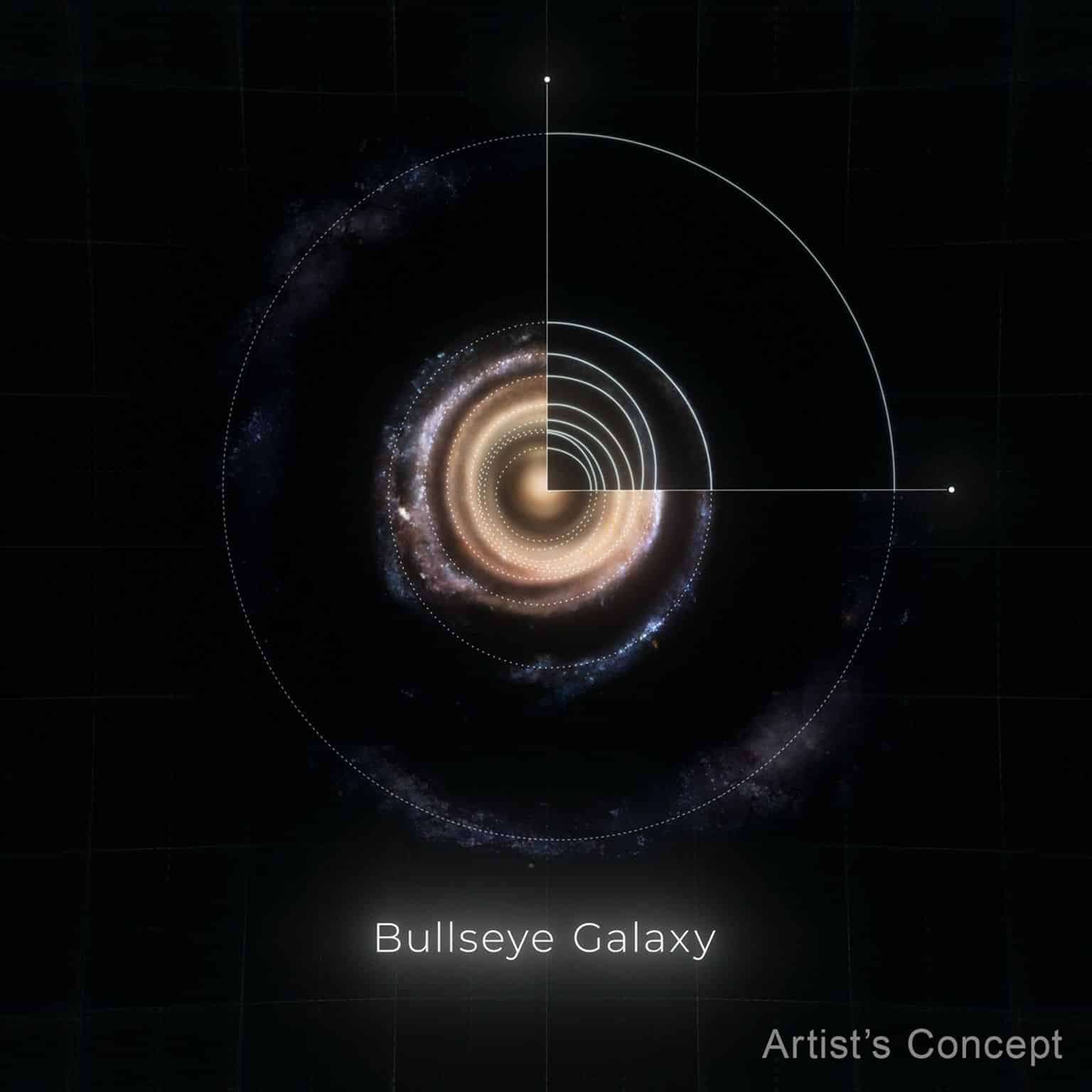
The impact sent waves rippling through the galaxy’s gas and dust, forming multiple outward-moving rings akin to the ripples made by a stone tossed into water. Each ring marks a burst of star formation, initiated as shockwaves compressed the interstellar material, prompting new stars to ignite.
Contrary to many collision events that produce chaotic distortions or spirals, the Bullseye's rings maintained their clarity. As Yale professor Pieter G. van Dokkum explains, this galaxy is being observed at a unique stage in its evolution.
“We are fortunate to witness the Bullseye during a brief phase when so many rings are visible,” van Dokkum noted.
These rings are expected to slowly fade over millions of years as the disturbances calm. Hubble's snapshot captures this fleeting cosmic episode, offering a rare chance to study a transient galactic event.
Validating Decades of Theory on Galactic Ring Formation
For many years, astronomers have hypothesized that galaxies impacted by smaller intruders should develop several concentric rings. Yet, before now, this had not been conclusively observed. The Bullseye Galaxy provides the first clear confirmation that these models accurately describe real cosmic events.
Pasha's team found the rings expanding precisely as predicted by simulations, confirming that galactic collisions follow the dynamics long proposed by theorists. Van Dokkum shared his enthusiasm for the breakthrough:
“It’s rewarding to finally see the theory come to life in the Bullseye galaxy,” he said. “This discovery closes a significant gap between prediction and observation.”
This insight marks a milestone in understanding galactic interactions and star formation triggered by shockwaves. It might also shed light on the eventual fate of the Milky Way when it collides with Andromeda in around 4.5 billion years.
Future Prospects: Hunting for More Galactic Bullseyes
With LEDA 1313424 unveiled, astronomers are now wondering: how many other galaxies with similar ring structures exist? While the Bullseye Galaxy was a fortunate discovery, it suggests other galaxies undergoing such phenomena could be waiting to be found.
The imminent launch of the Nancy Grace Roman Space Telescope promises to revolutionize the search for rare galactic structures. According to van Dokkum, this new observatory will greatly enhance the ability to survey deep space, likely leading to the discovery of more cosmic ringed galaxies.
“When the Roman Telescope starts operations, these fascinating objects will stand out more readily,” van Dokkum said. “This will help us gauge just how common such spectacular galactic events are.”
Therefore, the Bullseye Galaxy might represent the first among many galactic rings yet to be encountered.
Capturing a Rare Stage of Galactic Evolution
The Bullseye Galaxy is an exceptional find that provides vivid evidence supporting theories of ring formation in galaxies. At approximately 250,000 light-years wide, its nine vivid rings showcase the powerful forces that mold the cosmos.
Observed at a critical and fleeting phase of its development, LEDA 1313424 offers a mesmerizing look at the aftermath of a galactic collision, with its rings narrating a tale of star birth and cosmic interaction.
Although its rings may eventually dissipate, Hubble’s imagery immortalizes this extraordinary chapter in the galaxy’s life. As scientists continue to explore the universe for more such bullseye-patterned galaxies, it’s clear that the cosmos still holds many awe-inspiring mysteries to uncover.





0 comments
Sign in to Comment