
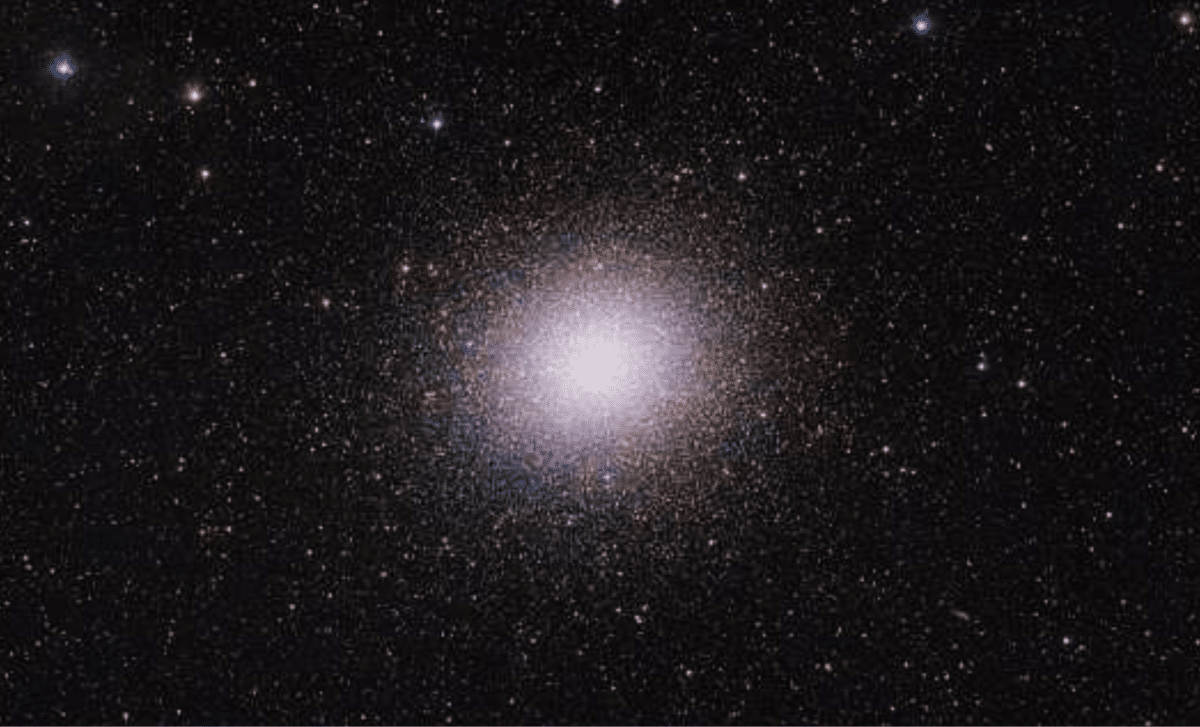
Astronomers have focused their attention on Omega Centauri, one of the Milky Way’s most remarkable globular clusters, where evidence points towards a colossal black hole residing at its center. A recent investigation, featured on ArXiv, utilized advanced radio telescope technology to verify this black hole’s presence. Surprisingly, despite thorough observation, no radio signals were detected, posing new questions about the behavior of black holes in stellar-poor settings.
Unraveling the Mystery at Omega Centauri’s Core
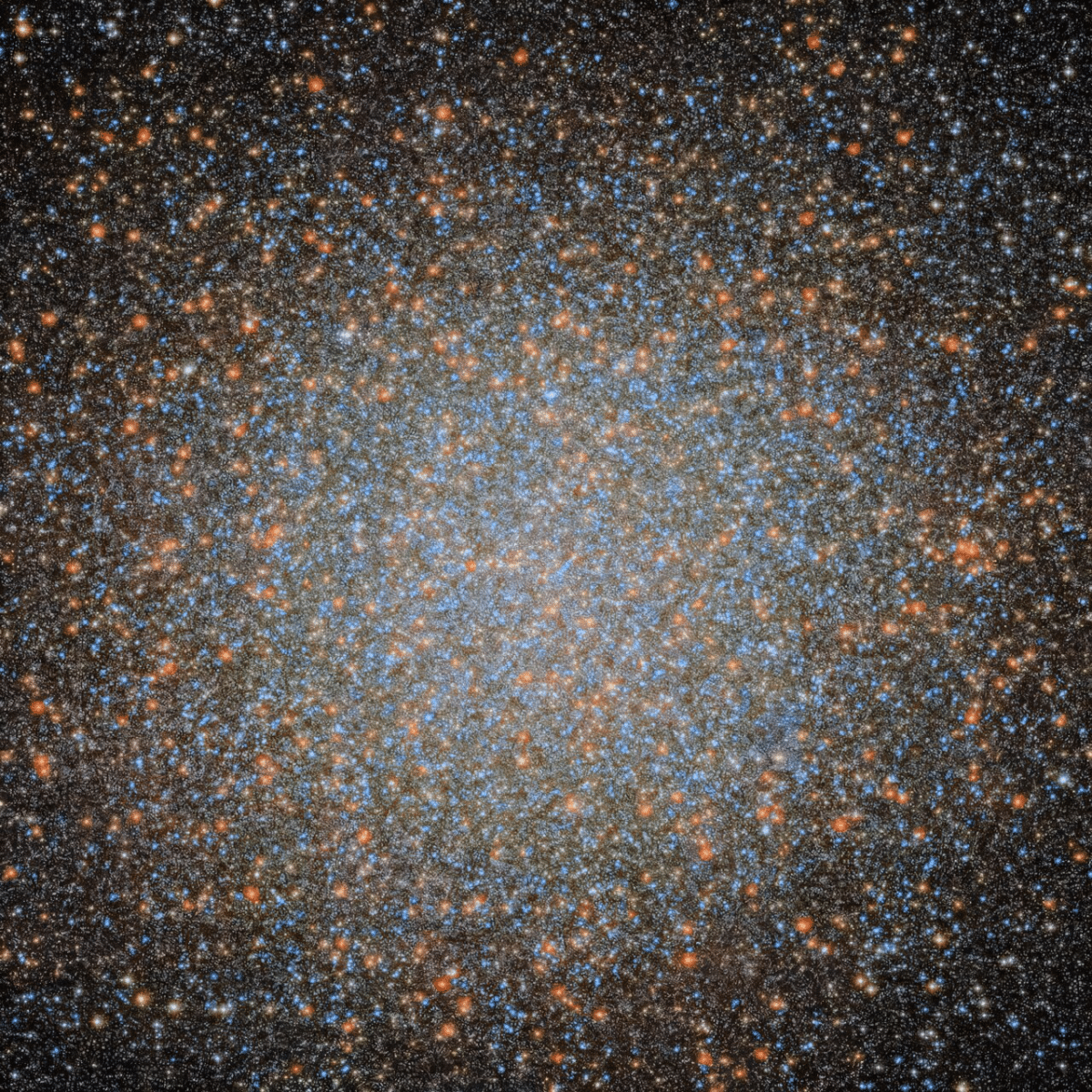
Omega Centauri, recognized as the brightest and largest globular cluster in our galaxy, lies roughly 15,000 light-years from Earth and contains roughly ten million stars densely packed together. The cluster’s center has intrigued scientists for years. Previous studies, especially those utilizing the Hubble Space Telescope, revealed a puzzling observation: seven stars in the core move at speeds suggesting they are influenced by a massive invisible object, most likely a black hole.
These observations hinted at the presence of an intermediate-mass black hole, potentially weighing between 8,200 and 47,000 solar masses. These mid-sized black holes represent a crucial gap in black hole astronomy, bridging the scale between smaller stellar-mass black holes born from dying stars and the gargantuan supermassive black holes found in galaxy centers.

The Radio Investigation and Unexpected Absence of Signals
To further probe this possibility, lead researcher Angiraben Mahida and her team employed the technique of radio astronomy. Their hypothesis centered on detecting emissions from the black hole’s accretion process—where gas and dust falling into a black hole produce a luminous accretion disk that radiates energy across different wavelengths, including radio frequencies. Using the Australia Telescope Compact Array, the group dedicated nearly 170 hours to capturing data from Omega Centauri’s central zone.
The findings startled the scientific team. Despite achieving exceptional sensitivity of 1.1 microjanskys at 7.25 gigahertz, which marks the most detailed radio imagery ever obtained for the cluster, no signs of radio waves were observed. The anticipated accretion disk signatures were absent at all known central points attributed to the hypothesized black hole. This lack of detection suggests a profoundly inefficient accretion process, placing an upper limit on accretion efficiency below 0.004—much lower than scientists initially predicted.
These insights were shared in a study published on ArXiv, contributing new intrigue to the ongoing quest to identify intermediate-mass black holes.
The Mystery of a Quiet Black Hole in a Starved Environment
The absence of detectable radio output leads to speculation about this black hole’s nature within Omega Centauri. The research team proposes that this silence could stem from the cluster’s distinct evolutionary history. Omega Centauri is considered the remnants of a dwarf galaxy’s core, long ago assimilated by the Milky Way. Consequently, the surroundings of the black hole may lack the gas and dust necessary to sustain an active accretion disk.
Unlike the luminous, gas-rich domains surrounding supermassive black holes that fuel striking emissions in active galaxies, the black hole at the core of Omega Centauri may be isolated in a gas-deficient region. This scarcity of feeding material prevents typical radiation processes, rendering the black hole almost invisible across the spectrum. Simply put, it remains a silent giant in a cosmic desert, quietly lurking without the usual bright signatures astronomers expect.
- Categories:
- Astronomy










0 comments
Sign in to Comment