
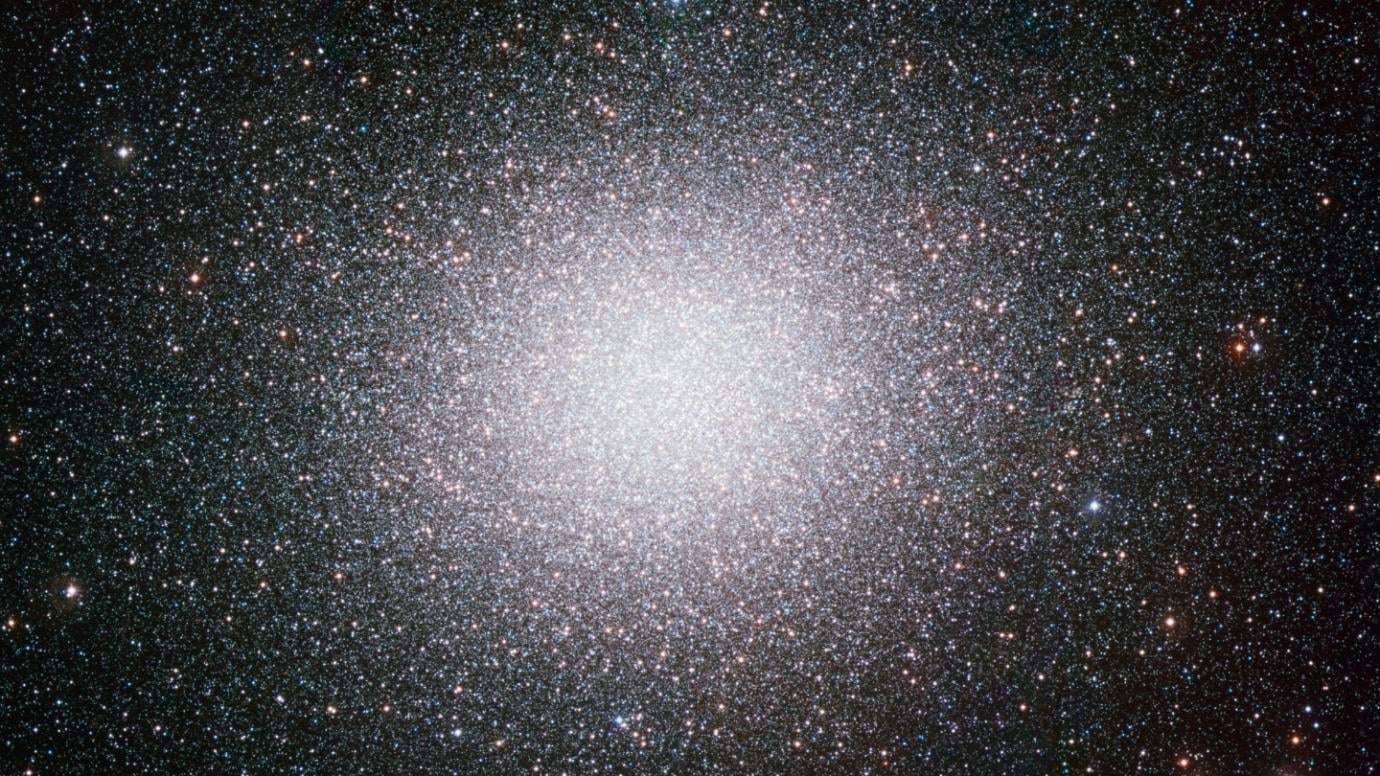
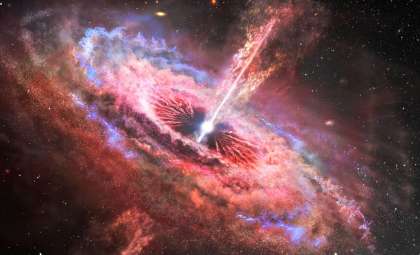
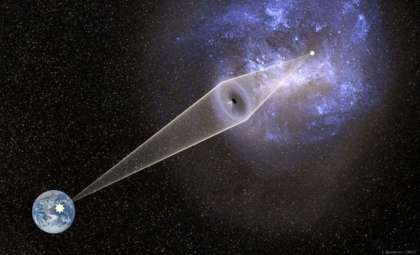
Recent research has challenged the long-standing idea of an intermediate-mass black hole residing at the core of Omega Centauri, the largest globular cluster in our galaxy.
Rather than a singular massive black hole, the unusual stellar motions are likely caused by a large population of smaller black holes, explains Andrés Bañares-Hernández from the Instituto de Astrofísica de Canarias. This raises questions about previous interpretations of Omega Centauri’s heart.

Dominance of Stellar-Mass Black Holes
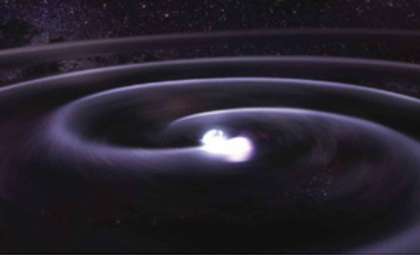
Bañares-Hernández’s team proposes that the cluster’s unusual star patterns can be attributed to the gravitational influence of between 10,000 and 20,000 small black holes residing within Omega Centauri’s dense core. Collectively, these black holes may sum to a mass of about 200,000 to 300,000 times that of the Sun, offering a fresh perspective on the cluster’s dynamics.

“Our analysis supports an extended distribution of stellar-mass black holes rather than a single intermediate-mass black hole,” says Bañares-Hernández. Could this mark a shift away from the previously favored intermediate-mass black hole hypothesis?
Debate Continues Among Astronomers
However, some astronomers remain unconvinced. Maximilian Häberle from Germany’s Max Planck Institute for Astronomy, who previously identified seven stars near Omega Centauri’s core moving at such speeds that they seemed to orbit a massive black hole, with a mass estimate ranging from 8,200 to 50,000 times that of the Sun, stands by his findings.
Despite the new report, Häberle insists: “The fastest stars are best explained by the presence of an intermediate-mass black hole.” This could herald the start of a renewed scientific debate over what truly occupies the cluster’s center.
The community remains divided. Gerry Gilmore at the University of Cambridge supports the latest results, highlighting the improved modeling of neutron stars and smaller black holes in the cluster. Conversely, Daryl Haggard from McGill University finds the evidence supporting an intermediate-mass black hole compelling, emphasizing the challenge in discounting the rapid stellar motions observed.
Looking Ahead
The question remains open. Simon Portegies Zwart, expressing skepticism about an intermediate-mass black hole, suggests a decisive test: “Capture the orbit.” Identifying a star orbiting an invisible object with a mass of thousands of suns would provide definitive proof.
One thing is clear — the mystery of Omega Centauri’s core continues. Whether it hosts a swarm of stellar black holes or a singular massive entity, this cosmic puzzle is intensifying, with major implications for our understanding of star clusters.
- Categories:
- Astronomy





0 comments
Sign in to Comment