
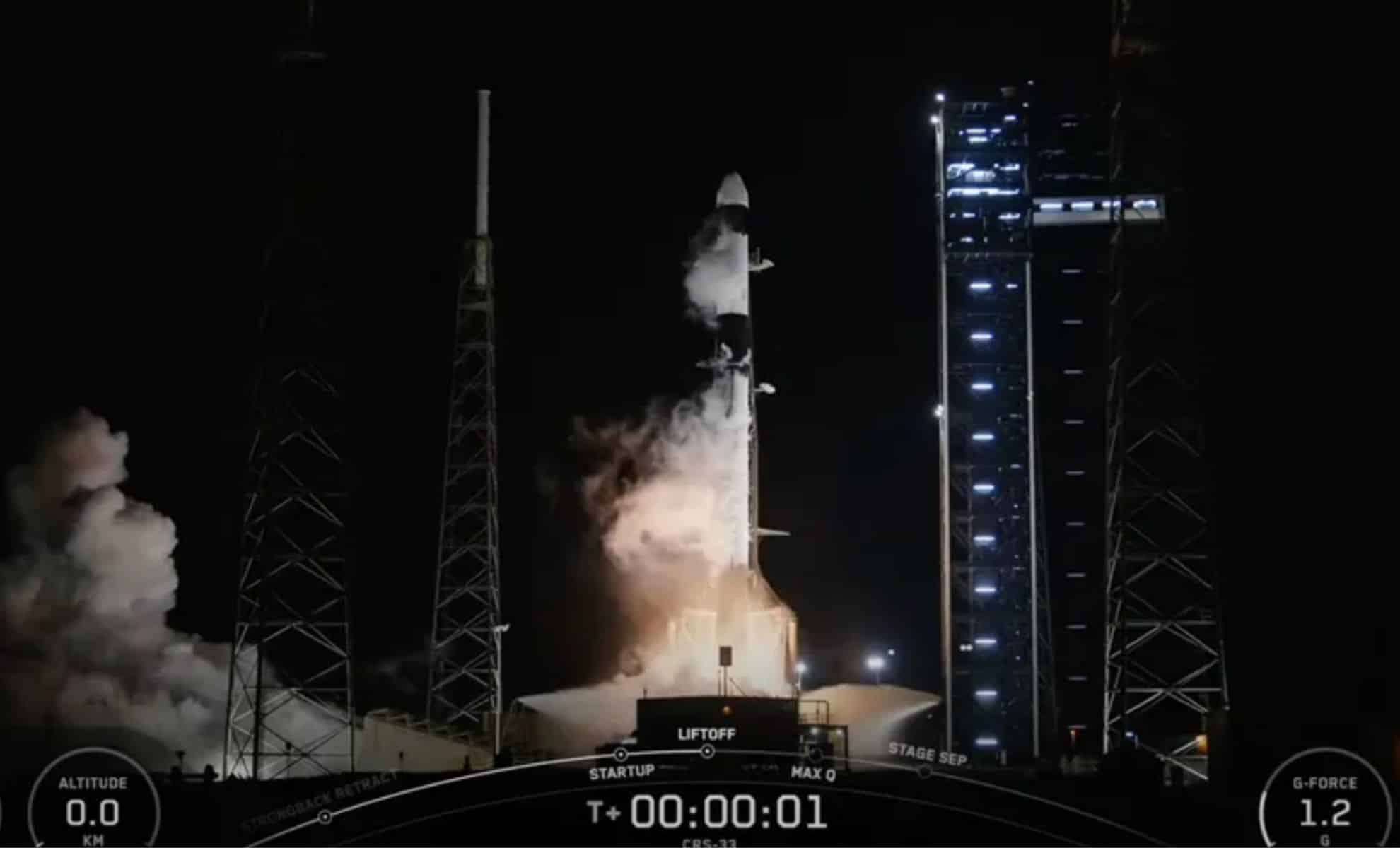
On August 24, 2025, SpaceX achieved a successful launch with its CRS-33 mission, strengthening NASA's ongoing collaboration to support the International Space Station (ISS). Liftoff from Cape Canaveral, Florida, sent a Dragon spacecraft carrying 5,000 pounds (2,270 kilograms) of essential cargo into orbit aboard a Falcon 9 rocket, as SpaceX reported.
Details of the CRS-33 Launch and Booster Recovery
At 2:45 a.m. EDT on August 24, the Falcon 9 rocket successfully launched from Cape Canaveral Space Force Station’s Launch Complex 40, ferrying the CRS-33 Dragon capsule into space. Approximately 8.5 minutes after takeoff, the Falcon 9's first stage executed a flawless touchdown on SpaceX’s autonomous drone ship “A Shortfall of Gravitas” in the Atlantic Ocean. This marked the seventh successful recovery for this booster, highlighting SpaceX’s advancements in rocket reuse. Both NASA and SpaceX teams celebrated the flawless launch as a continued testament to their partnership in space exploration.
The Dragon capsule from CRS-33 is en route to docking with the ISS's Harmony module on August 25, 2025. Once attached, it will remain at the station through December to support ongoing scientific experiments and deliver critical provisions. Among its mission objectives is a reboost demonstration to elevate the ISS’s orbit — a maneuver traditionally handled by Russian spacecraft but now integrated into U.S. operations due to Russia's planned ISS exit in 2028. This transition underscores SpaceX's growing role in maintaining station functionality.

SpaceX's Crucial Role in Replenishing ISS Resources
CRS-33 is another vital resupply mission delivering fresh food, equipment, and scientific payloads to astronauts aboard the ISS. Such missions are essential for keeping the station stocked with tools and materials necessary for crew health and ongoing research.
“Along with essential supplies, Dragon will transport multiple experiments, including bone-forming stem cells aimed at tackling bone loss and materials for 3D printing medical implants to advance nerve repair treatments on Earth,” NASA representatives stated prior to launch. These efforts highlight how space missions not only sustain astronaut health but also drive breakthroughs that could improve medical care on Earth, especially in understanding and counteracting bone deterioration caused by microgravity.
The CRS-33 shipment also includes materials for 3D printing medical implants in microgravity, a cutting-edge technology that may enable in-space medical treatments for crews on extended missions beyond Earth’s orbit. Additionally, NASA noted the mission carries bioprinted liver tissue to study blood vessel growth in microgravity, a project that could inform better liver disease therapies and transplant techniques on Earth.
Innovations in Orbital Maintenance and Space Manufacturing
A standout element of CRS-33 is its planned reboost demonstration. While the ISS maintains a mostly stable orbit, atmospheric drag gradually lowers its altitude, necessitating periodic boosts to maintain position. Historically, Russian Progress vehicles have performed these maneuvers, but with Russia scaling back ISS involvement by 2028, NASA has assigned U.S. cargo providers, including SpaceX and Northrop Grumman, to execute these vital orbital adjustments.
This mission also advances in-space manufacturing by supplying materials to 3D print metal parts aboard the ISS. Developing the ability to produce components on demand dramatically enhances long-term space mission logistics by reducing dependency on Earth-based resupply. Such capabilities are crucial for future exploration endeavors to the Moon, Mars, and beyond, where timely delivery of spare parts is not always feasible.
- Categories:
- News









0 comments
Sign in to Comment