
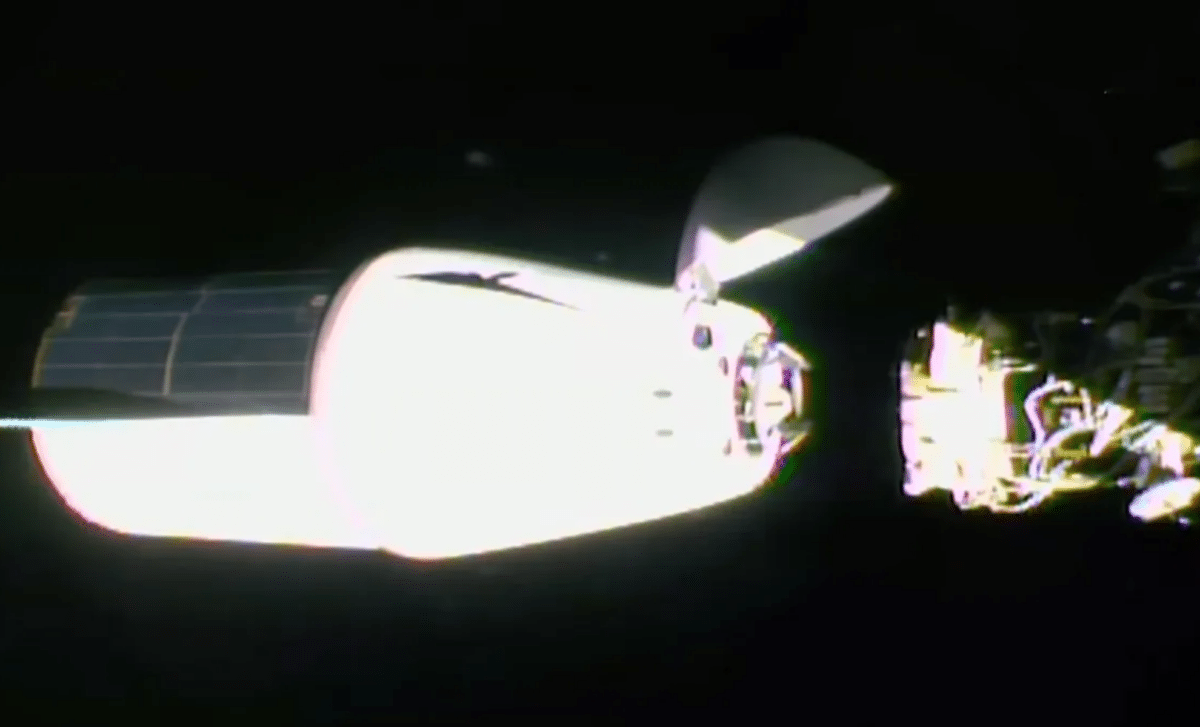
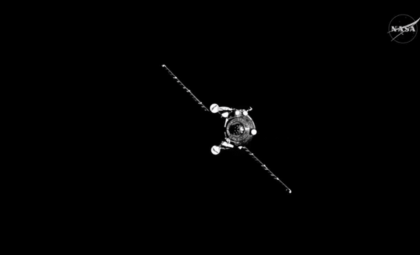
SpaceX’s Dragon spacecraft has smoothly docked at the International Space Station, delivering nearly 6,500 pounds of essential cargo, including crucial scientific experiments that aim to deepen our knowledge of biology and physics in microgravity, reports Space.com. This mission marks the 34th resupply flight under NASA’s commercial contracts, emphasizing SpaceX’s key role in supporting ongoing orbital research.
Precision Docking of the Dragon Spacecraft
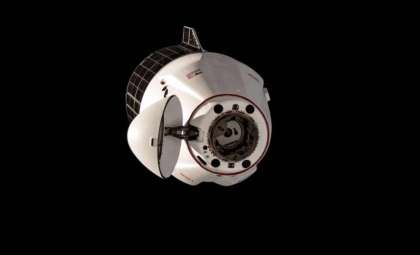
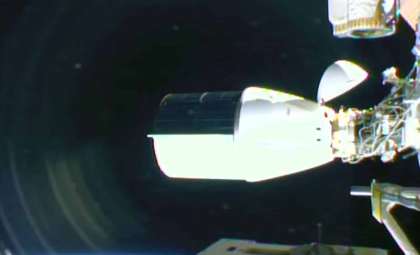
The SpaceX Dragon CRS-34 mission attached itself autonomously to the forward port of the Harmony module at 6:37 a.m. EDT on May 17, two days post-launch from Cape Canaveral Space Force Station, Florida. NASA astronaut Jack Hathaway confirmed the docking, stating, “Dragon contact and soft capture complete,” while observing alongside ESA astronaut Sophie Adenot from the station’s Cupola. This flawless docking showcases Dragon’s advanced automation, freeing astronauts to concentrate on scientific activities instead of manual spacecraft operations.
Science and Supplies Aboard the Capsule
The cargo delivered by Dragon comprises a diverse collection of research projects and supplies that Expedition 74 crew members will unpack over the coming days. A NASA media advisory details the cargo as

“a project to determine how well Earth-based simulators mimic microgravity conditions; a bone scaffold made from wood that could produce new treatments for fragile bone conditions like osteoporosis; and equipment to help researchers evaluate how red blood cells and the spleen change in space.”
These experiments may provide breakthrough insights into human physiology, tissue regeneration, and cellular adaptations to long-term weightlessness, promising advancements both aboard the station and back on Earth.
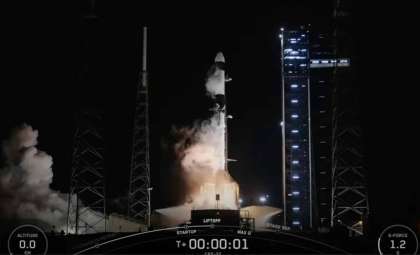
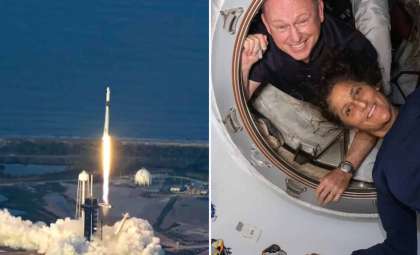
SpaceX and NASA successfully launched the CRS-34 Cargo Dragon mission to the International Space Station Friday evening at 6:05 p.m. EDT from Space Launch Complex 40 at Cape Canaveral Space Force Station.
— Florida Spaceflight (@FLspaceflight) May 18, 2026
Following stage separation, Falcon 9’s first stage booster returned to… pic.twitter.com/0anJTLxijY
Investigating Earth's Environmental Forces
In addition to biological studies, Dragon brought instruments designed to explore factors shaping our planet. One experiment will monitor charged particles surrounding Earth, which can disrupt satellites and electrical grids, providing data to improve resilience of global infrastructure. Another will delve into processes of planetary formation, while a precision device will measure light reflected from Earth and the moon, aiding climate modeling and illumination research. These diverse investigations demonstrate the multifaceted value of Dragon missions, linking space weather, planetary science, and human health.
SpaceX’s Continual Contribution to Space Research
Since launching its commercial resupply efforts, SpaceX has become indispensable to the International Space Station’s function. Each mission delivers vital materials and returns scientific samples and gear for study on Earth. The CRS-34 flight continues this tradition, ensuring the flow of research and safe recovery of experiments. According to Space.com, these flights also support technology development for future deep space missions, including explorations of the Moon and Mars, solidifying SpaceX’s vital role in humanity’s expansion beyond Earth.
- Categories:
- News





0 comments
Sign in to Comment