
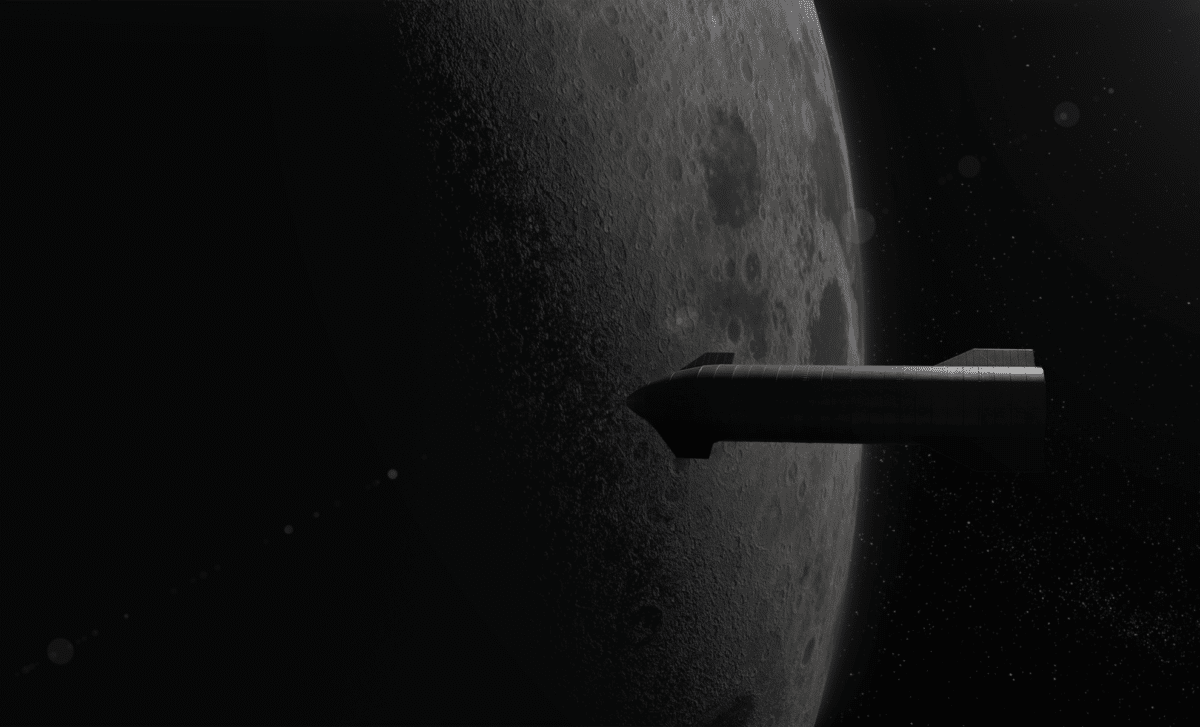
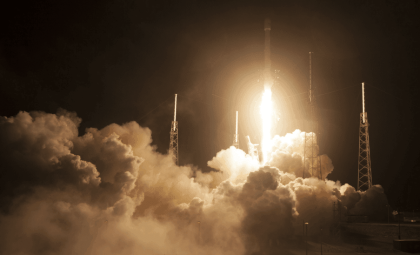
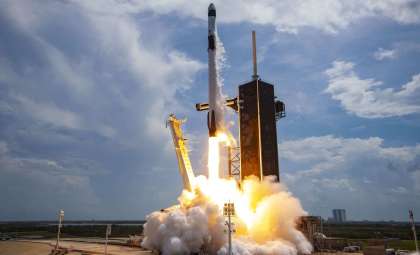
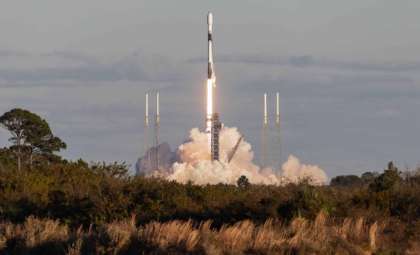
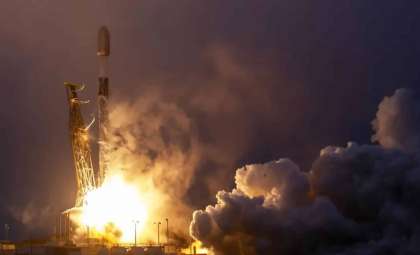
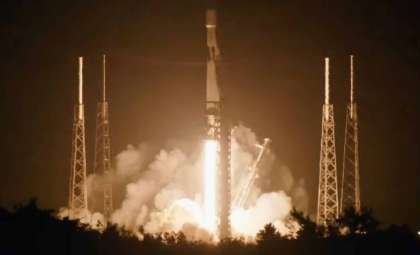
In August, a used upper stage from a SpaceX Falcon 9 rocket is predicted to crash into the Moon, an event drawing keen interest from scientists and skywatchers worldwide, as reported by Space.com.
Global Research Community Watches as Lunar Impact Approaches
The lunar surface is about to experience an extraordinary occurrence that combines the legacy of space missions with ongoing scientific inquiry. A discarded SpaceX Falcon 9 upper stage, previously supporting NASA’s Commercial Lunar Payload Services program, has been steadily orbiting before now being expected to collide with the Moon. Current projections indicate it will strike at high velocity near Einstein Crater or possibly beyond the Moon’s visible edge. Because its exact impact site remains uncertain, this complicates efforts to anticipate how visible or scientifically informative the collision will be.
Enthusiasts are preparing for a potential event along the Moon’s far western boundary—where observational chances hinge on orbital geometry. Even minor trajectory updates could drastically change how astronomers plan their watch. This has led to an internationally coordinated observation campaign from both amateur and professional astronomers. The goal is not to prevent the crash but to capture data from a rare human-made lunar impact experiment.

Following the Trajectory of a Moon-Bound Rocket Stage
As detailed by Space.com, the rocket section involved is an upper stage of a Falcon 9 tied to earlier lunar cargo missions under NASA’s CLPS initiative. Scientists have traced its orbit using telescopic observations combined with orbital dynamic models that predict how debris drifts in space beyond Earth. One significant hurdle is the uncertainty in long-term predictions due to subtle gravitational influences, causing a broad estimated impact area spanning multiple kilometers across the lunar terrain.
Researchers are constantly updating their forecasts as fresh data arrives. The estimated impact timing centers around August 5 but remains subject to revision since minute shifts may affect when and where the event can be observed from Earth. Moving at several kilometers per second, the booster is expected to generate enough force to carve out a noticeable crater when it hits, offering a unique chance to study the Moon’s regolith response. Observation teams worldwide are mobilizing to catch this fleeting and unpredictable moment.
Bill Gray from Project Pluto expressed measured caution about the changing predictions: “I’ve gone from ‘probably’ to ‘probably not,’ and more recently, to ‘maybe,’”
He elaborated on the inherent challenges: “Even though we have tracked it since launch, our idea of when and where it’s going to hit are currently fuzzy by minutes and dozens of kilometers,” Gray noted. “But we will refine that and get an idea of where it’s going to hit.”
Scientific Interest in the Moon’s Impact Outcome
Scientists are eager not only to confirm the strike but to learn what the impact reveals about lunar surface processes. The Moon’s lack of atmosphere means objects hit with no atmospheric drag, releasing energy instantly into its dusty surface. This can create a visible flash and send debris lofting far above the ground. Researchers want to study how ejecta behaves in the Moon’s weak gravity and how dust and plumes form and spread.
Observations from Earth and lunar orbiters may combine to shed light on this. The event also serves as a test for planetary defense instruments aimed at identifying impact flashes, which can be tricky to distinguish from sensor glitches or cosmic rays. Reliable detection depends on multiple observations across the globe, emphasizing international coordination over isolated efforts.
Brian Day from NASA’s SSERVI highlighted the larger importance of such impacts, stating:
“One of the things that is really important here with this impact that is coming up is it serves as a reminder to us that the moon is a dynamic environment. We think of it as being static. It is not. It is being whacked. It is changing,” Day said.
He also encouraged public involvement in observation campaigns, remarking:
“And that can be done either with instrumentation you have in your own backyard or you can use ours in orbit around the moon,” Day added. “This impact is a great reminder of this wonderful environment of the moon.”
Assessing Visibility From Our Planet
One key point of debate is whether the impact will be observable from Earth. Visibility depends heavily on the impact’s exact timing and position on the Moon, as well as sunlight conditions during the event. If the collision happens near the Moon’s edge (limb), viewers might witness only a quick flash or a dust cloud illuminated by the Sun. Expert views differ widely, reflecting the uncertainties in predicting both the impact itself and its visibility. Many scientists believe the event will be subtle and hard to detect with most telescopes. However, there remains a slim but plausible chance to observe it under ideal conditions. As August nears, predictions will become clearer.
William Cooke from NASA’s Meteoroid Environment Office explained the challenges:
“I think it’s going to be very subtle. I think it’s going to be very, very hard to see, if not impossible. But there’s always a chance,” said Cooke, who manages NASA’s Meteoroid Environment Office at the Marshall Space Flight Center in Alabama.
He also pointed out what might enhance detection chances:
“It will excavate that out of the crater and this may create a plume that will be illuminated by the sun,” Cooke added. “So, it’s not only important to look for the impact flash, but if this occurs close enough to the limb, you may be able to see that plume of material rising, and that would be significant as well.”
- Categories:
- News



0 comments
Sign in to Comment