
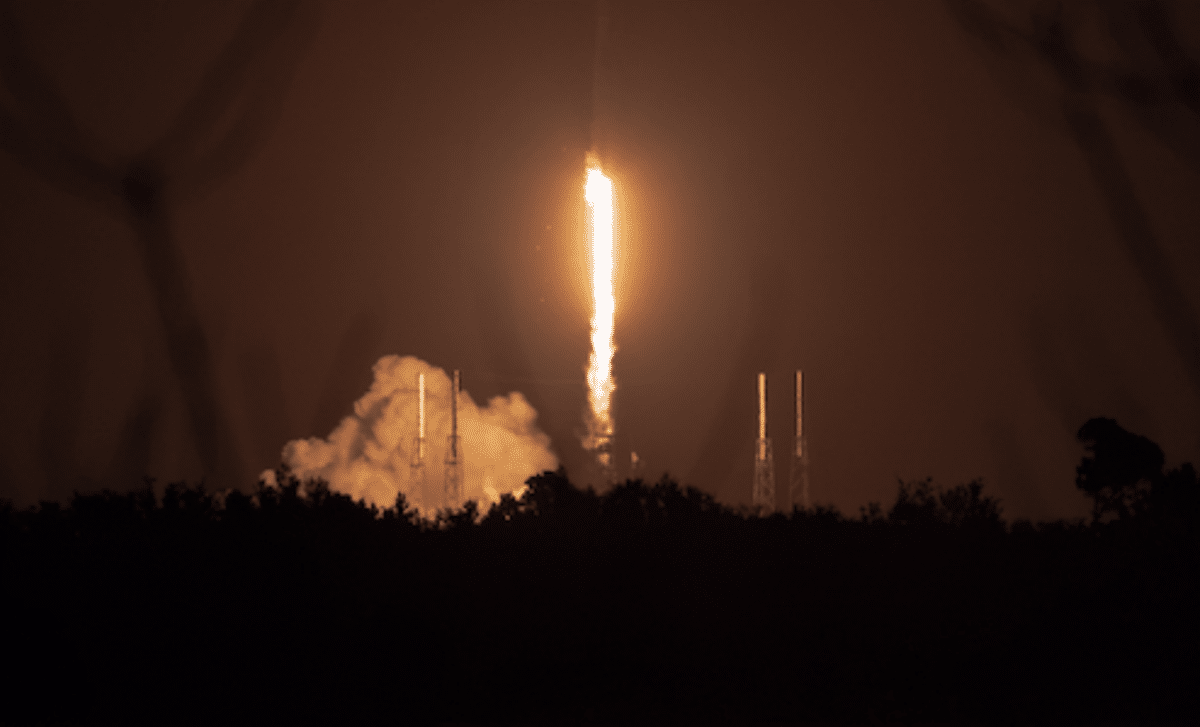
SpaceX has launched SXM-11, SiriusXM’s latest and most advanced communications satellite, on a Falcon 9 rocket from Cape Canaveral Space Force Station. This deployment marks a key advance in SiriusXM’s ongoing efforts to upgrade its satellite network. The Spaceflight Now report highlights that this mission delivered one of the heaviest commercial satellites for 2026, engineered to enhance SiriusXM’s radio coverage throughout North America for many years.
Falcon 9 Places Towering Satellite Into Geostationary Transfer Orbit
The launch occurred at 10:25 p.m. EDT on June 28 from Space Launch Complex 40, lofting the roughly 7.5-ton (15,000 pounds) SXM-11 satellite into a geostationary transfer orbit. Utilizing the seasoned Falcon 9 booster B1085 on its 17th flight, SpaceX demonstrated its reliability and rapid launch turnaround. Less than nine minutes post liftoff, the first stage touched down safely on the droneship A Shortfall of Gravitas stationed in the Atlantic Ocean, extending SpaceX’s record of booster recoveries. As covered by Spaceflight Now, the mission launched within a four-hour window amid favorable weather conditions after careful monitoring of Florida’s volatile summer storms. According to launch meteorologists:
“Flow aloft will be weak and variable, supporting daily storm motions that will be seabreeze and outflow dependent. This erratic nature of storm motion is more evident in today’s model runs, suggesting a higher risk of storms lingering closer to the coast later into the night,” they wrote.
Add Cosmo Herald as a Preferred Source“However, remnant storms and clouds should slowly diminish as the night wears on during both the primary and backup launch opportunities.”

These improving conditions allowed the countdown to proceed smoothly, culminating in another successful Falcon 9 launch.
Deployment of SXM-11 confirmed pic.twitter.com/Qci9ddqbHT
— SpaceX (@SpaceX) June 29, 2026
SXM-11 Aims to Replace Older Satellites and Broaden Service Reach
This launch contrasts recent commercial missions focused on broadband constellations; instead, SXM-11 updates SiriusXM’s geostationary broadcast infrastructure. It is set to substitute older satellites such as XM-5 (launched in 2010) and Sirius FM-5 (launched in 2009). Manufactured by Lanteris Space Systems, a division of Intuitive Machines acquired from the former Maxar Space Systems, the satellite rides on the IM-1300 bus. When fully extended, its expansive solar panels stretch nearly 106 feet, while the antenna system boosts its height to around 230 feet. Approximately 60% of the satellite's mass is fuel reserved for station-keeping operations in geostationary orbit. SiriusXM underscored the mission's significance on LinkedIn:
“After years of planning, engineering, testing, and collaboration, SXM-11 is set to launch aboard a SpaceX Falcon 9 rocket and begin its journey to orbit.” The company added, “As the most powerful high-powered satellite in SiriusXM’s fleet, SXM-11 will help enhance signal reception, expand coverage in Alaska, and support the delivery of audio entertainment and information services across the United States, Canada, and the Caribbean.”
These upgrades are anticipated to improve reliability and extend SiriusXM’s reach to millions of listeners over a widespread geographical area.
A Strategic Investment for Sustained Satellite Radio Service
The SXM-11 launch signifies more than a mere equipment swap; it is part of a comprehensive fleet refresh aiming to guarantee SiriusXM’s satellite service remains robust into the 2030s. Following the launch of SXM-10 in 2025, financial data suggest that model will stay active until around 2040. These modern satellites boost broadcast power, provide redundancy, and elevate reliability as older spacecraft near retirement.
Investing in next-generation, high-capacity geostationary satellites reveals SiriusXM’s strong belief in satellite radio as a fundamental business pillar, despite growing competition from streaming platforms. The deployment of these advanced satellites strengthens link quality and coverage across the US, Canada, Alaska, and the Caribbean. This mission also exemplifies the expanding collaboration between satellite operators and SpaceX, whose reusable rocket technology remains a favored choice for commercial communications satellite launches.
SpaceX Reinforces Leadership in Commercial Satellite Launches
For SpaceX, the delivery of SXM-11 supplements an already demanding flight roster encompassing commercial payloads, government missions, crewed flights, and the Starlink network expansion. The reflight of booster B1085 confirms Falcon 9’s longstanding reliability and launch flexibility.
Successful missions like this bolster SpaceX’s authority in a competitive launch market where operators prioritize dependable and timely access to orbit. The synergy of reusable rocket tech, consistent scheduling, and robust recovery methods continues attracting clients developing future satellite systems across various sectors. As SXM-11 starts its slow trek to its operational orbit, this mission highlights how satellite manufacturers and commercial launch providers join forces to renew critical communications infrastructure impacting millions daily.
- Categories:
- Space









0 comments
Sign in to Comment