
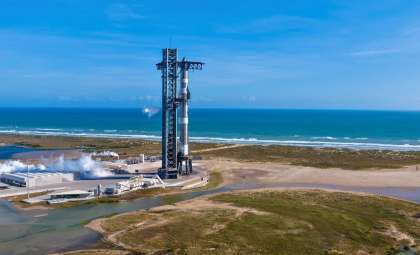
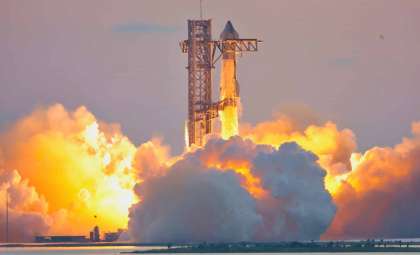
In a recent All-In Podcast interview, Elon Musk revealed bold plans for advancing SpaceX’s Starship initiative. He shared insight into upcoming enhancements designed to revolutionize the rocket’s orbital delivery capacity, with a strong focus on achieving full reusability. Such advancements are expected to lower launch expenses and accelerate flight frequency. Musk’s vision positions Starship not just as a launch vehicle for commercial satellites but as a vital asset for ambitious interplanetary missions—enabling the transport of heavier payloads into low Earth orbit and beyond.
Comprehensive Overhaul: Starship Version 3
SpaceX is gearing up to debut Starship Version 3, featuring extensive design changes. Musk noted that “almost every aspect of the rocket is altered in version 3,” highlighting a major shift in both the materials used and engineering strategies. Critical systems like propulsion, structural strength, and aerodynamics are being reexamined to meet the enhanced performance goals. Despite the significant improvements, Musk acknowledged potential challenges ahead, stating, “The new Starship is likely to experience some initial setbacks due to its radical redesign,” underscoring the complexity of such a comprehensive upgrade.
Full Reusability Within Grasp
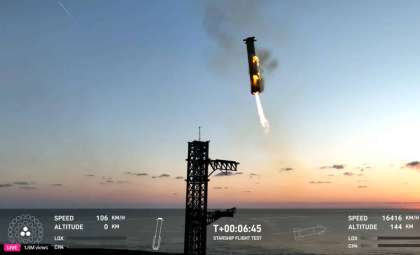
Striving for complete reusability remains a top priority for SpaceX, aiming to recover both the booster and spacecraft during launches. Musk confirmed that barring significant obstacles, “SpaceX plans to showcase full reuse capabilities next year, successfully recovering the booster and the ship while delivering more than 100 tons to orbit.” This milestone involves sophisticated engineering to optimize landing sequences, fuel management, and vehicle durability. Efforts are also focused on refining recovery methods to reduce wear, which is crucial for achieving rapid turnaround and sustaining Musk’s ambitious launch cadence.

Heat Shield: A Key to Reentry Success
The upgraded Starship incorporates an advanced heat shield crucial for its reusability goals. Musk pointed out ongoing challenges, explaining, “Much work remains on perfecting the heat shield for full ship reuse.” This protective layer must endure the intense heat of reentry while being lightweight and robust. Musk remarked, “We are addressing fundamental physical challenges—how to create a shield that resists heat, remains light, insulates the core structure, and maintains integrity without cracking.” Testing new materials and attachment methods is vital to guarantee the shield’s resilience over multiple missions, a necessity for lowering operational costs through reusability.
Future Horizons for Orbital Travel
Successfully deploying the revamped Starship could revolutionize space transportation economics and enable missions once deemed unfeasible. Transporting over 100 tons to orbit would facilitate expansive satellite networks, interplanetary cargo runs, and crewed missions to Mars. Musk envisions a future where this versatile vehicle supports commercial ventures alongside scientific exploration, fostering new discoveries in astronomy, planetary science, and extraterrestrial resource development. While challenges persist, Musk’s outlined progress portrays a promising path toward more frequent, affordable, and ambitious space launches.
- Categories:
- News








0 comments
Sign in to Comment