

The Federal Aviation Administration (FAA) has authorized SpaceX to conduct the fourth test launch of its Starship rocket.
Scheduled for Thursday, this flight represents a pivotal step in SpaceX's ambitious project to build a fully reusable spacecraft that can transport astronauts to the Moon, Mars, and destinations beyond.
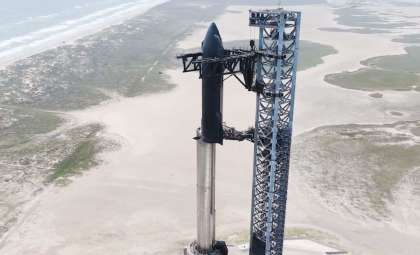
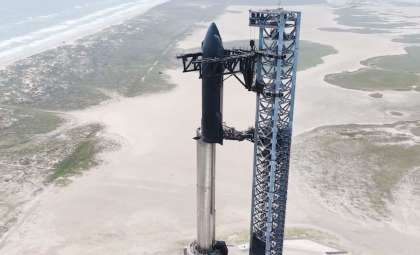
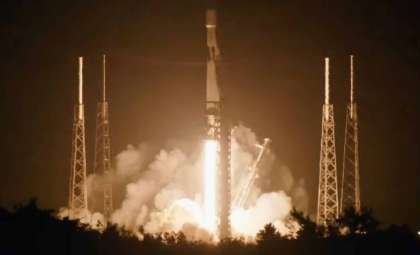
The Starship, recognized as the most potent rocket ever engineered, will lift off from SpaceX’s private Starbase facility located in Boca Chica, Texas. The launch window spans 120 minutes, beginning at 8 a.m. ET, and viewers can watch the launch live on SpaceX’s website approximately 30 minutes prior to the scheduled liftoff.

FAA’s Criteria and SpaceX’s Readiness
On Tuesday, the FAA issued the launch license, affirming that SpaceX has complied with all regulatory safety protocols and licensing mandates for this upcoming test flight.
The FAA described three possible failure scenarios during Starship’s atmospheric reentry that would not trigger an automatic investigation: thermal shield failure, partial loss of control mid-flight, and engine failure during the final landing phase.
The agency added, “Should any other type of anomaly occur with Starship, or if issues arise with the Super Heavy booster, an investigation may be necessary.”
SpaceX must inform the FAA ahead of time if it plans to execute an uncontrolled reentry. This collaborative agreement indicates that SpaceX and the FAA have aligned on likely failure modes and how to manage them efficiently during the testing cycle.
History of Starship Test Missions
Each test flight of Starship has offered critical lessons for SpaceX’s ongoing development efforts. The inaugural flight in April 2023 ended in an explosion shortly after launch, damaging the rocket and its launch site. This early failure provided vital insights for enhancements.
The second mission in November 2023 also faced difficulties, failing to reach space and resulting in vehicle destruction. Despite setbacks, SpaceX values these experiences as crucial for rapid progress. “We’re continuing to rapidly develop Starship, putting flight hardware in a flight environment to learn as quickly as possible,” SpaceX stated.
The third flight in March 2024 achieved several important milestones by reaching space and collecting essential data, although the vehicle broke apart upon reentry. This test solidified Starship’s capabilities and guided improvements based on “rapid spiral development,” a strategy emphasizing swift iteration with prototype flights.
Upgrades for the Fourth Launch
For the upcoming launch, SpaceX has implemented a series of hardware and software refinements. Key among these is an upgraded thermal protection system designed to better endure the extreme heat encountered during reentry.

Enhancements to the propulsion system aim to improve dependability and performance during critical launch and landing sequences, while updates to the flight software focus on handling complex flight dynamics and control challenges experienced in earlier tests.
SpaceX has also bolstered the structural durability of both Starship and the Super Heavy booster. Upgrades to the launch pad infrastructure seek to avoid damage similar to that sustained in the initial test. These improvements are intended to reduce risks and boost overall mission safety and success.
According to SpaceX, “The primary goals will be to complete a landing burn and achieve a gentle splashdown in the Gulf of Mexico with the Super Heavy booster, along with achieving controlled reentry of Starship.” These refinements significantly raise the prospects for a successful mission outcome and spacecraft recovery.
Implications for Space Exploration
The success of the Starship program is crucial for SpaceX’s long-term vision. CEO Elon Musk highlights Starship as central to the company’s objective of sending humans to Mars. Additionally, NASA has selected this vehicle to return astronauts to the lunar surface under the Artemis program, marking the first moon landing in over fifty years. This effort is part of a broader international effort to establish a sustained human presence on the Moon and prepare for deeper space missions.
The fourth Starship flight will advance the development of a fully reusable transportation system capable of ferrying crews and cargo to low Earth orbit, the Moon, Mars, and beyond. SpaceX emphasizes its fast-paced approach: “We’re continuing to rapidly develop Starship, putting flight hardware in a flight environment to learn as quickly as possible.”
As the company refines its technology through ongoing testing, it moves steadily toward realizing a revolutionary future in space travel. SpaceX’s progress pushes the envelope of space exploration and works to make interplanetary journeys a reality.
- Categories:
- Astronomy ,
- News ,
- Space ,
- Aircraft








0 comments
Sign in to Comment