
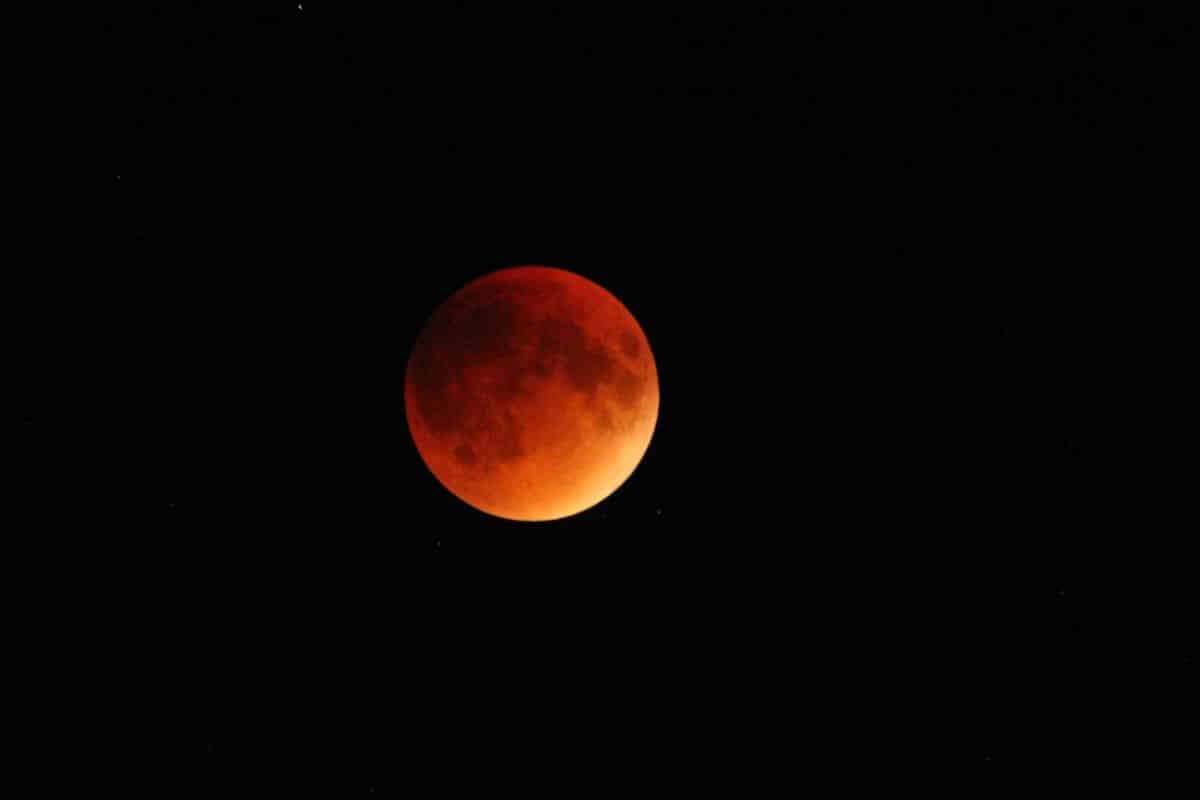
This week, a striking blood moon will illuminate the night sky with a haunting reddish glow. Marking the first total lunar eclipse in over two years, this rare event offers a spectacular show for stargazers across various continents.
The Earth, moon, and sun will align perfectly, casting Earth’s shadow fully over the moon, which then takes on a vivid crimson shade. Often surrounded by legends, this captivating phenomenon is actually a remarkable demonstration of how our atmosphere affects light. Here’s everything you need to know about when, where, and how to observe it.
The Cause Behind the Moon's Red Color
During a total lunar eclipse, Earth blocks direct sunlight from reaching the lunar surface. Still, some sunlight reaches the moon after bending around Earth's atmosphere.

As sunlight travels through the thick layers of the Earth’s atmosphere, shorter blue and violet wavelengths scatter away, leaving behind red and orange hues that continue onward. This same atmospheric effect is responsible for the vivid colors observed during sunrises and sunsets, giving the eclipsed moon its distinctive reddish glow.
NASA explains the effect as all of Earth’s sunrises and sunsets projected simultaneously onto the lunar surface.
Timing and Viewing Locations for the Blood Moon
The total lunar eclipse will occur from the evening of March 13 into the early morning of March 14. Its visibility depends heavily on your location and weather, with the best viewing opportunities across North and South America, Europe, and parts of Africa. The key times in Eastern Time (ET) are:
- 1:09 AM ET: Partial eclipse starts as Earth’s shadow begins to cover the moon.
- 2:26 AM ET: Total eclipse commences, turning the moon a deep red.
- 3:31 AM ET: Total eclipse finishes; the moon begins moving out of Earth’s shadow.
- 6:00 AM ET: The eclipse concludes, and the moon regains its usual appearance.
For optimal viewing, find a dark spot away from city lights. Although the eclipse can be seen with the naked eye, binoculars or a telescope will reveal more surface details of the lunar landscape.
Tips for Capturing the Blood Moon in Photos
Photographing the blood moon demands preparation due to the low-light conditions during totality. Using a tripod is crucial for steady shots and to prevent blur caused by hand movement.
Extending exposure times by several seconds helps brighten the moon’s reddish glow, and manually adjusting focus enhances sharpness, since autofocus struggles under dim lighting. Employing a telephoto lens or a smartphone zoom attachment can highlight detailed surface features such as craters.
Missed the Event? More Eclipses Are Ahead
If clouds or commitments prevent you from witnessing this event, rest assured there are two more total lunar eclipses coming soon. The next will occur in September, followed by another in March of next year.
Many space organizations, including NASA, offer live broadcasts of these eclipses, allowing enthusiasts worldwide to experience the spectacle in real time online.
- Categories:
- Space







0 comments
Sign in to Comment