
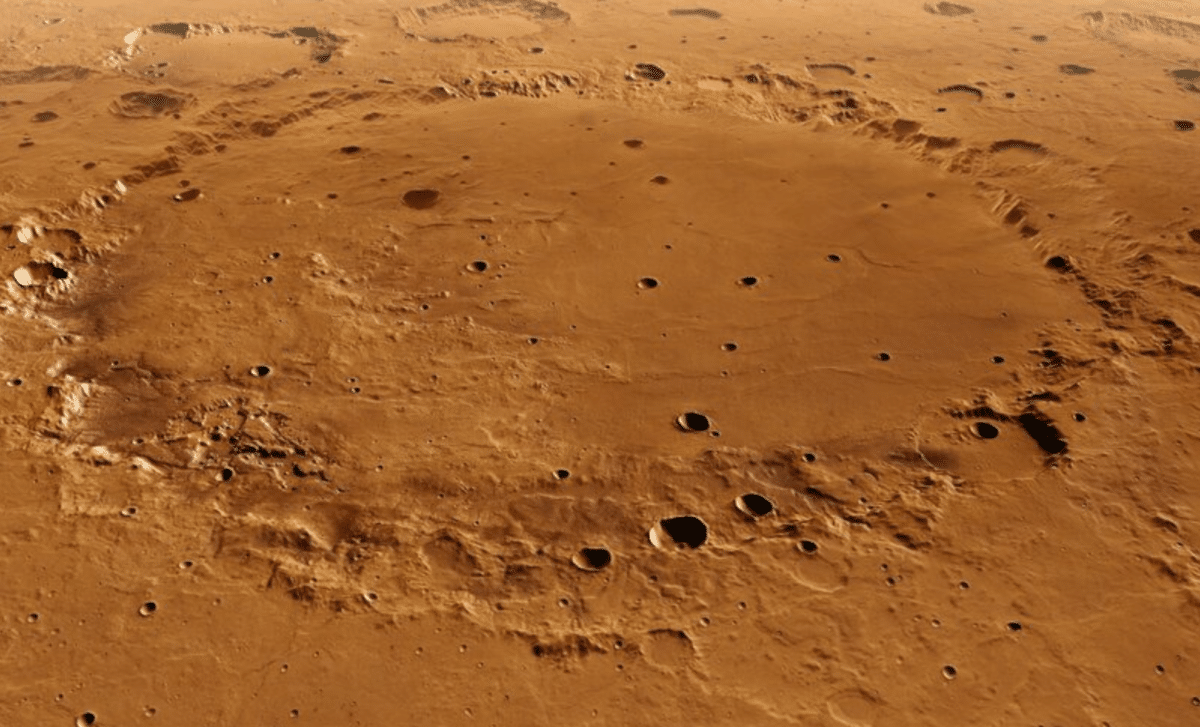
The European Space Agency (ESA) has delivered an exceptional aerial view of Flaugergues Crater on Mars through footage from the Mars Express mission. This flyover sequence glides over rugged Martian terrain framed by towering cliffs, highlighting the planet's textured landscape. The captivating video showcases the vast impact crater and surrounding ridges, offering an intimate look at Mars’ ancient, battered surface—unveiling both well-known landmarks and lesser-seen features. In this article, we explore the significance of this imagery, the science underpinning it, and the sophisticated technology employed to capture these views.
Exploring the Dramatic Terrain: The Unique Features of Flaugergues Crater
As a testament to Mars’ turbulent history, Flaugergues Crater serves as a valuable geological archive. Impact craters like this provide vital clues regarding the planet's evolutionary timeline. Nestled among other age-old formations, Flaugergues forms part of a rich topographical tapestry chronicling Mars’ dynamic past. The adjacent landscape is marked by rugged cliffs and jagged ridges shaped through millennia of erosion and meteorite bombardment.
This flyover’s aerial vantage offers scientists an unparalleled viewpoint, allowing detailed examination of both the main crater and the intricate smaller structures around it. Each feature contributes insights into Mars’ geological and environmental history.

Behind the Scenes: How ESA Created This Remarkable Mars Flyover
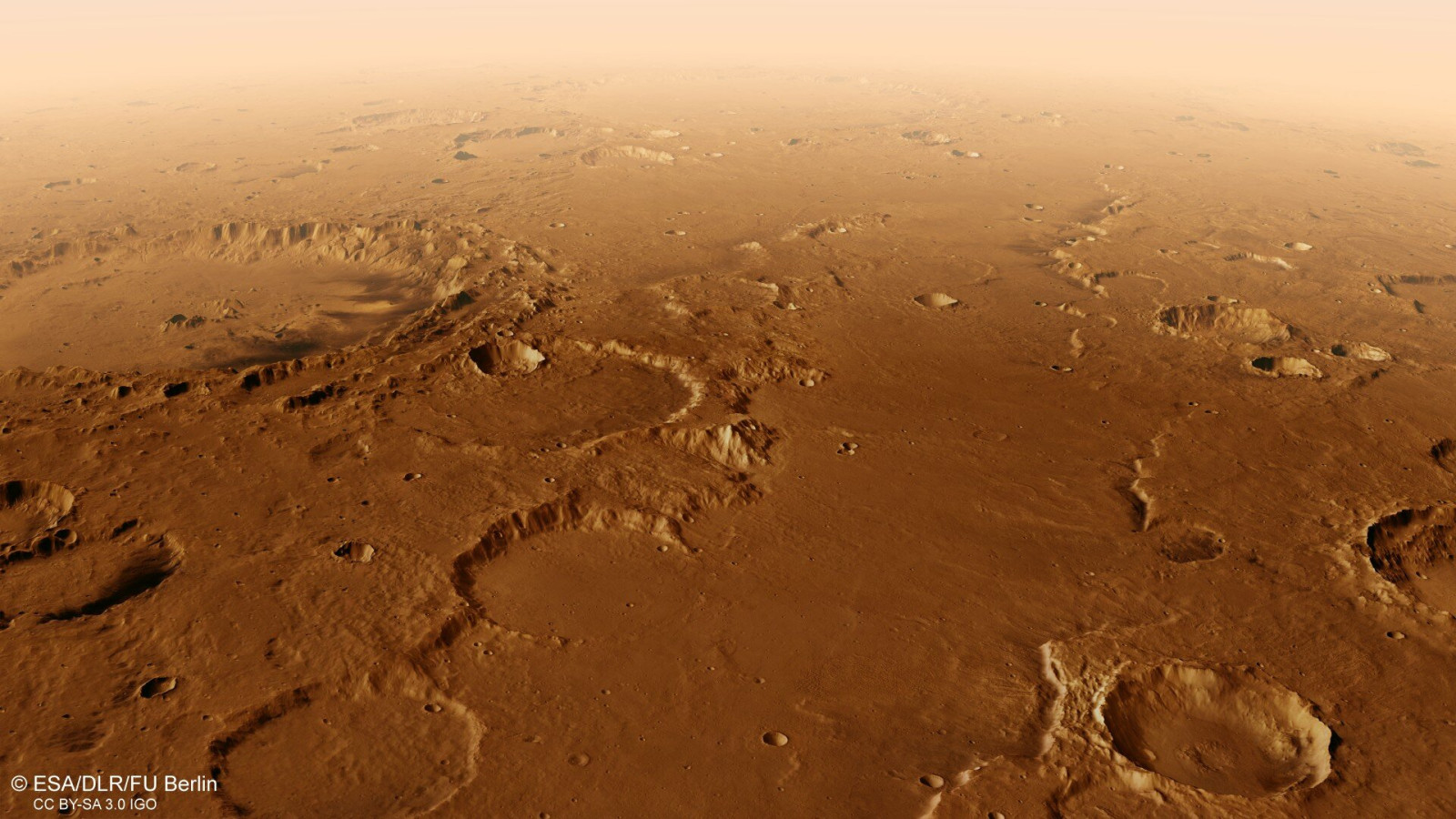
The captivating footage stems from the Mars Express mission’s High Resolution Stereo Camera (HRSC), which compiles high-definition images together with detailed topographic measurements. This combination enables generation of precise three-dimensional representations of the Martian landscape. Through these 3D models, experts can analyze physical features including crater dimensions and surface texture with unprecedented accuracy.
A defining aspect of this flyover video is the incorporation of atmospheric shading effects. The distant haze visible approximately 250 km away simulates Mars’ dust-laden atmosphere, adding a realistic, soft visual layer that also cleverly conceals the edges of the terrain model, enhancing the immersive quality of the scene.
ESA’s Mars Express: Unlocking Mars’ Ancient Mysteries
Since its 2003 launch, ESA’s Mars Express has been pivotal in deepening human understanding of Mars through comprehensive data acquisition and imagery. The mission’s High Resolution Stereo Camera stands out as a cutting-edge instrument that continues to unveil detailed Martian topography, enriching scientific knowledge of the planet’s geology.
The Flaugergues Crater flyover represents just one of many extraordinary findings made possible by Mars Express. Ongoing examination of Mars’ surface enhances insight into its climatic history, past habitability possibilities, and planetary development as seen through ESA’s efforts.
Interpreting Martian Craters: Windows to the Red Planet’s Past
Martian craters are not merely surface marks—they offer essential evidence about Mars’ environmental and atmospheric evolution. Investigations of craters like Flaugergues reveal data on the relative dating of terrain and potential historical presence of liquid water.
Scientists speculate that some craters might once have held lakes or larger bodies of water, possibly enabling microbial ecosystems. Mars Express’s consistent supply of high-resolution imagery is invaluable in advancing this search for signs of ancient life on Mars.
Mars Express and the Quest to Identify Signs of Life
ESA’s Mars Express mission aims to go beyond mapping, striving to uncover whether Mars could have supported life forms. The existence of ancient craters, such as Flaugergues, suggests historical environments that could have favored life. Detailed analysis of Martian soil, rocks, and atmosphere by the mission contributes critical evidence to this investigation.
The HRSC's ability to capture fine-scale images paired with 3D terrain profiling is vital for detecting subtle land features hinting at past water and habitability. This Flaugergues Crater imagery exemplifies Mars Express’s role in addressing profound planetary science questions.
ESA’s Advanced Technology Driving the Future of Mars Exploration
The technological advancements aboard Mars Express, led by its High Resolution Stereo Camera, have transformed space exploration capabilities. Besides delivering high-quality visual data, these technologies make it possible to create detailed 3D Martian maps, crucial for mission planning and selecting future landing sites.
The extensive data from Mars Express informs upcoming missions like the ExoMars rover, which will analyze the Martian surface with increased detail to continue the search for life. ESA’s innovations thus not only reveal Mars’ secrets but also pave the way for human expeditions on the Red Planet.
Flaugergues Crater: A Prime Target for Upcoming Mars Missions
Flaugergues Crater is rapidly becoming a focal point for ongoing and planned Mars research. Its distinct size and interactions with nearby terrain offer unique opportunities to study the planet’s geological and climatic history, directly supporting investigations into Mars’ past habitability.
Alongside other regional craters, Flaugergues provides vital information about atmospheric changes and surface evolution. It stands out as a promising location for future missions looking to uncover evidence of past life and further decode the planet’s environmental story.
- Categories:
- News








0 comments
Sign in to Comment