
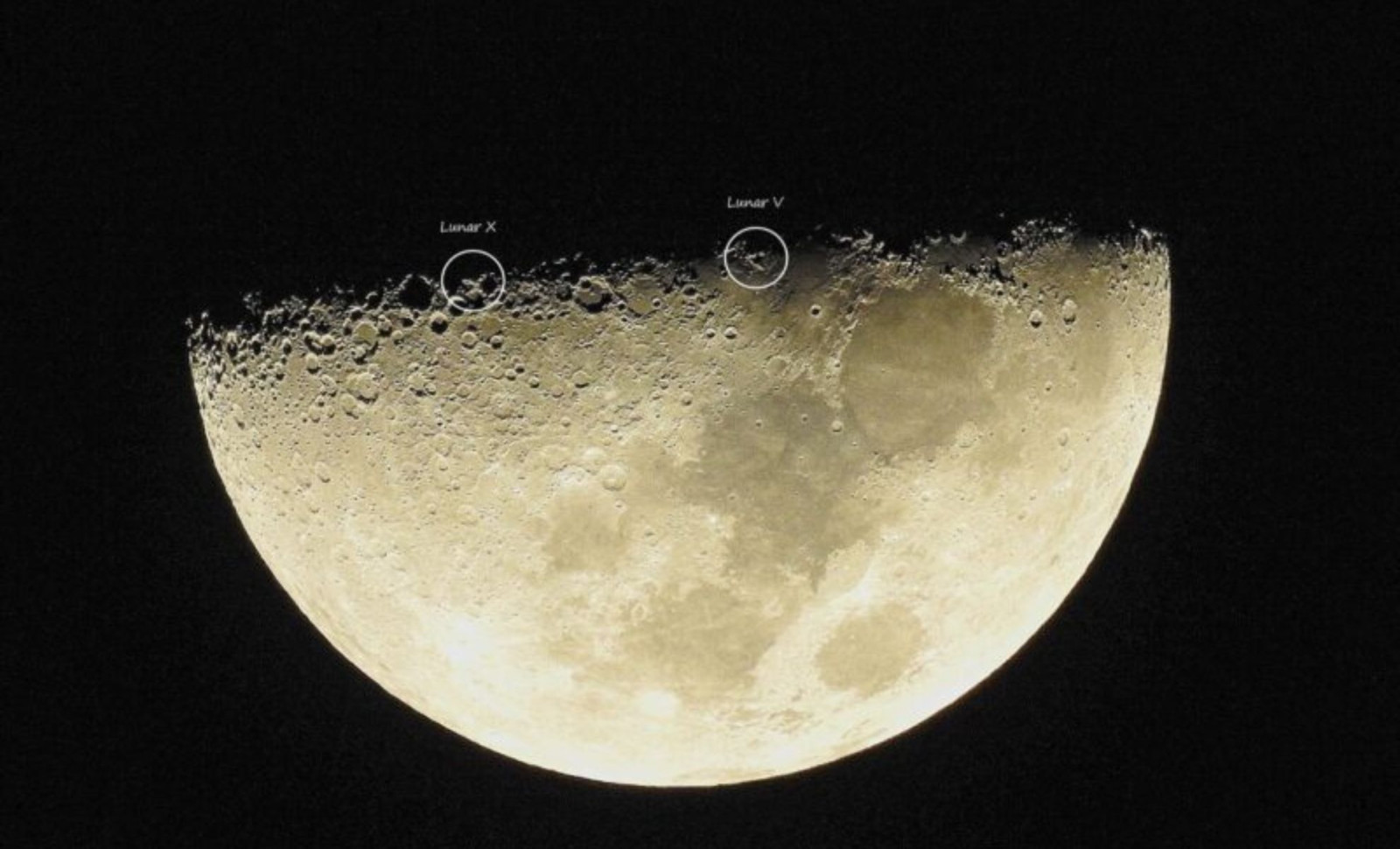
During the period surrounding the moon’s first quarter, observers can witness two remarkable large letter-like patterns emerging on the lunar landscape. These luminous shapes, resembling an “X” and a “V,” will be visible overnight from May 23 to May 24, creating a striking spectacle across the moon’s face.
The moon’s appearance shifts continually as the sun’s angle changes relative to the surface. As sunlight moves over lunar craters, hills, and valleys, shadows stretch and retract, giving familiar features a fresh look from one night to the next.
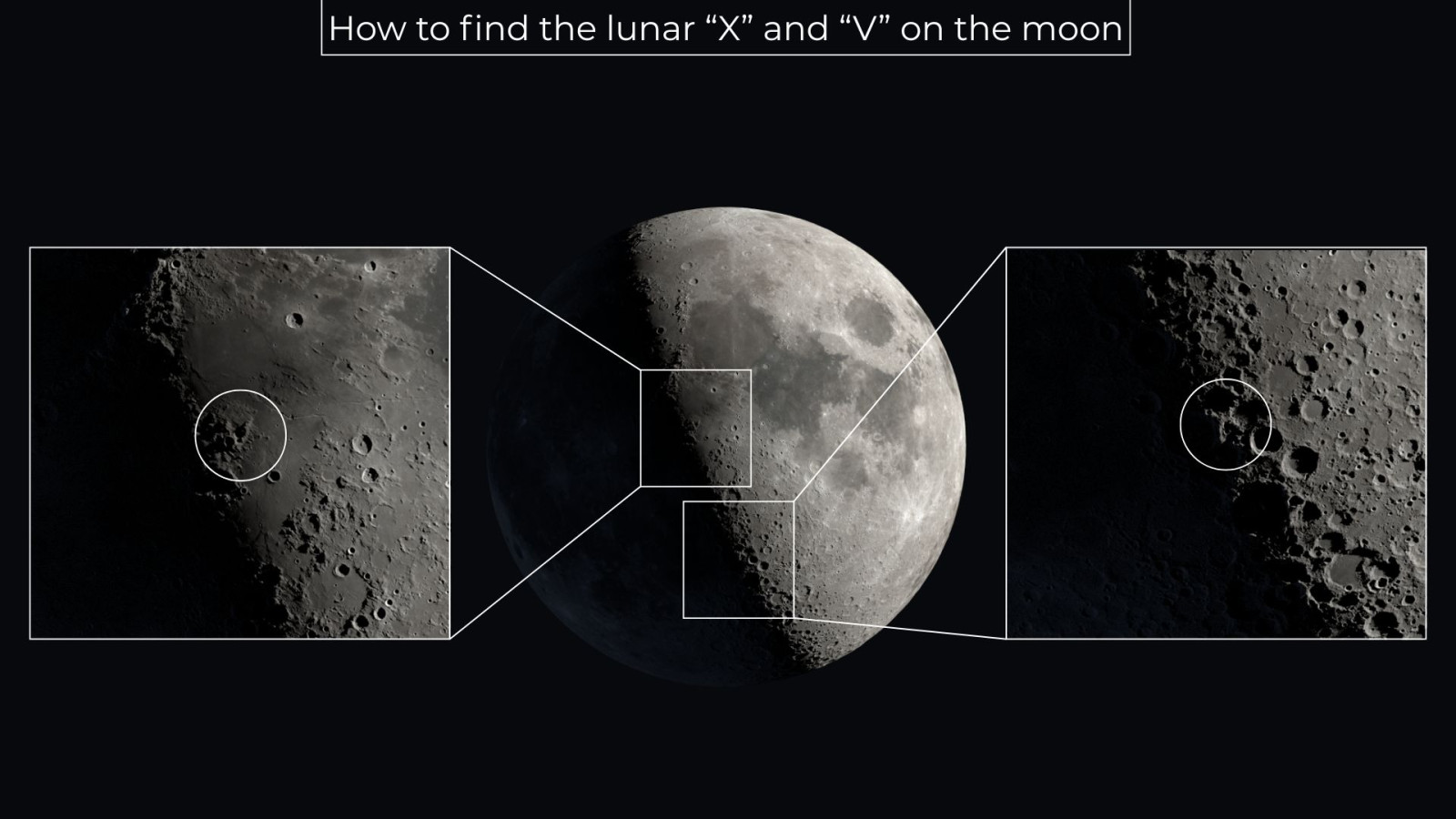
These visual phenomena fall under the category of clair-obscur effects, a term rooted in the French words for light and shadow. This effect capitalizes on the human brain’s tendency to recognize known patterns in irregular terrain, with the moon’s cratered surface offering perfect conditions for this optical illusion.

First Quarter Phase Brings Ideal Lighting Conditions
The luminous “X” and “V” become visible during the first quarter moon, when half of the lunar disk is bathed in sunlight. The illuminated portion is on the right, while the left remains in darkness.
The most dramatic contrast occurs along the terminator, the dividing line between lunar day and night. Here, the sun’s low-angle rays illuminate elevated features, casting long shadows over nearby lower ground.
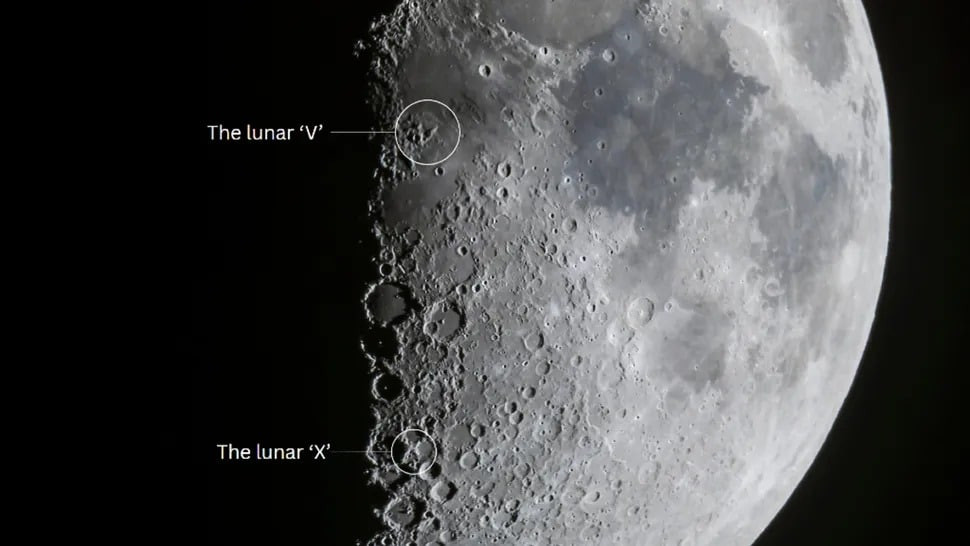
Space.com notes that these formations are best seen beginning at 6 p.m. EDT (2200 GMT) on May 23 and can be observed until the early hours of May 24.
Because these shapes depend on a fleeting alignment of light and shadow, the opportunity to view them is brief before they fade back into the moon’s rugged landscape.
Identifying the Lunar “V” Near Ukert Crater
The “V” formation, visible with binoculars or a small telescope, lies near the terminator between Sinus Medii and Mare Vaporum, about ten degrees north of the lunar equator. This shape arises when sunlight highlights the rim of Ukert crater, along with surrounding rough terrain and smaller impacts.
The source material explains this occurs because certain high regions catch direct sunlight, while nearby areas remain shaded.
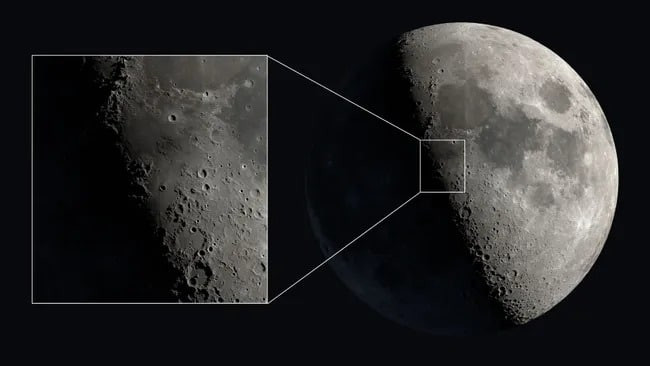
While initially challenging to distinguish within the dense crater fields, the letter shape becomes easier to recognize once located.
How the Lunar “X” Is Formed by Illuminated Crater Edges
Further south along the terminator, near 25 degrees below the lunar equator, viewers can spot the “X.” This formation results from several aged impact craters whose contours become especially prominent when struck by sunlight at low angles.
According to the report, sunlight striking parts of the crater rims of Purbach, Blanchinus, and La Caille creates the brilliant “X.” During this brief lunar cycle moment, only select crater edges are illuminated, while the surrounding terrain stays in shadow. This contrast produces the dramatic glowing shape against the darker surface.
- Categories:
- Astronomy










0 comments
Sign in to Comment