
For many years, the mystery of what existed before the Big Bang has eluded cosmologists. Utilizing cutting-edge computational methods grounded in Albert Einstein’s general relativity, scientists are now delving into cosmic epochs once deemed unreachable. A comprehensive overview published in Living Reviews in Relativity showcases how numerical relativity is emerging as a powerful approach to explore the universe's infancy and to evaluate theories that were once purely speculative.
The Challenge of Exploring the Universe’s Earliest Moments
The difficulty arises from a fundamental barrier in physics. When Einstein’s equations are applied backward in time, they lead to a singularity—an extreme point where density, temperature, and spacetime curvature become infinite. At this frontier, conventional mathematics fails, leaving the exact origins of the cosmos beyond clear scientific explanation.
Classic cosmological models treat the universe as a smooth and uniform expanse, which successfully aligns with large-scale observations like cosmic structure and the cosmic microwave background. However, the early universe was likely far more tumultuous, with intense gravitational fluctuations, erratic spacetime warps, and irregular matter distributions. Such conditions challenge standard assumptions, limiting scientists’ understanding of what truly occurred at the universe’s dawn.

This barrier has spurred ongoing debates over various hypotheses, including cosmic inflation, cyclic models, and bouncing universe scenarios, all attempting to account for the universe’s emergence.
Numerical Relativity Paving a Path into the Unknown
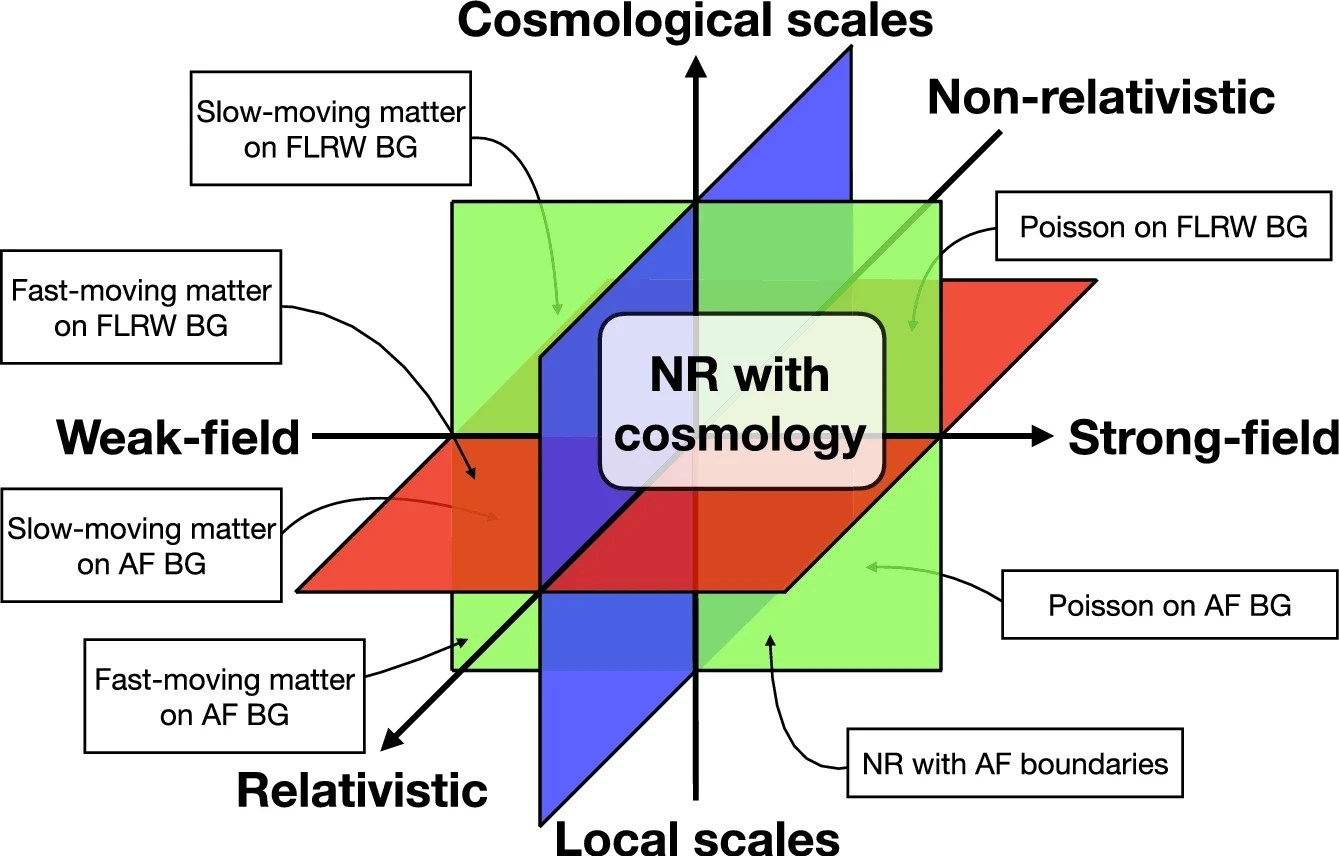
Numerical relativity offers a revolutionary approach. Instead of relying on equations solvable by hand, it harnesses the power of supercomputers to approximate solutions in scenarios too intricate for analytic methods. This approach has already revolutionized astrophysics by enabling precise models of black hole mergers and predicting gravitational wave patterns detected by facilities like LIGO.
Cosmologists are now applying these techniques to simulate universes with asymmetries and irregular features, studying their evolution through Einstein’s full equations. This enables testing if early universe models remain robust or falter when exposed to realistic gravitational complexities.
Researcher David Lim states, “You can search around the lamppost, but you can’t go far beyond the lamppost, where it’s dark—you just can’t solve those equations. Numerical relativity allows you to explore regions away from the lamppost.”
His metaphor captures this field’s ambition: moving beyond well-understood, mathematically manageable areas into previously inaccessible realms of cosmological inquiry.
Exploring Pre-Big Bang Scenarios
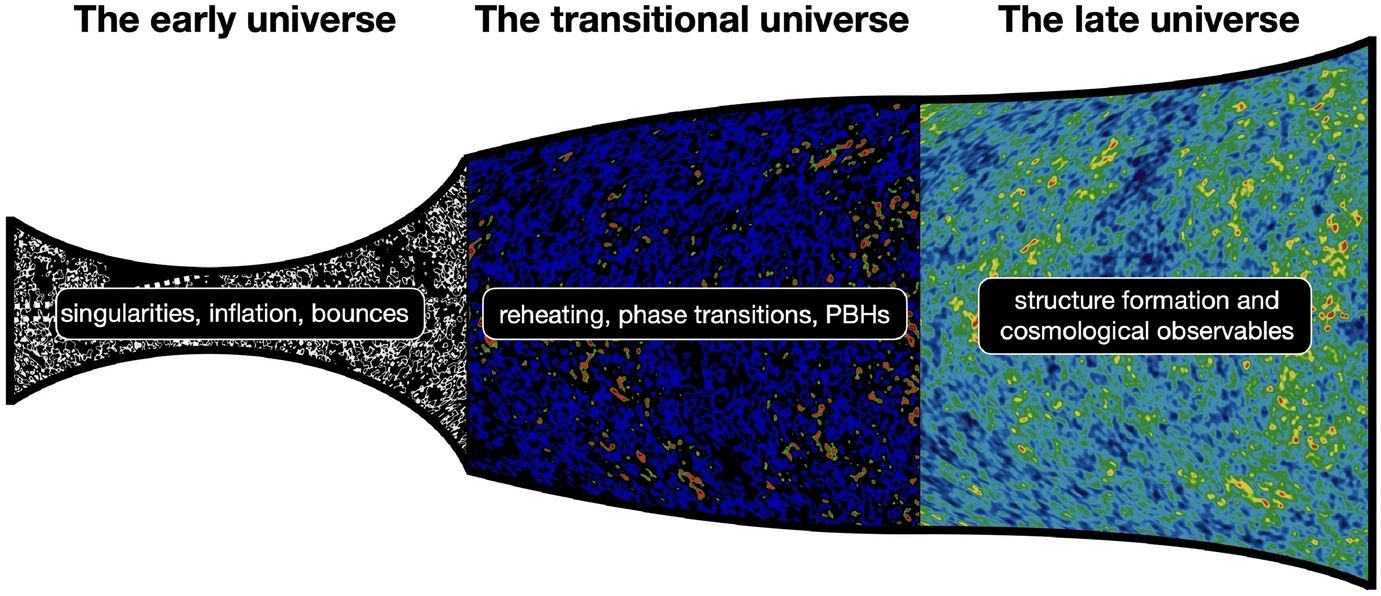
One compelling avenue involves theories positing that the Big Bang was not the inception of all existence. Certain models suggest the cosmos undergoes endless cycles of contraction and expansion, while others propose a previous phase collapsed before initiating the current universe’s expansion.
Until now, proving these theories viable under authentic physical conditions has been a major hurdle. Elegant on paper, some scenarios might collapse under the influence of gravity, uneven matter distributions, and relativistic effects. Numerical relativity enables rigorous testing of these ideas.
The review in Living Reviews in Relativity suggests simulations might confirm the stability of bounce models, the natural onset of inflation amid chaos, and whether alternative origin theories produce observable phenomena detectable by astronomers.
Additionally, these computational methods interrogate phenomena like cosmic strings, primordial black holes, bubble collisions, and the turbulent preheating phase post-inflation. Such processes could leave imprints in gravitational waves or subtle cosmic microwave background irregularities, opening avenues for future observational verification.
Uniting Scientific Disciplines for Deeper Insights
The publication also addresses a broader challenge: bridging the gap between cosmologists and numerical relativists, two communities that have historically operated independently despite overlapping goals around gravity and cosmic evolution.
Authors advocate for enhanced collaboration, combining numerical relativists’ expertise in tackling Einstein’s equations under extreme scenarios with cosmologists’ detailed understanding of data and universe models.
Lim stresses the importance of fostering this alliance. “We hope to actually develop that overlap between cosmology and numerical relativity so that numerical relativists who are interested in using their techniques to explore cosmological problems can go ahead and do it,” he says. “And cosmologists who are interested in solving some of the questions they cannot solve, can use numerical relativity.”
Such interdisciplinary partnerships may prove crucial as computational models grow more advanced and resources expand, potentially transforming longstanding philosophical puzzles into questions that can be addressed through empirical science.
- Categories:
- Astronomy




0 comments
Sign in to Comment