
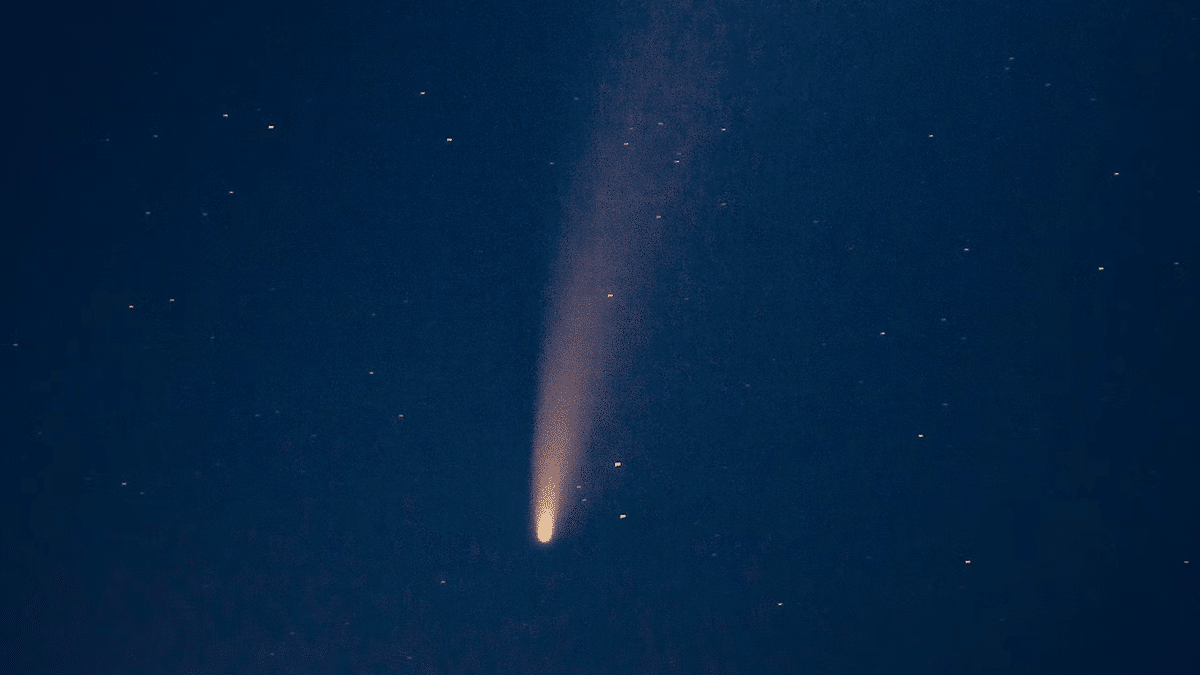
On a recent Saturday night in Spain, an unusual event captured the attention of both sky enthusiasts and scientists. Initially mistaken for a meteorite, the bright fireball was later identified as a comet fragment, illustrating the dynamic nature of our solar system and its ongoing interactions with Earth.
Tracking the Phenomenon
The European Space Agency (ESA) played a pivotal role in detecting this celestial object. Using their bolide camera, they recorded the event precisely at 22:46 UTC (or 0:46 Sunday local time in Spain). The fast-moving object traveled at an astonishing velocity of 45,000 meters per second (roughly 100,662 mph) and disintegrated at a height of 37.28 miles above Earth, leaving no physical remnants.
The dazzling light show lit the Spanish sky, impressing observers and capturing numerous images. Despite its brilliance, it remained undetected before entering Earth's atmosphere, underscoring the difficulty of forecasting such swift space visitors.

Scientific Analysis and Discoveries
Following the initial sighting, ESA’s Planetary Defense Office collaborated with the Spanish National Research Council Library and Archives Network (CSIC) to analyze the object’s characteristics. Their studies revealed it originated from a comet, based on its shallow flight angle of 10 degrees relative to the horizon and its distinctive blue glow, attributed to elevated magnesium content.
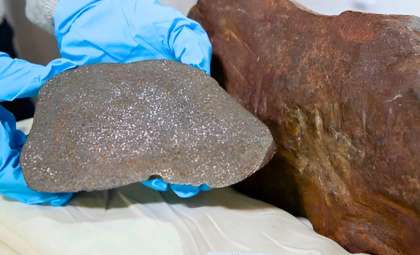
Although it was first reported as a meteorite, experts clarified the terminology: a meteorite refers únicamente a fragments that survive atmospheric entry to reach Earth’s surface. Since this fireball burned completely above the Atlantic Ocean without leaving debris, there is no material left to examine or recover.
Classified as a superbolide, the event exhibited an exceptional brightness of magnitude -16±1, outshining even the full moon. Such rare occurrences remind us of the energetic phenomena happening in near-Earth space.
Implications for Earth Safety
This recent event has prompted ESA’s Planetary Defense Office to contemplate potential hazards from space objects. The occurrence serves as a reminder that Earth regularly encounters extraterrestrial material, reinforcing the necessity for vigilant monitoring and preparedness.
Efforts are ongoing to enhance early-warning and detection technologies to improve response capabilities in future events. ESA continues to observe and study atmospheric entries to bolster protection strategies against possible cosmic threats.
Demystifying Space Terms
To better understand this spectacle, it's important to clarify the terminology. A bolide is an exceptionally bright meteor that surpasses the luminosity of any star visible in the night sky. More intense still, a superbolide produces light comparable to daylight, making these rare events particularly memorable.
This remarkable incident over Spain not only amazed viewers but also offered valuable insights for planetary defense research. It highlights the importance of closely monitoring cosmic events that could impact our planet.
Encounters like this emphasize humanity’s connection to the wider cosmos. They also serve as a call to stay observant and prepared for the diverse phenomena that space can bring our way.
- Categories:
- Space






0 comments
Sign in to Comment