

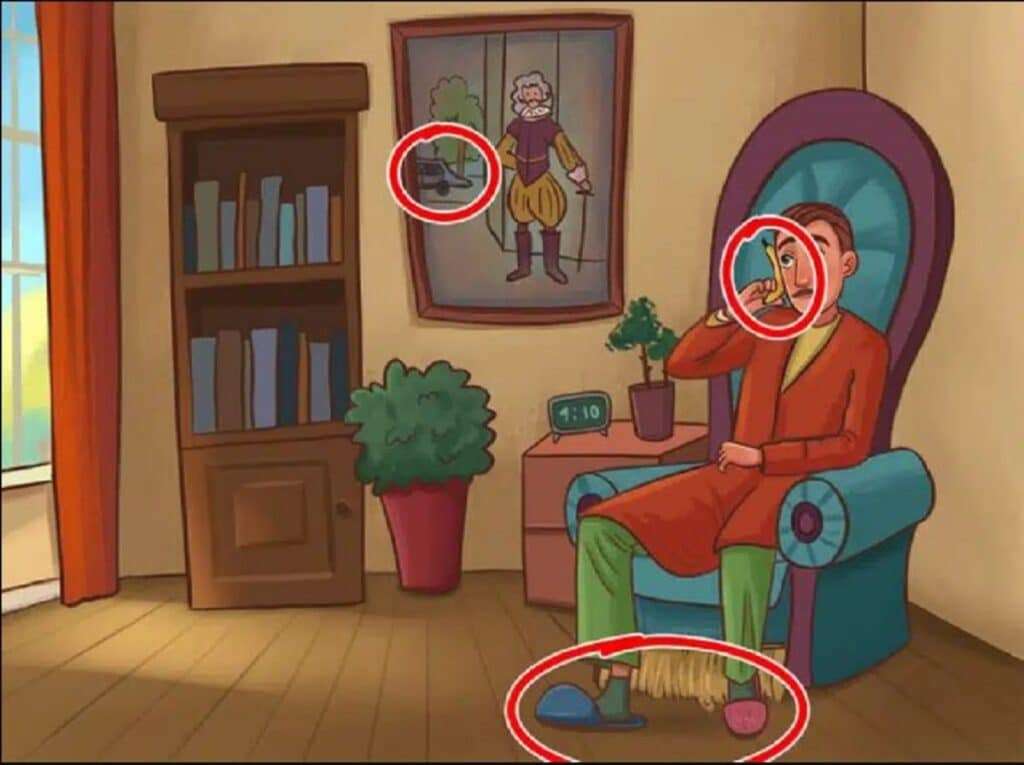
Get ready to challenge your brain with Mensa’s newest visual riddle that's capturing attention across social networks. This intricate visual puzzle has baffled even the most intellectual thinkers, as they strive to detect a hidden mistake within an apparently straightforward image. Are you ready to take on this challenge that's engaging sharp minds from across the globe?
A puzzle puzzling enthusiasts everywhere
Known for celebrating intelligence, Mensa has launched its latest visual brain teaser. At first glance, the picture looks flawless, but it contains a subtle discrepancy that only the most meticulous observers can identify. The objective is straightforward: find the error. Yet, as numerous puzzle fans have realized, pinpointing the flaw is far from simple.
What makes this riddle notably captivating is its deceptive ease. It doesn’t rely on complex calculations or rare knowledge, but rather tests perception and keen observation. Similar to how research links nearby supernovae to impacts on Earth's life, this puzzle plays with how we interpret visual cues.

Key aspects of this puzzle include:
- Assessing visual sharpness
- Challenging ingrained perceptions
- Encouraging unconventional thinking
- Stimulating analytical problem-solving
How to unravel the enigma: tips for success
Solving this visual mystery demands more than just sharp eyesight. Those who succeed use diverse strategies to reveal the hidden imperfection. One helpful tactic is to carefully examine the image in segments instead of trying to capture everything instantly. This organized approach helps avoid missing minor details that could be overlooked.
Another effective method is to question your assumptions, since the error might not be something added but rather something absent or misplaced. Reconsidering what you expect to see allows you to detect elements you might have initially ignored.
Here’s a table summarizing common problem-solving methods:
Method Explanation Segmented Scanning Carefully review each portion of the image Detecting Patterns Spot disruptions in repeating designs Side-by-Side Comparison Look for differences between similar objects Logical Context Assessment Judge if each part fits logically with the overall scene
Understanding the cognitive effects
This intellectually stimulating puzzle illustrates intriguing elements of how the human mind works. It demonstrates the ways our brains simplify and interpret visuals, often relying on mental shortcuts known as heuristics. While helpful in everyday life, these shortcuts can mislead when confronting cleverly designed puzzles.
The challenge also brings to light the idea of inattentional blindness — missing an obvious stimulus because attention is elsewhere. This explains why even highly intelligent individuals might initially overlook the hidden error.
Success in puzzles like this doesn’t always align strictly with IQ scores. Traits such as:
- Patience
- Determination
- Inventiveness
- Openness to revising assumptions
Are all vital components in cracking these complex puzzles. This diversity in skills highlights that intelligence involves many dimensions beyond what a single test can measure.
From pastime to real-world impact
Though this visual puzzle might seem like just an enjoyable challenge, the skills it develops are applicable in many professional fields, including quality assurance and scientific investigation.
Within cognitive research, puzzles like this provide crucial insights into perception and how our minds process visual information. They also aid advancements in emerging technologies such as artificial intelligence and computer vision.
Additionally, the widespread fascination with this puzzle underlines the human desire for mental stimulation and discovery. In today’s fast-paced digital world, a thoughtfully crafted puzzle offers a refreshing opportunity to engage deeply with complex problems.
As humanity advances in understanding the universe’s mysteries, such brain teasers remind us to observe carefully, think critically, and never cease questioning our surroundings.
- Categories:
- Trends











0 comments
Sign in to Comment