
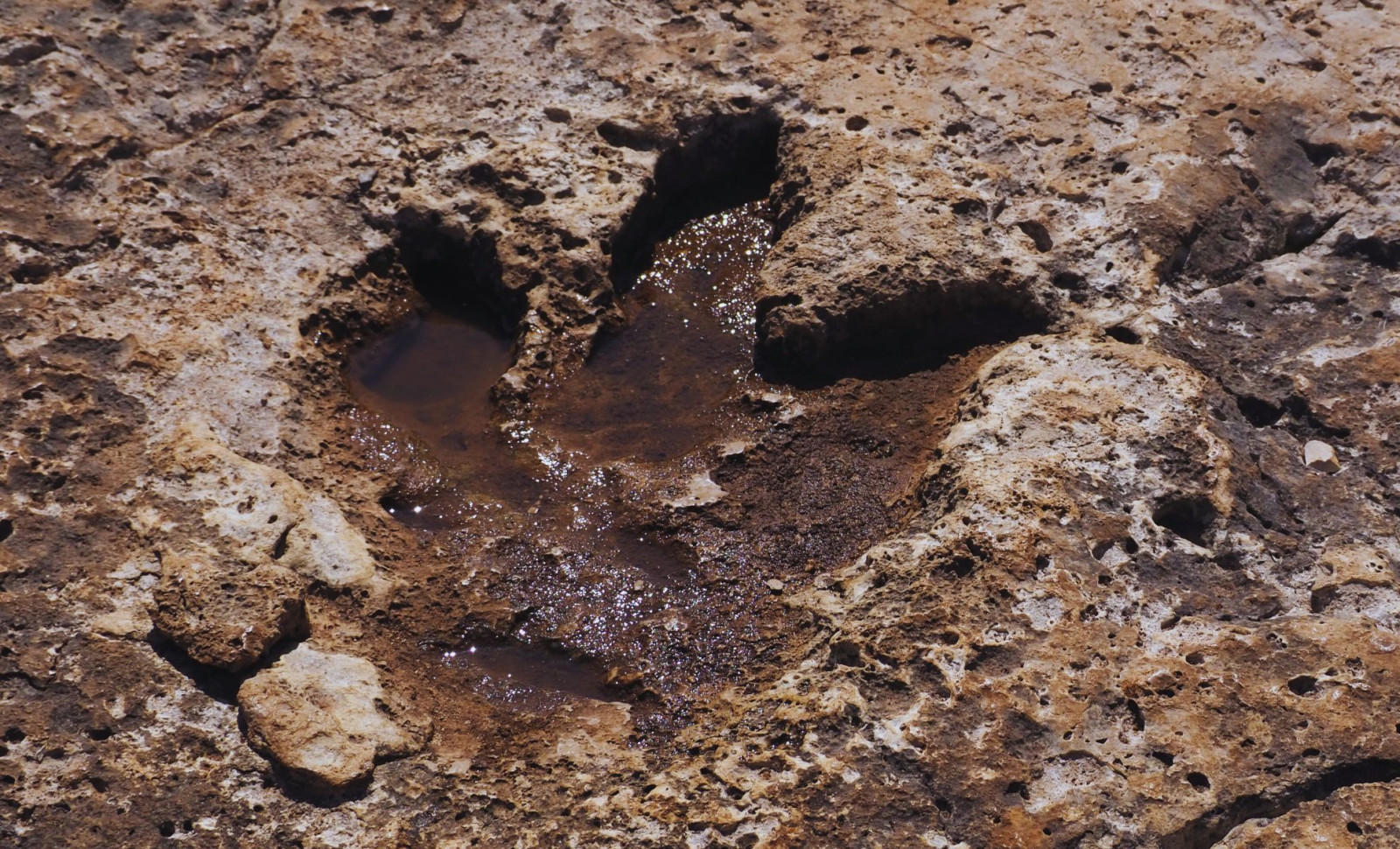
In central Texas, flooding unearthed fifteen dinosaur footprints estimated to be 115 million years old. These impressions, likely made by the carnivorous dinosaur Acrocanthosaurus, appeared along a creek in northwest Travis County.
The tracks were first spotted in early July by volunteers assisting with flood debris removal. Verification by paleontologists from the University of Texas at Austin confirmed their authenticity. While dinosaur footprints have been recorded in Texas before, this discovery stands out due to its scale and remarkable preservation.
Misidentified Predator Once Confused With T. Rex
As noted by ABC News, the distinctive three-toed prints probably belong to Acrocanthosaurus, a bipedal predator reaching lengths of about 35 feet. Matthew Brown, a paleontologist from the University of Texas at Austin, explained to CNN that although this species shares some resemblance with Tyrannosaurus rex, they are distinct and possess several differences.

Compared to T. rex, Acrocanthosaurus featured a slimmer skull, longer arms, and shorter legs. Its name means “high-spined lizard,” referencing the tall vertebral spines along its back. Despite its prominence as a predator, it remains less well-known, partly due to the scarcity of complete fossils.
Fossilized Footprints Highlight Ancient Ecosystem
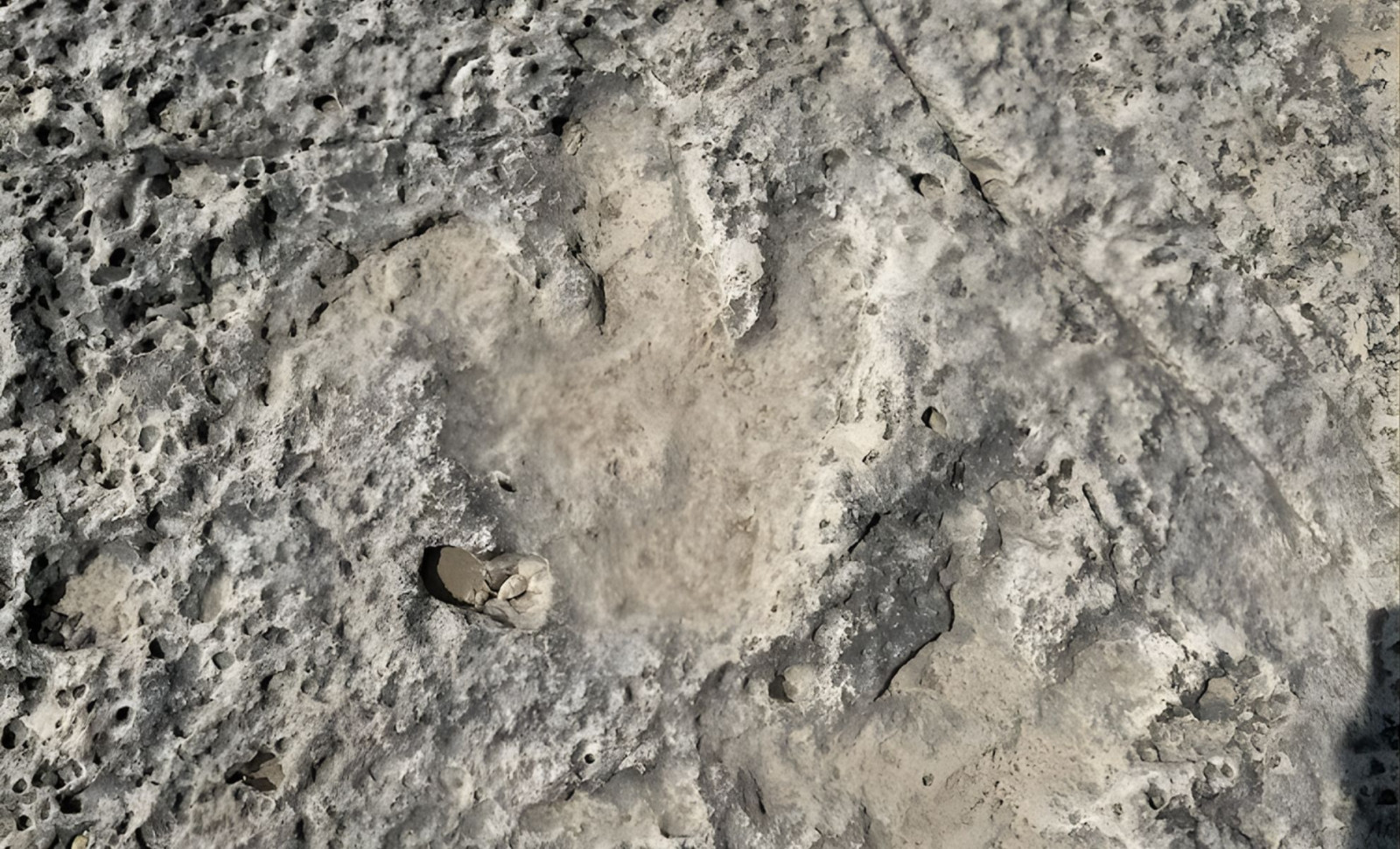
The trackways were preserved in sedimentary layers dating to the Early Cretaceous period, a time when Texas's landscape was markedly different. According to a report from the Jackson School of Geosciences,
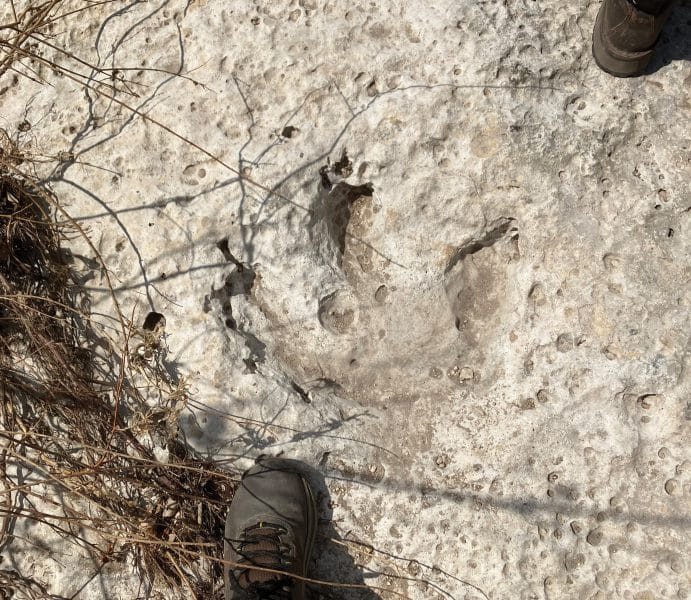
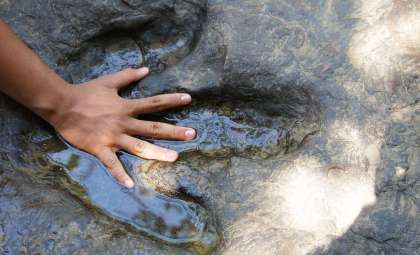
“The footprints, which are about 20 inches long, were probably made by Acrocanthosaurus, a large carnivorous dinosaur from the Early Cretaceous.”
During this era, an inland sea covered much of the territory, accompanied by a warmer and more humid climate influenced by volcanic activity. Dinosaurs such as Iguanodons, Pleurocoelus, and Technosaurus also inhabited the area.
The site of the tracks offers crucial insight into the habitat and movement patterns of Acrocanthosaurus across the once swampy, verdant terrain.
Measures to Preserve the Fragile Footprints
After confirming the discovery, specialists took steps to protect the footprints from damage caused by ongoing flood cleanup work. Brown mentioned collaborating with environmental monitors to keep heavy vehicles away from the track sites.
“We’ve been talking with the environmental monitoring company too about sensitive locations that they’ve gotten from the state and what to watch out for … basically, to make sure that they’re not rolling heavy equipment across the trackways,” he explained.
Scientists intend to employ 3D imaging technology to thoroughly document the footprints. One question they aim to address is whether the tracks were left by a lone dinosaur or a herd traversing the area.
“That’s the sort of the information that we’ve been providing, just trying to identify positively tracks and then sort of set boundaries around them for the cleanup crews to give them some guidance while they’re working in the area,” he added.
- Categories:
- News







0 comments
Sign in to Comment