
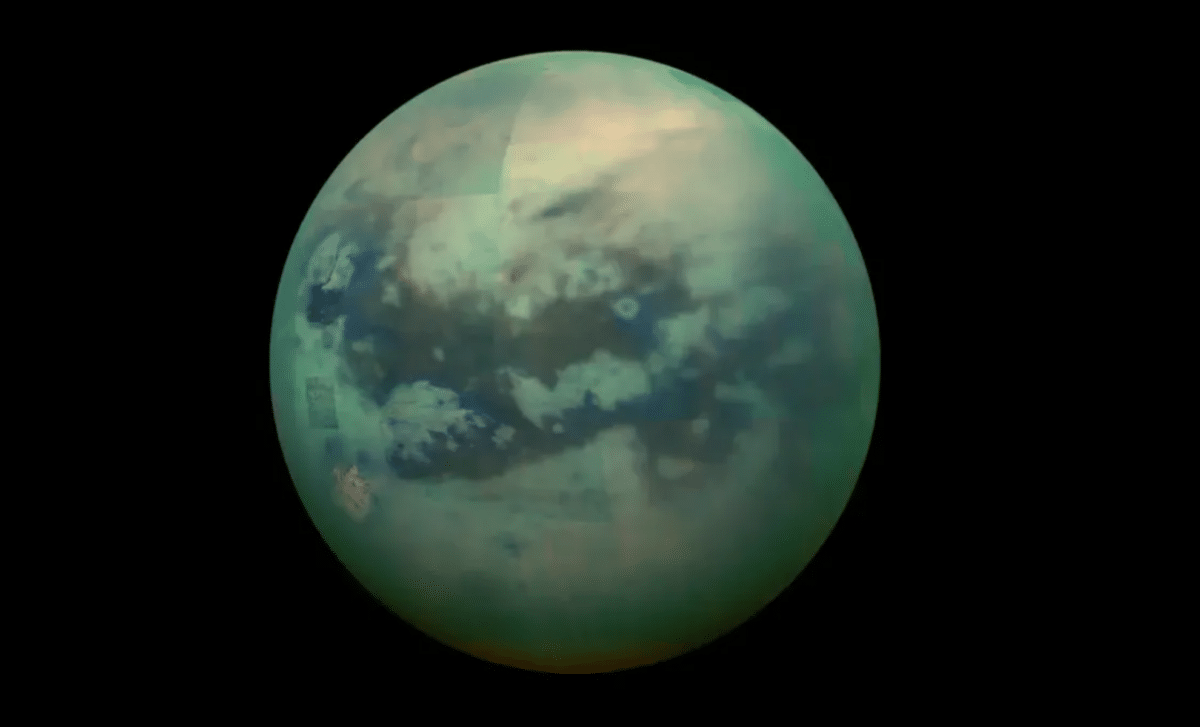
For years, the prospect of humans venturing to Titan, the largest moon orbiting Saturn, seemed like a far-off dream. However, attitudes are shifting. At the inaugural Humans to Titan Summit 2026, scientists, engineers, and researchers convened to explore practical questions surrounding human settlement and research on this captivating celestial body. Though actual missions remain distant, experts believe early planning could forge the path for post-Mars exploration.
Titan Gains Traction as a Long-Term Exploration Target
The two-day event held in Boulder, Colorado, was the first concerted initiative solely dedicated to human exploration of Titan. Instead of focusing on science fiction, attendees dived into tangible challenges including spacecraft systems, habitat engineering, astronaut gear, environmental risks, and mission architecture. This gathering underscores an increasing consensus in the planetary science community that destinations beyond Mars warrant preparation. Amanda Hendrix, head of the Planetary Science Institute and chair of Explore Titan, emphasizes the importance of shifting public and scientific perceptions about the moon.
“Everyone recognizes that the reality of this is a long way off,” Hendrix told Space.com, “but normalizing the idea — that Titan is actually a very reasonable destination for humans — is important.” She argued that thinking beyond Mars provides a long-term objective capable of sustaining scientific momentum across generations. Taking this goal seriously means that “we can have a next destination in our minds, after Mars,” she added. “That keeps the momentum going.”
Add Cosmo Herald as a Preferred Source

While no crewed Titan missions are currently scheduled, many researchers stress the importance of advancing relevant technologies today to enable such ventures in the future.
Unique Environmental Features Make Titan Stand Out
Among the many intriguing bodies in the outer solar system, Titan stands out for its distinctive properties. Its dense, nitrogen-rich atmosphere serves as a natural shield against harmful cosmic radiation, a major threat for long-duration space travelers. This thick air also allows for efficient flight of aerial vehicles, paving the way for innovative aircraft and hovercraft able to traverse the moon’s icy terrain with relative ease.
The summit highlighted Titan’s weather, influenced by hydrocarbons rather than water, featuring methane precipitation, rivers, lakes, seasonal floods, and strong winds. These factors present operational difficulties but also open unmatched avenues for scientific investigation. Abundant methane, nitrogen, and other chemicals on Titan could support future fuel production and extensive exploration deeper into the Saturn system. Hendrix pointed out that substantial groundwork is still essential before these ambitions can be realized. “We’ve got a lot of planning to do,” she commented, “but we have time!” She also noted the moon’s dense atmosphere as its greatest asset for human visitors.
Robotic Missions Paving the Path Ahead
Human missions to Titan hinge on robotic precursors. Our knowledge took a giant leap forward after the European Space Agency’s Huygens probe touched down on Titan in 2005 as part of the famed Cassini-Huygens mission. Looking forward, NASA’s Dragonfly, a nuclear-powered drone, targets launch no earlier than 2028 followed by a six-year journey through space.
Upon arrival, Dragonfly will spend over three years flying between diverse locations, gathering samples, analyzing surface composition, and investigating Titan’s chemistry with onboard sensors. The insights gained will inform designs for habitats, landers, vehicles, and astronaut protocols for future human visits. Additional envisioned missions include orbiters that would produce detailed maps while pinpointing the safest and most scientifically promising landing spots. Each robotic mission narrows knowledge gaps, easing the path for those who eventually follow.
Charting a Course to Human Presence on Titan
For Scot Rafkin, director of the Department of Space Studies at the Southwest Research Institute, the summit was more than a technical event—it was the start of a visionary journey.
“Everyone recognized that sending humans to Titan is extraordinarily ambitious. But history shows that the greatest achievements in exploration begin when people are willing to pursue goals that seem beyond reach,” said Rafkin. Sharing with Space.com his personal reflections, he described the gathering as “the beginning of a long-term effort to imagine and ultimately achieve something transformative.”
Rafkin views the obstacles as substantial but increasingly manageable.
“Human exploration of Titan is not a question of physics,” said Rafkin. “It is a question of time, technology, and commitment. We understand most of the major challenges. We know many of the critical science and engineering gaps that remain.”
Advancements in propulsion, robotics, manufacturing, computing, communications, power, and life support will gradually transform these concepts into tangible missions. Rafkin emphasizes starting immediately. “Some steps can be taken now, such as sending an orbiter to better characterize the Titan system,” he said. “Other capabilities will require decades or even generations of development. The challenge is immense, but it is achievable.” Reflecting on the bigger picture, he stated, “It was about starting a movement. If space exploration has taught us anything, it is that ambitious goals accelerate innovation in ways we cannot fully predict. The destination is Titan, but the investment is in ourselves,” Rafkin concluded.
- Categories:
- News










0 comments
Sign in to Comment