
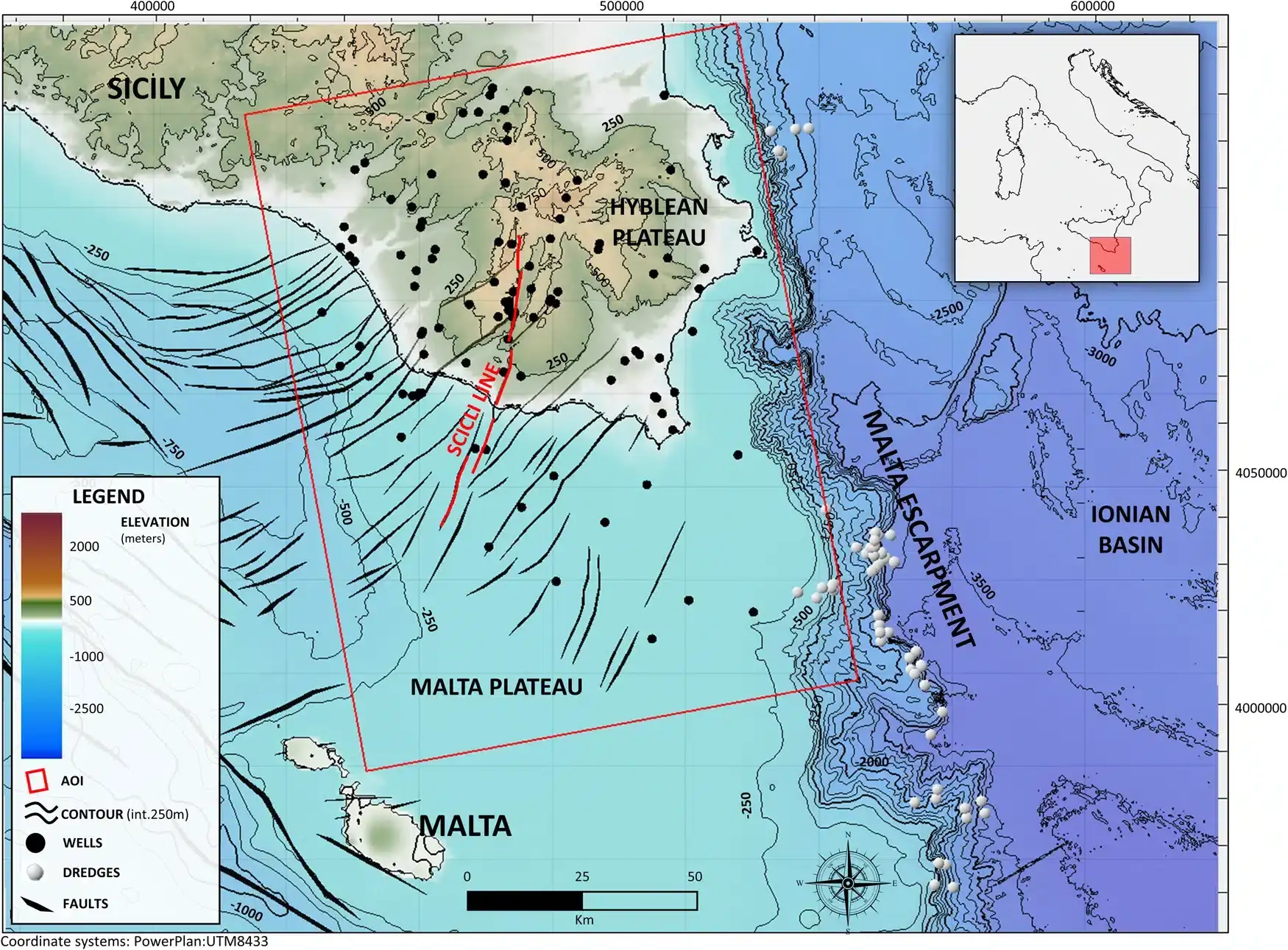
Scientists have made an astonishing find off Italy’s southern coast: an enormous reserve of ancient freshwater hidden beneath the Hyblaean Mountains in southeastern Sicily.
Exploring the Depths Under the Hyblaean Mountains
Employing cutting-edge mapping technologies, 3D geological modeling, and data from oil and gas exploration, an international research collaboration unearthed this vast water reservoir. Situated roughly 2,400 meters below sea level and concealed beneath the mountain range, the deposit is estimated to hold around 17.3 cubic kilometers (4.1 cubic miles) of water.
This enormous water supply may prove crucial for southern Italy, which is facing increased water scarcity driven by climate change. The aquifer is believed to have formed approximately 6 million years ago during notable geological transformations in the Mediterranean region.

Water Scarcity Challenges in the Mediterranean
The Mediterranean Basin, home to Sicily, is confronting growing environmental pressures. Already characterized by an arid climate, the area is increasingly threatened by rising temperatures and coastal flooding risks. These factors contribute to intensifying droughts and concerns over future freshwater availability.
This newly identified water source could provide relief for southern Italy’s water shortages. Furthermore, similar subterranean freshwater reserves might exist across the Mediterranean, potentially benefiting countries such as Morocco, Tunisia, Egypt, Lebanon, and Turkey, all of which face comparable climate-induced water challenges.
Uncovering the Hidden Aquifer
Scientists from institutions in Malta, Rome, and Bologna analyzed comprehensive datasets from hydrocarbon wells to guide their investigation. They constructed detailed 3D geological and hydrogeological models that revealed the presence of this massive groundwater body.
The team proposes that the aquifer’s origin relates to the Messinian salinity crisis, a major event that occurred about 5.33 million years ago. During this period, the Mediterranean Basin nearly dried out as the Strait of Gibraltar closed. When the basin was later refilled by a dramatic megaflood, rainwater permeated through the exposed seabed and infiltrated the Earth’s crust, becoming trapped within porous rock layers and eventually forming the aquifer.
Implications for Alternative Water Supplies
This discovery holds promising potential not only for Sicily but for the broader Mediterranean region. Researchers suggest that similar deep groundwater reservoirs could exist in places like the Adriatic Carbonate Platform and parts of Tunisia. As climate change continues to strain water resources, tapping into these deep aquifers might become an essential strategy.
“The discovery of such an extensive, preserved, and deep-freshened groundwater body has significant implications as an unconventional source of potable water,” the researchers stated in their publication in Nature. “The technology to explore and utilize such deep groundwater bodies nowadays exists, making these potentially extensive groundwater resources available for utilization.”
- Categories:
- News


0 comments
Sign in to Comment