
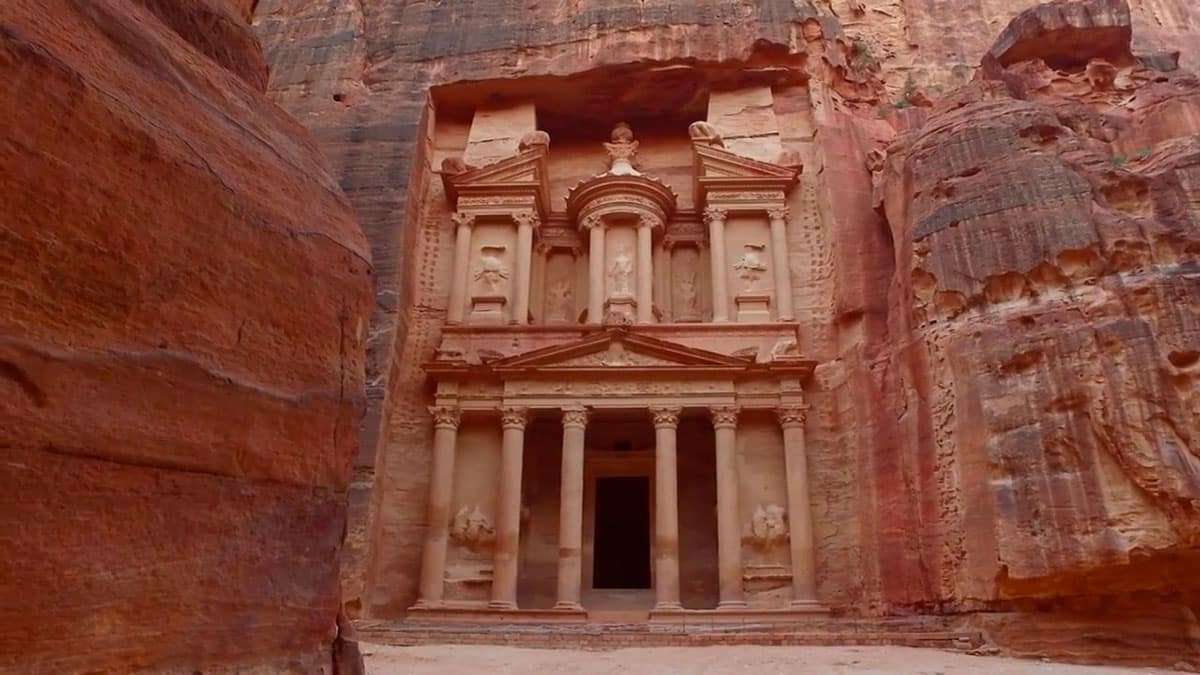
Led by Dr. Pearce Paul Creasman, executive director of the American Research Center, the excavation took place under Petra’s renowned Khaznah, or "Treasury," monument. This remarkable facade, attributed to the era of Nabataean King Aretas IV (9 BCE – 40 CE), has long intrigued visitors with its elaborate design and enduring myths.
Legends about treasures hidden within the urn crowning the Treasury have circulated for centuries, yet it seems the real wealth was concealed underground. Armed with sophisticated ground-penetrating radar, archaeologists pinpointed subterranean chambers, confirming suspicions of additional burial sites beneath the surface.
This major breakthrough builds on earlier discoveries made in 2003, when two tombs were first uncovered adjacent to the monument’s left side. The current excavation deepens our knowledge of Petra's funerary traditions and sheds new light on the daily existence of the ancient Arab nomadic groups who inhabited the city between the 4th and 1st centuries BCE.

Why Petra’s Skeleton Find Matters
The discovery of twelve complete human skeletons at Petra is a landmark event within archaeological circles. Unlike many previous tombs that were found emptied, these skeletons provide extensive data about the city’s past residents. Josh Gates, host of American reality series “Expedition Unknown,” highlighted the uniqueness of the find:
“This is an extremely rare discovery. In the two centuries that Petra has been studied by archaeologists, nothing like this has ever been found before. Even in front of one of the world’s most famous buildings… there are still enormous discoveries to be made.”
This find transcends Petra itself, illuminating the wider cultural and historical landscape of the region. Similar to the Al Naslaa stone in Saudi Arabia, it challenges conventional perspectives on the technological and social achievements of ancient civilizations.
Revealing Nabataean Culture and Customs
The skeletons uncovered beneath the Treasury enable researchers to delve into Nabataean society and their burial rituals. Current analyses focus on:
- Examining physical traits of Petra’s ancient population
- Determining diet and nutrition through skeletal analysis
- Understanding burial ceremonies and traditions
- Identifying social ranks and status through burial context
This trove of information enriches archaeologists’ ability to reconstruct life in ancient Petra. The preservation of these undisturbed burials is especially valuable, retaining contextual details often lost with damaged or looted graves.
Looking Ahead: Research and Discoveries
The unearthing of these twelve skeletons signals a promising new phase in Petra’s archaeological narrative. As scientists continue their examinations of the remains and related objects, greater insights into the Nabataean world are expected to emerge.
This discovery also underscores that renowned archaeological sites like Petra still hold secrets waiting to be uncovered. The application of cutting-edge methods such as ground-penetrating radar is expanding opportunities for exploring ancient locations without excavation damage.
This remarkable revelation is capturing the imagination of both academic experts and the general public. An upcoming episode of “Expedition Unknown” on the Discovery Channel will showcase this fascinating discovery, potentially inspiring new interest in archaeology worldwide.
Looking forward, further detailed studies and scholarly papers will unfold as knowledge of these 12 skeletons develops. Once silent for thousands of years, their presence offers a powerful link to Petra’s ancient past, poised to transform our understanding of the Nabataean kingdom and its enduring legacy.
- Categories:
- Science











0 comments
Sign in to Comment