
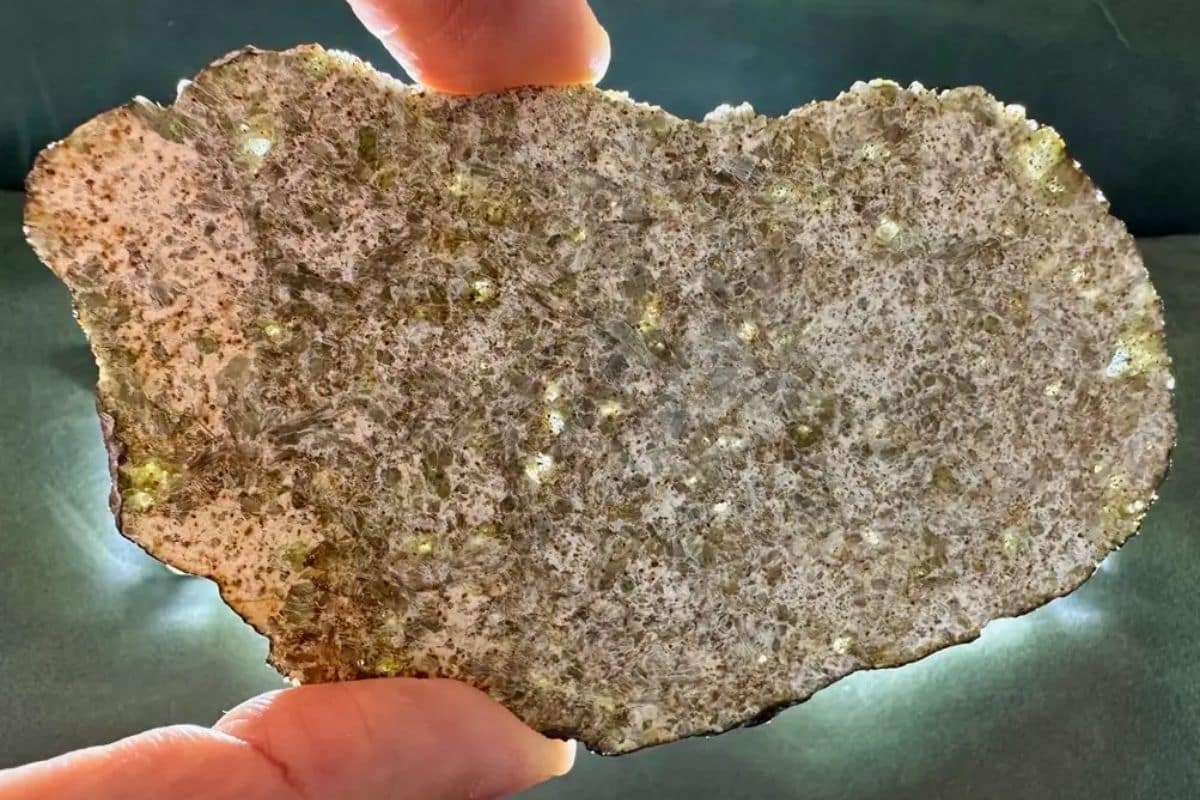
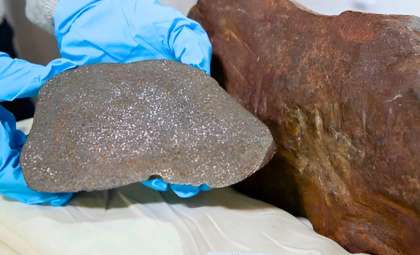
In 2023, a puzzling meteorite named NWA 15915 was uncovered in Northwest Africa, prompting scientists to rethink aspects of the solar system's evolution. Unlike typical space rocks, it neither originates from known asteroids nor from the Moon or Mars. Experts now propose that it could be a surviving fragment from an ancient, vanished planet.
A Rare Meteorite with No Clear Origins
Most meteorites falling to Earth can be linked back to specific sources, such as asteroids or debris from the Moon and Mars. Researchers classify these space rocks by their mineral content and formation history, but a small percentage—about 0.2%—fail to fit into known categories.
NWA 15915 belongs to this unusual group. Jennifer Mitchell, a key scientist examining the meteorite, states the stone’s elemental makeup is unlike any recorded before.

Could It Be from a Planet Lost to Time?
New Scientist reports that the fragment may stem from a planet resembling Mercury, possibly destroyed by a massive collision billions of years ago.
In the early, tumultuous stage of the solar system, many protoplanets emerged but were later consumed by larger celestial objects or obliterated in cataclysmic impacts.
Current theories suggest NWA 15915 originated from one such world that was destroyed during this chaotic period. “All evidence points to a significant, differentiated body likely akin to Mercury,” explains Jennifer Mitchell.
An Unexpected Chemical Signature
Initial studies indicate that NWA 15915 differs chemically from common meteorite types, including ordinary chondrites and achondrites, which are remnants of planetary crusts.
Should subsequent investigations validate its unique source, NWA 15915 might represent the first physical proof of a now-extinct planet. Saverio Cambioni remarks, “Confirming this would be a truly remarkable breakthrough.”
Shaping New Views on Planet Formation
If these ideas hold up, this meteorite could transform how we understand planetary development. It has been assumed that only a few large planets endured the solar system’s initial formation, while smaller bodies merged into those larger entities.
This discovery introduces the possibility that numerous small planets once existed but were wiped out over time. It highlights a more chaotic early solar system, with many worlds forming and disappearing.
Investigating the True Origins
Researchers are employing advanced techniques such as mass spectrometry and isotopic analysis to further examine NWA 15915. By comparing its composition to those of other celestial bodies, scientists hope to confirm whether it truly originates from a lost planet.
Should this be verified, NWA 15915 would offer groundbreaking physical evidence of a planet that has ceased to exist. Studying it may unlock deeper insights into the solar system’s violent beginnings and the forgotten worlds that once thrived around our Sun.
- Categories:
- Science









0 comments
Sign in to Comment