

Researchers have uncovered surprising evidence within a widespread mineral deep beneath Earth’s surface. Microscopic imperfections, once considered scarce, may actually be significant contributors to the mantle’s gradual deformation and movement.
Although minerals appear rigid and stable, under intense heat and pressure conditions, they can slowly bend and flow. This gradual change drives the motion of tectonic plates, gradually reshaping the planet’s continents and oceans over geological time.
A key mineral in the upper mantle, olivine, has been extensively studied, yet new insights continue to emerge about its behavior under extreme stress.

The Previously Overlooked Deformation Mechanism
Traditionally, scientists identified two primary slip directions—known as “a” and “c”—within olivine crystals, while a third direction, “b,” was dismissed as an infrequent anomaly.
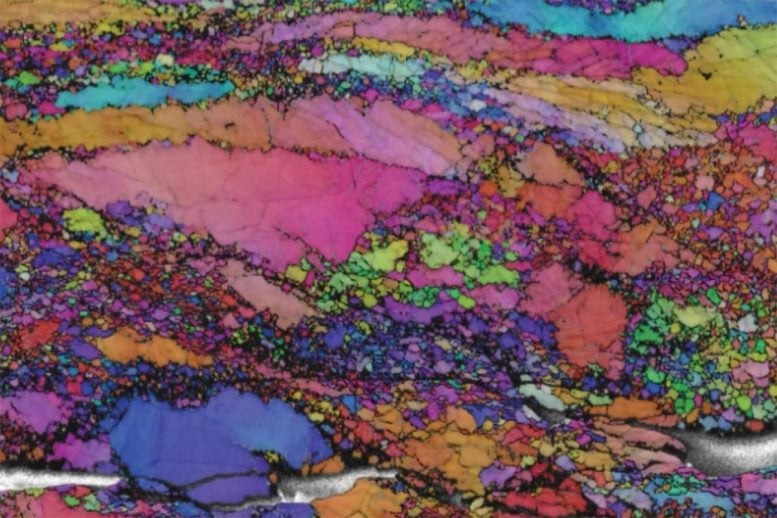
New research published in Geophysical Research Letters shows that roughly 17% of olivine crystals examined exhibited deformation consistent with “b” dislocations. This considerable proportion suggests a reevaluation of the role these defects play in mantle dynamics. John Wheeler, a geologist at the University of Liverpool, remarked :
“Our findings suggest that these dislocations may be more widespread than previously thought, improving our understanding of how the Earth’s mantle deforms.” He added, “Their presence may be influenced by pressure, temperature, and stress levels. Measuring ‘b’ dislocations in natural samples could therefore help scientists determine the depth of deformation and the conditions experienced during it.”
Advanced Techniques Reveal Hidden Flaws
Identifying these minuscule defects is challenging due to their tiny scale. Researchers initially utilized Electron Backscatter Diffraction (EBSD) to analyze crystal structures and detect subtle irregularities. With this information, they turned to Transmission Electron Microscopy (TEM) for high-resolution inspection. These methods verified the presence of “b” dislocations in the targeted regions.
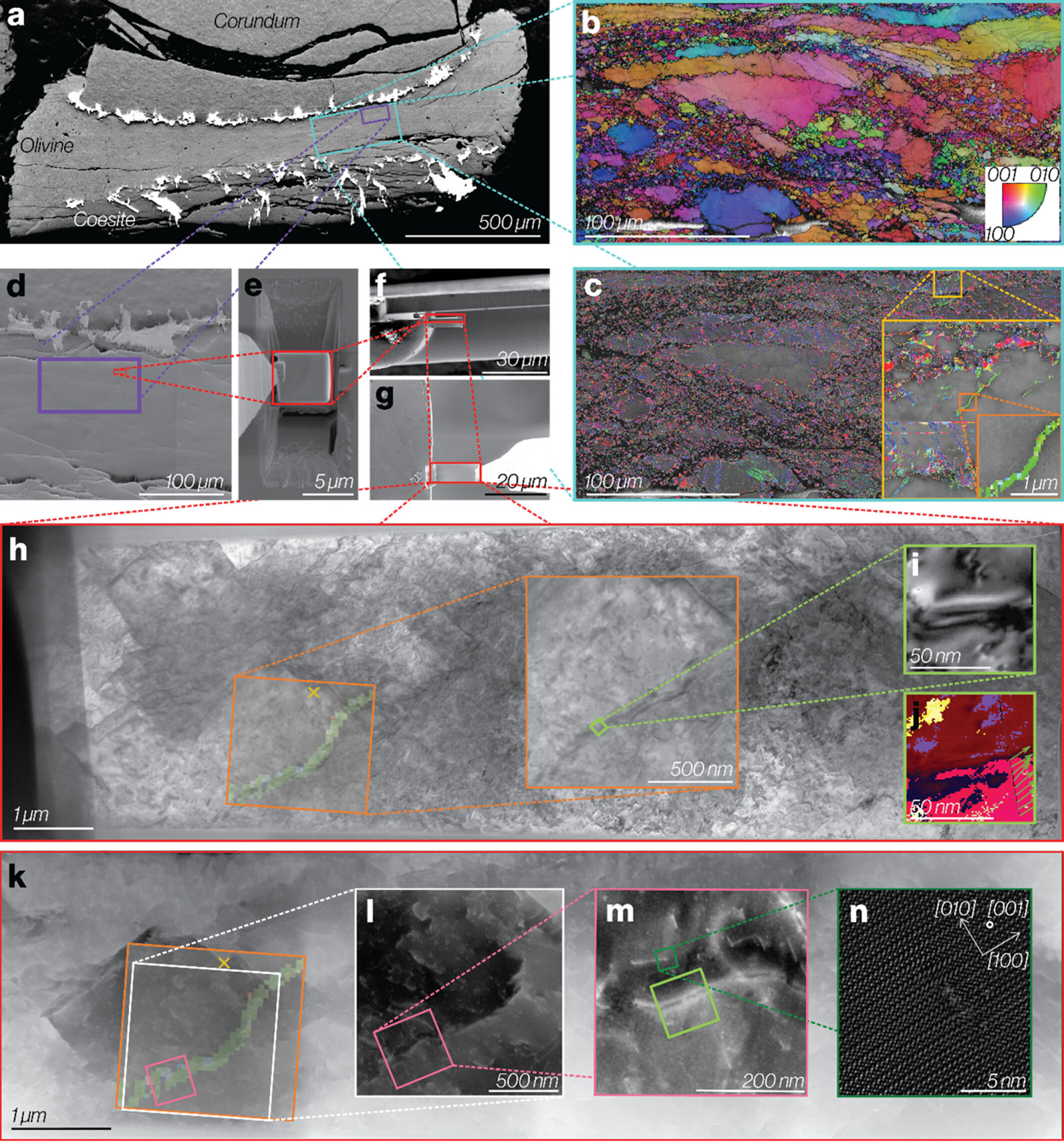
This combined approach transitioned from broad detection to precise observation, enabling identification of features that were previously extremely difficult to detect.
Implications Extending Beyond Earth’s Interior
These tiny crystal defects could provide valuable clues about the stress and environmental conditions deep within the mantle. Wheeler highlighted that factors like pressure, temperature, and mechanical stress likely influence their formation and distribution.
“Some materials such as semiconductors contain dislocations because of the manufacturing process which are deleterious to performance, so their abundance and arrangements need to be investigated,” Professor Wheeler explained.
- Categories:
- Science










0 comments
Sign in to Comment