
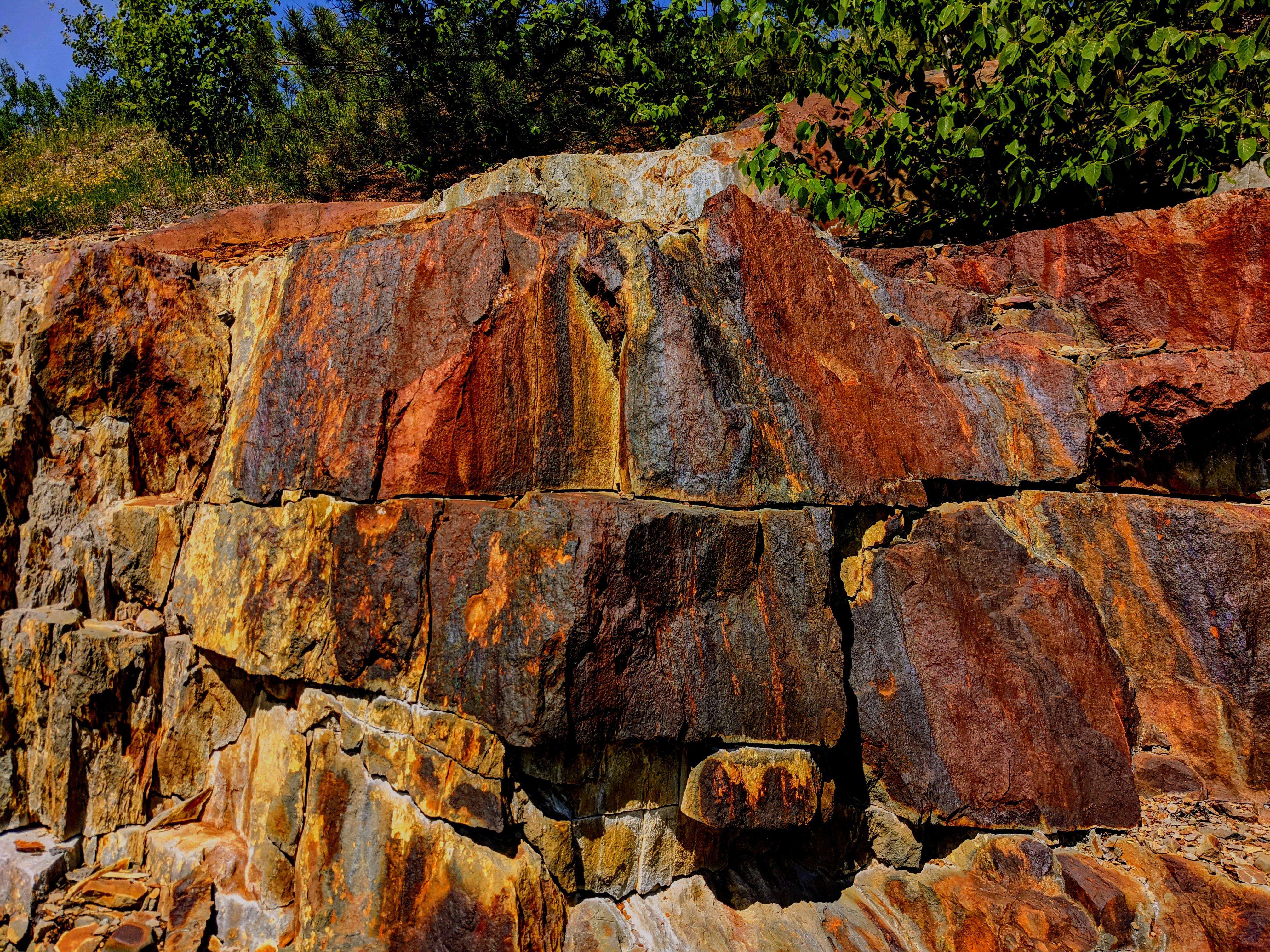
Earth scientists have faced challenges interpreting major chronological gaps in the planet’s rock formations, where millions or even billions of years seem to vanish. Researchers from Utah State University have now devised an innovative forensic technique that leverages rusted iron-bearing minerals to determine the timing and processes behind these mysterious absences.
A Novel Geological Clock Found in Oxidized Minerals
A recent investigation by Jordan Jensen and Alexis Ault, featured in the March 4, 2025, edition of Geology, unveils a method utilizing iron oxide minerals, especially martite, to accurately date ancient oxidation events that occurred as rocks obtained close proximity to Earth's surface.
This rust-like oxidation functions as natural chronometers, chronicling when rocks encountered water and oxygen – environmental factors exclusive to the near-surface realm.

“A challenge for geoscientists is accurately constraining when rocks resided in the near-surface environment,” said Alexis Ault, associate professor at USU’s Department of Geosciences. “It’s tricky to pinpoint the timing of such processes, because the geologic evidence has often been erased.”
This innovative approach offers a much clearer pathway to tracking these elusive geological intervals.
Unconformities: Earth's Vanished Timeframes
Unconformities represent significant voids in the geological timeline where older rock layers lie directly beneath much younger sediments, indicating that substantial erosion erased intermediate deposits.
“Unconformities in the rock record are like missing chapters in the book of geologic time,” said Jordan Jensen, a USU Presidential Doctoral Research Fellow. “These gaps are the physical manifestation of past erosion events that removed evidence of past landscapes and environments.”
One notable example is The Great Unconformity, a widespread feature throughout North America that separates ancient igneous and metamorphic rocks, over a billion years old, from comparatively younger sedimentary strata often rich in fossils. Locations such as the Grand Canyon showcase this phenomenon, yet its formation remains debated.
Martite: An Enduring Recorder of Earth's History
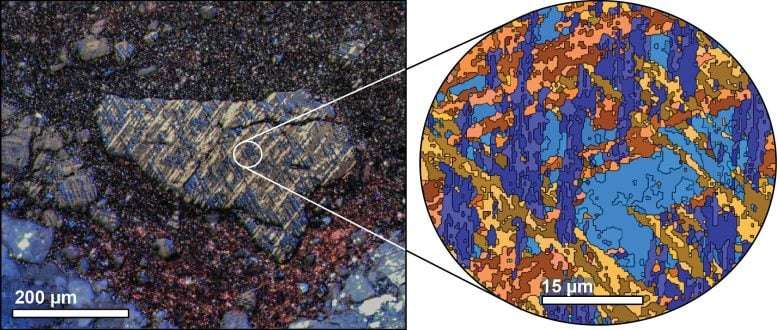
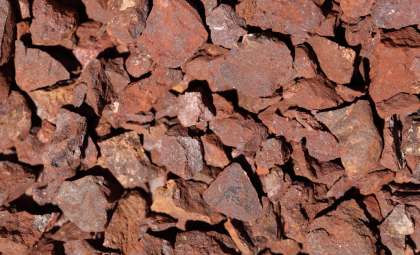
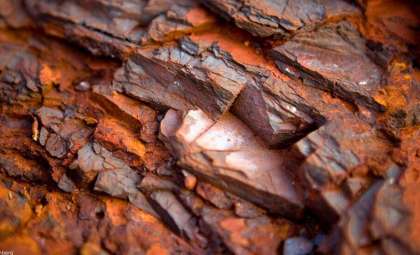
This research spotlights martite, an iron oxide mineral formed when magnetite undergoes oxidation to become hematite. Though martite preserves the external shape of magnetite, microscopic hematite crystals within narrate a distinct tale of transformation.
“Like diamond and its conversion to graphite, magnetite is not stable at Earth’s surface and slowly transforms to hematite in a process similar to how iron metals rust when exposed to air,” said Jensen. “Martite is often mistaken for magnetite, because its exterior still preserves the appearance of magnetite.”
By utilizing sophisticated techniques such as scanning electron microscopy and (U-Th)/He thermochronometry, the team detected these oxidation events and dated precisely when rocks approached Earth’s surface.
Pinpointing the Great Unconformity to 1.4 Billion Years Ago
Applying this novel dating approach to rocks aged around 1.7 billion years beneath a substantial unconformity in Colorado’s Front Range has revealed oxidation ages as far back as 1.04 billion years. These results imply that the unconformity formation may have commenced as early as 1.4 billion years ago.
“When magnetite is oxidized, the geologic clock is reset, so to speak, revealing when these rocks were pushed to the near-surface of the Earth,” said Jensen.
This significantly predates earlier hypotheses linking parts of the Great Unconformity’s origin to the global glaciation event known as Snowball Earth, which began roughly 635 million years ago.
A Versatile Approach to Geological Chronology
Since martite occurs broadly throughout a variety of rock contexts worldwide, the researchers suggest this method has wide potential for investigating weathering, erosion, and the evolution of important mineral resources over immense geologic timescales.
“These tiny and resilient martite grains preserve the story of when these rocks were first exhumed to the Earth’s near surface, despite the many events like burial and mountain-building that could have destroyed the evidence,” Jensen explained.
Specifically, some martite grains analyzed indicate that erosional forces responsible for the Great Unconformity were active hundreds of millions of years before previously accepted timelines, predating glaciations associated with Snowball Earth.
Rusted Iron Minerals Illuminate Earth's Deep Past
These findings do more than simply provide fresh dates; they enable reconstruction of vanished chapters in Earth’s intricate history. Understanding when rocks were brought to the surface offers insights into past tectonic shifts, climate dynamics, and surface processes that shaped modern continents.
“Martite is an iron-oxide and my research group is known for using iron-oxide textures and (U-Th)/He analyses to fingerprint earthquakes and slow slip events in seismically active faults,” noted Ault.
The approach holds promise not just for unraveling Earth’s ancient past but also as a tool to predict future geological developments related to mining, carbon cycling, and continental crust evolution.
- Categories:
- News







0 comments
Sign in to Comment