
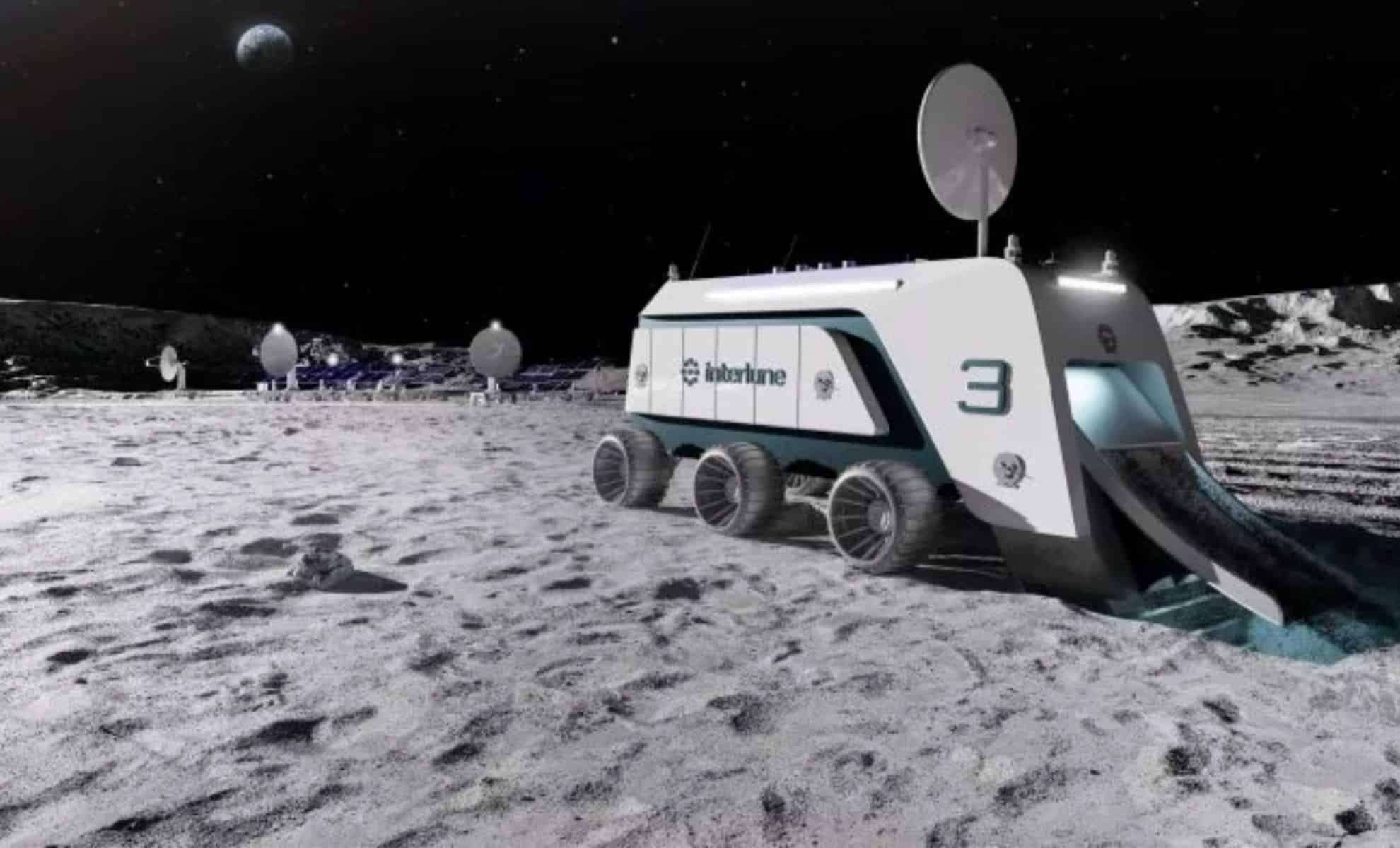
With humanity extending its presence beyond Earth, a new chapter in space exploration promises to revolutionize energy and advanced technology. Interlune, a startup rooted in Seattle and founded by ex-Blue Origin leaders, is spearheading efforts to commercialize helium-3 mining on the Moon. This rare isotope, valued at an estimated $20 million per kilogram, holds the key to groundbreaking applications such as nuclear fusion power and innovative quantum computing technologies.
Interlune aims to harvest helium-3 from lunar soil, or regolith, and transport it back to Earth to energize critical sectors. Already progressing swiftly with partners like Vermeer Corporation, the company is laying the foundation for a pioneering lunar extraction endeavor. As Interlune’s CEO, Rob Meyerson, told Newsweek in an interview, “At $20 million dollars a kilogram, helium-3 is the only resource in the universe that is priced high enough to warrant going to space and bringing it back to Earth.” This statement highlights helium-3’s unmatched value and its potential to fuel multiple futuristic industries.
Helium-3’s Pivotal Role in Next-Generation Technologies
Beyond its rarity, helium-3 is prized for its exceptional attributes. Unlike traditional fuels in nuclear fusion, helium-3 generates minimal radioactive waste, positioning it as a cleaner option for sustainable energy production. The isotope is also vital in quantum computing, where it cools superconducting components to near absolute zero, accelerating the capabilities of quantum processors. Additionally, helium-3 is crucial for advanced medical imaging technologies, notably improving cooling systems in MRI machines.

Due to its scarcity on Earth, the Moon’s plentiful reserves of helium-3 have attracted growing interest from scientists, industry leaders, and governments. Estimates indicate over 1 million metric tons of helium-3 lie within the Moon’s surface layers, a vast resource waiting to be harnessed. Interlune is set to lead this burgeoning space resource market, potentially transforming lunar materials into a cornerstone of Earth’s future economy.
Innovative Lunar Mining Machinery by Interlune
To realize its objectives, Interlune is crafting advanced technology tailored to lunar conditions. Central to the mission is a lunar harvester, engineered to excavate, process, and isolate helium-3 from lunar soil at unprecedented volumes. This machinery will function autonomously, sorting and refining helium-3 alongside mining operations.
Rob Meyerson shared, “Our vision involves deploying five harvesters that will extract, separate, and process helium-3 from lunar regolith, aiming to yield tens of kilograms per year.” Overcoming challenges such as operating in low gravity and extreme temperatures is crucial for this endeavor. These harvesters are designed to handle up to 100 metric tons of lunar soil hourly, ensuring steady helium-3 extraction to meet future demand.
Success depends not only on engineering breakthroughs but also on securing private investment and partnerships within the space industry. Meyerson emphasized, “Achieving this goal requires collaboration with a range of companies and significant private funding,” underscoring the collective effort needed to propel lunar mining forward.
Forging Partnerships Across Government and Industry
Interlune has already attracted attention and support from public and private sectors. The company secured a contract with the U.S. Department of Energy (DOE), committed to purchasing helium-3 for national security and advanced research purposes. The DOE’s agreement to acquire three liters of helium-3 by 2029 positions Interlune among the pioneers in commercial lunar resource development. This collaboration highlights helium-3’s strategic importance for U.S. technological leadership.
Beyond government partnerships, Interlune is collaborating with Maybell Quantum, a frontrunner in quantum infrastructure. The demand from Maybell Quantum for thousands of liters of helium-3 reflects the isotope’s crucial role in quantum computing, particularly for cooling systems in dilution refrigerators. Such commercial commitments reinforce the economic prospects of helium-3 extraction.
These deals signify growing recognition of the Moon’s resource wealth. As helium-3 demand surges, Interlune aims to cement its position at the forefront of the emerging space resource sector.
Overcoming Obstacles and Charting the Path Forward
The journey toward lunar mining is fraught with technical challenges. Extracting helium-3 is complex due to its trace amounts within the regolith, typically measured in parts per billion. Continuous, precise harvesting is essential to gather meaningful quantities. Additionally, isolating helium-3 from other elements and gases in the lunar soil demands sophisticated equipment and methods.
Interlune’s prototype harvester is undergoing tests in Earth-simulated environments and is being optimized for the Moon’s microgravity and extreme conditions. Ensuring these machines function effectively amidst vacuum and temperature extremes is vital. The company is also advancing technology to liquefy helium-3 on the lunar surface, facilitating its transport back to Earth.
Despite considerable obstacles, Interlune anticipates launching its initial prospecting mission by 2027, a pivotal step toward establishing a full-scale helium-3 mining operation by 2029.
Helium-3: Fueling Tomorrow’s Energy and Technology
The successful extraction of helium-3 from the Moon could transform energy and technology landscapes worldwide. Fusion energy fueled by helium-3 promises abundant, clean power to meet global demands sustainably. Meanwhile, helium-3’s function in quantum computing may hasten breakthroughs beyond the limits of classical systems.
As space exploration intensifies, lunar resource utilization like helium-3 mining may become foundational to future economies. Interlune’s pioneering efforts mark the beginning of a new era—not a race for territorial dominance, but a quest to harvest vital resources that will support generations to come on Earth.
Echoing this vision, Gary Lai, Interlune’s cofounder and CTO, remarked, “When there’s an abundance of any material on Earth, humans find a way to use it. It has so many unique physical properties. It has many uses and I’m pretty confident that when it is more available, people will find even more uses for it because it’s such a unique isotope.”
- Categories:
- News








0 comments
Sign in to Comment