
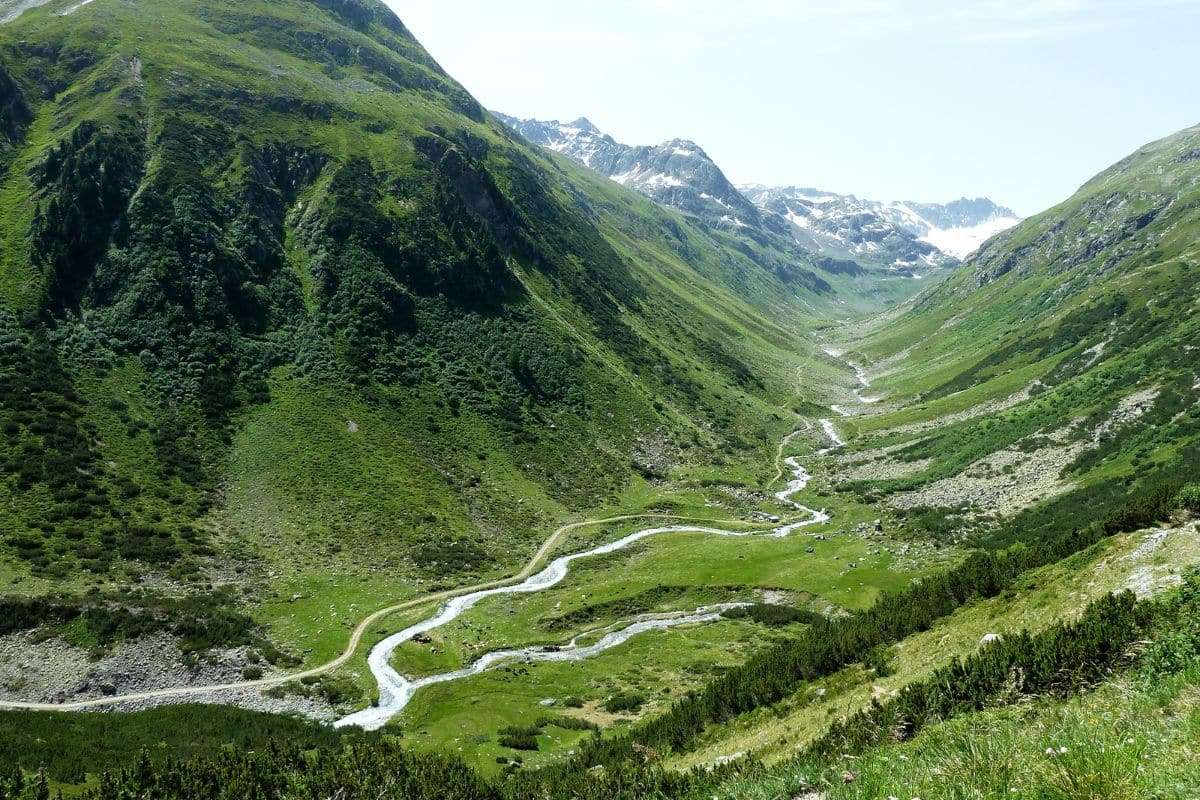
Earth’s rivers sculpt intricate winding paths, continually transforming the environment. Although these twisting channels might look similar to formations carved by lava or frost, recent work from The University of Texas at Austin uncovers key differences.
This breakthrough may enable researchers to distinguish between water-formed channels and those created by other geological processes on extraterrestrial terrains, advancing the hunt for water beyond Earth.
Contrasting Channel Formation: Rivers Versus Lava and Ice
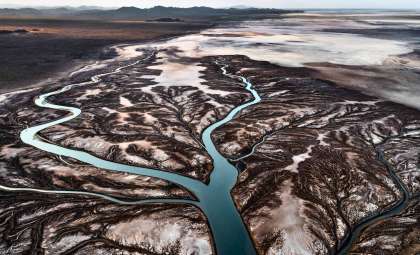
The curves of rivers arise from centrifugal forces at play. Water speeds up along the outer bends, gradually wearing away the bank, while material deposits accumulate on the inner edge, increasing the curve’s intensity over time. This prolonged cycle results in the iconic looping patterns seen in terrestrial river networks.
Channels carved by lava or glacial ice, however, develop through distinct mechanisms. Their shapes stem largely from melting and erosive processes rather than sediment transport, causing their bends to be gentler and less pronounced.
The study identifies this fundamental variation, offering a means to differentiate channels shaped by flowing water from those formed by volcanic eruptions or glacial dynamics.

Innovative Approach for Planetary Geology
Led by Juan Vazquez, the research team analyzed thousands of channel bends from rivers on Earth, lunar lava flows, and ice-carved formations on glaciers. Their findings, published in Geology, revealed stark differences in how these features curve.
At first, Vazquez suspected an error: “It wasn’t until the parameters for the code we had set for the volcanic channels on the Moon kept failing for the rivers on Earth that we realized, ‘Oh, that’s not a fault of the code. It’s an intrinsically different amplitude.”
Eventually, he recognized that this discrepancy represented a fundamental characteristic distinguishing each type of channel.
This discovery holds crucial value for planetary exploration. On bodies such as Mars and Titan, winding landscapes have sparked debates about their formation—whether by ancient rivers, volcanic lava, or melting ice.
Exploring Martian and Titan Surfaces
Mars offers a compelling example. Once featuring an active water cycle with rivers and lakes, it now shows sinuous channels near volcanic slopes. Scientists argue whether these formations result from cooling lava flows or melted snow and ice.
This new research presents a method to differentiate them: if the curvature matches Earth’s rivers, it suggests liquid water once shaped these features.
Titan, Saturn’s moon, possesses a thick atmosphere and methane-ethane lakes. The origin of its meandering channels remains uncertain, making this analysis a promising tool to understand its landscape's history.
Advancing Our Understanding of Alien Landscapes
Despite its promising potential, the researchers advise caution; channel shape depends on many variables such as geology and climate conditions. Curvature patterns should be integrated with other geological and atmospheric evidence to accurately interpret extraterrestrial environments.
Looking ahead, the team plans to enhance this technique and apply it across more planetary surfaces. Upcoming missions to Mars, Titan, and beyond aim to leverage these insights to deepen our knowledge of other worlds.
- Categories:
- News






0 comments
Sign in to Comment