
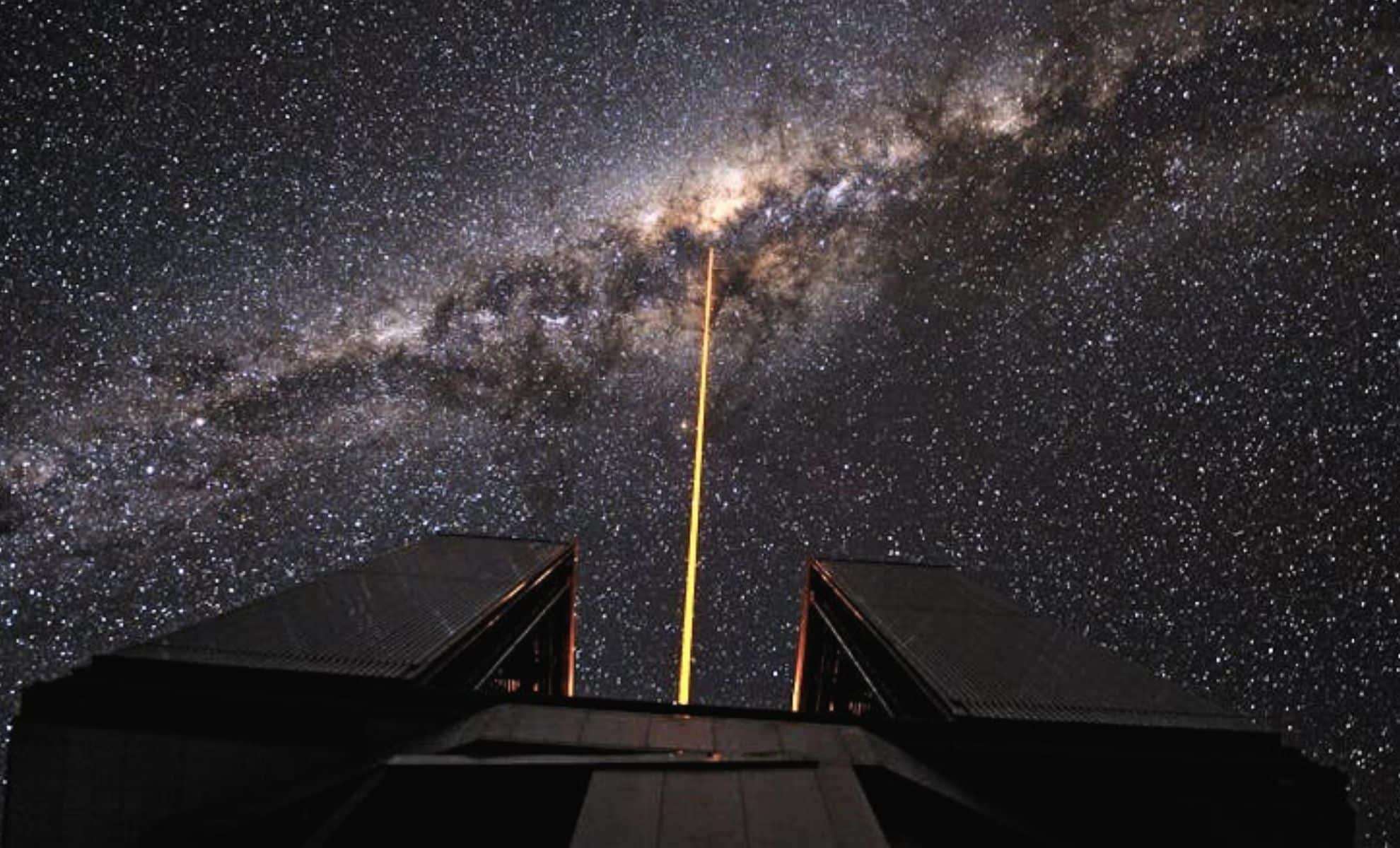
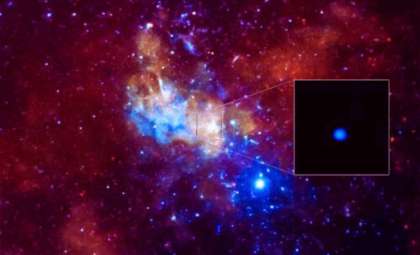
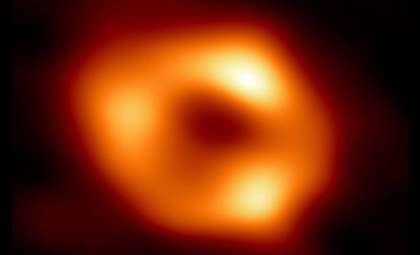
Astronomers have made a remarkable breakthrough: identifying a binary star pair locked in orbit around Sagittarius A*, the supermassive black hole anchoring the Milky Way’s core.
Published in Nature Communications, this discovery by Florian Peißker and associates at the University of Cologne offers unprecedented insights into the extreme conditions near black holes and addresses enduring questions about stellar behavior galactically.
Why is this finding so extraordinary?

Binary Stars Thriving in Hostile Space
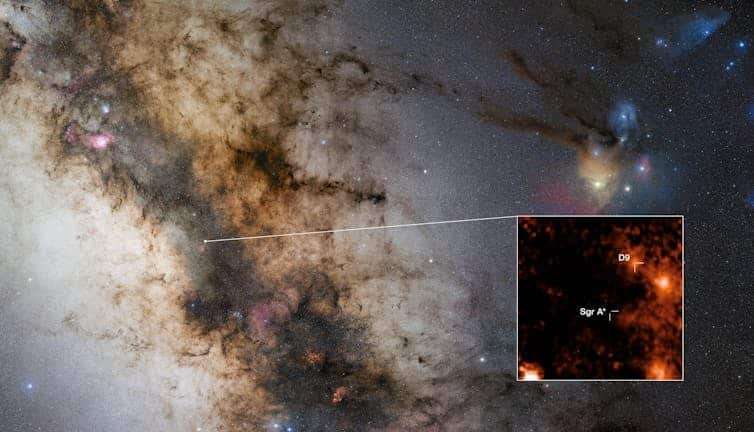
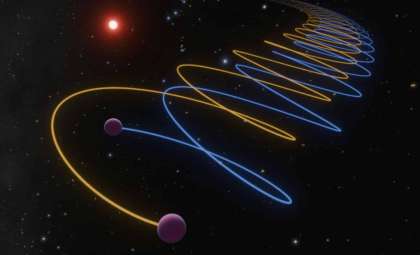
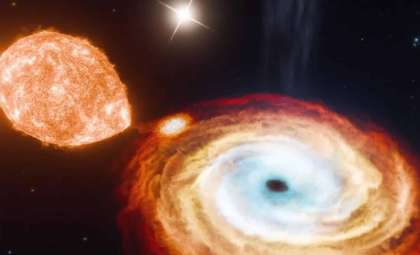
Known as D9, the newly identified binary system features two stars revolving around each other while also orbiting a black hole weighing roughly four million times the Sun’s mass. Even more astonishing, this paired system has persisted for nearly a million years.
Given Sagittarius A*’s tremendous gravitational pull, which typically tears nearby objects apart, D9’s endurance is nothing short of extraordinary. It now serves as a vital case study for astrophysicists exploring the most extreme galactic environments.
Adding to the marvel is the detection method. Situated 27,000 light-years away, D9 is too far to distinguish two separate stars visually. Researchers employed the Very Large Telescope (VLT) to observe subtle oscillations in emitted light—a signature sign of binary stars.
Understanding Binary Star Systems and Their Importance
Binary star systems consist of two stars gravitationally bound and circling one another, and they represent a significant fraction of stars in our galaxy. Larger stars, in particular, frequently exist in such paired arrangements.
Through analyzing D9’s orbital dynamics, scientists estimate its age at around 2.7 million years.
Moreover, evidence suggests that D9 did not originate in the tumultuous region close to Sagittarius A*. Instead, it likely formed elsewhere before migrating inward, managing to survive for about a million years within the galactic core.
Shedding Light on Hypervelocity Stars
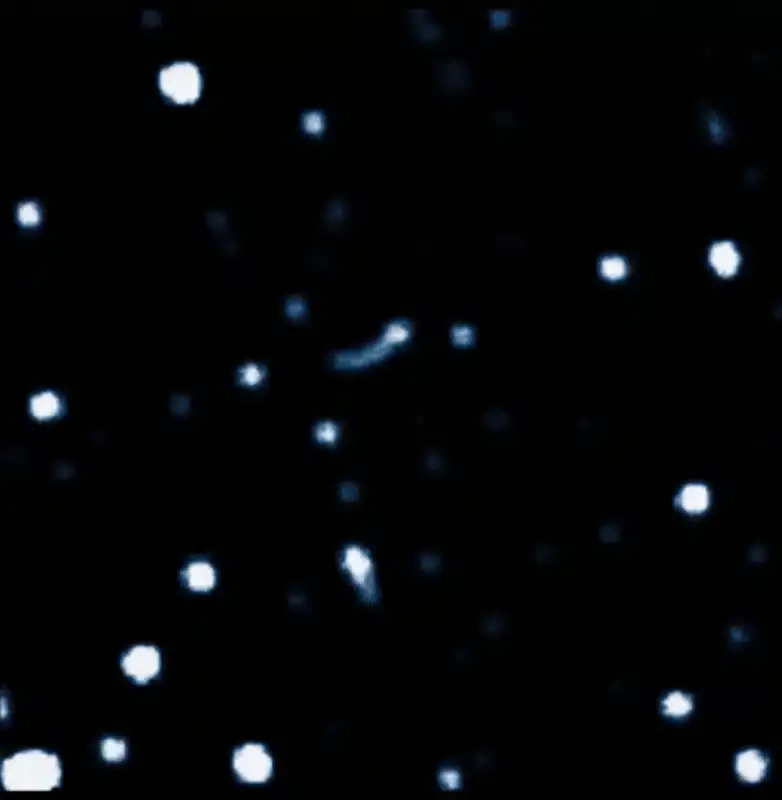
D9’s discovery enriches theories explaining mysterious hypervelocity stars — rare stars hurtling through the galaxy at speeds exceeding 1,000 kilometers per second, vastly outpacing typical stellar velocities.
These astonishing speeds are thought to arise from scenarios involving binary star systems like D9:
- A binary star system ventures dangerously close to a supermassive black hole like Sagittarius A*.
- The black hole’s powerful gravity disrupts the pair, capturing one star while flinging the other outward at phenomenal speeds.
- The expelled star becomes a hypervelocity star, racing through the cosmos.
D9 stands as concrete support for this process, confirming that binary pairs can exist near black holes and providing a potential source region for hypervelocity stars.
The Methodology Behind Detecting D9
Finding D9 was no simple feat. Due to its distance and the blinding light from Sagittarius A*, the stars couldn’t be resolved as separate points through conventional imaging.
Instead, astronomers measured tiny Doppler shifts in the light emitted by the system, revealing a repeating light oscillation characteristic of two stars orbiting each other.
Advanced modeling further allowed researchers to determine D9’s age and understand the delicate gravitational interactions enabling its survival near the black hole.
The Broader Implications of This Discovery
D9’s presence deepens our understanding of the complex interplay between stars and black holes at our galaxy’s heart, where intense gravity and stellar dynamics coincide.
The binary system challenges previous assumptions about black holes’ destructive influence, suggesting similar systems may be more common in galactic centers than once believed.
Spotting Sagittarius A* from Earth
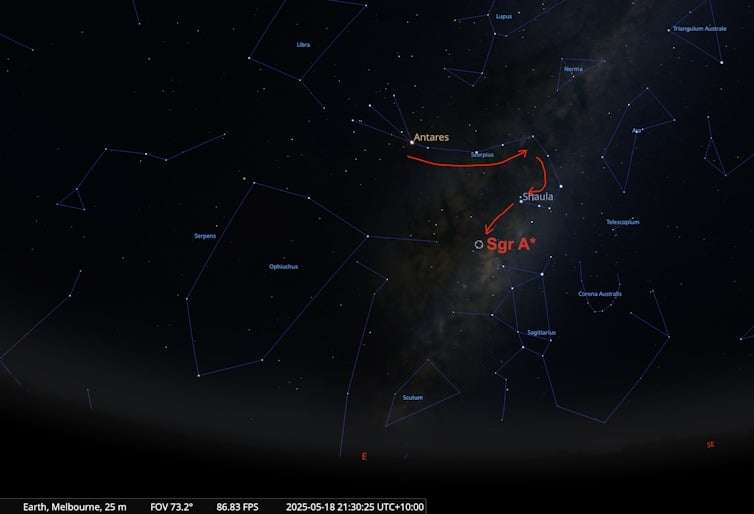
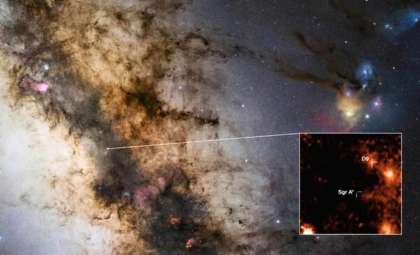
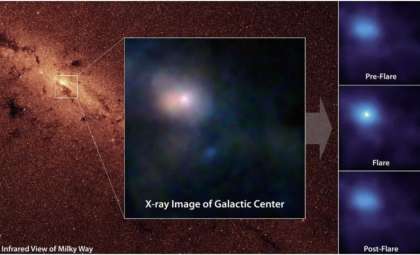
Though D9 itself lies beyond direct view, you can observe Sagittarius A*’s location in the night sky.
Begin by locating Antares, the bright reddish star in the Scorpio constellation. Trace the curve of the scorpion’s tail, bringing you near the galactic center. Alternatively, use a stargazing app for precise identification.
This article was published in the journal The Conversation. Read the original article.
- Categories:
- Astronomy ,
- Space




0 comments
Sign in to Comment