
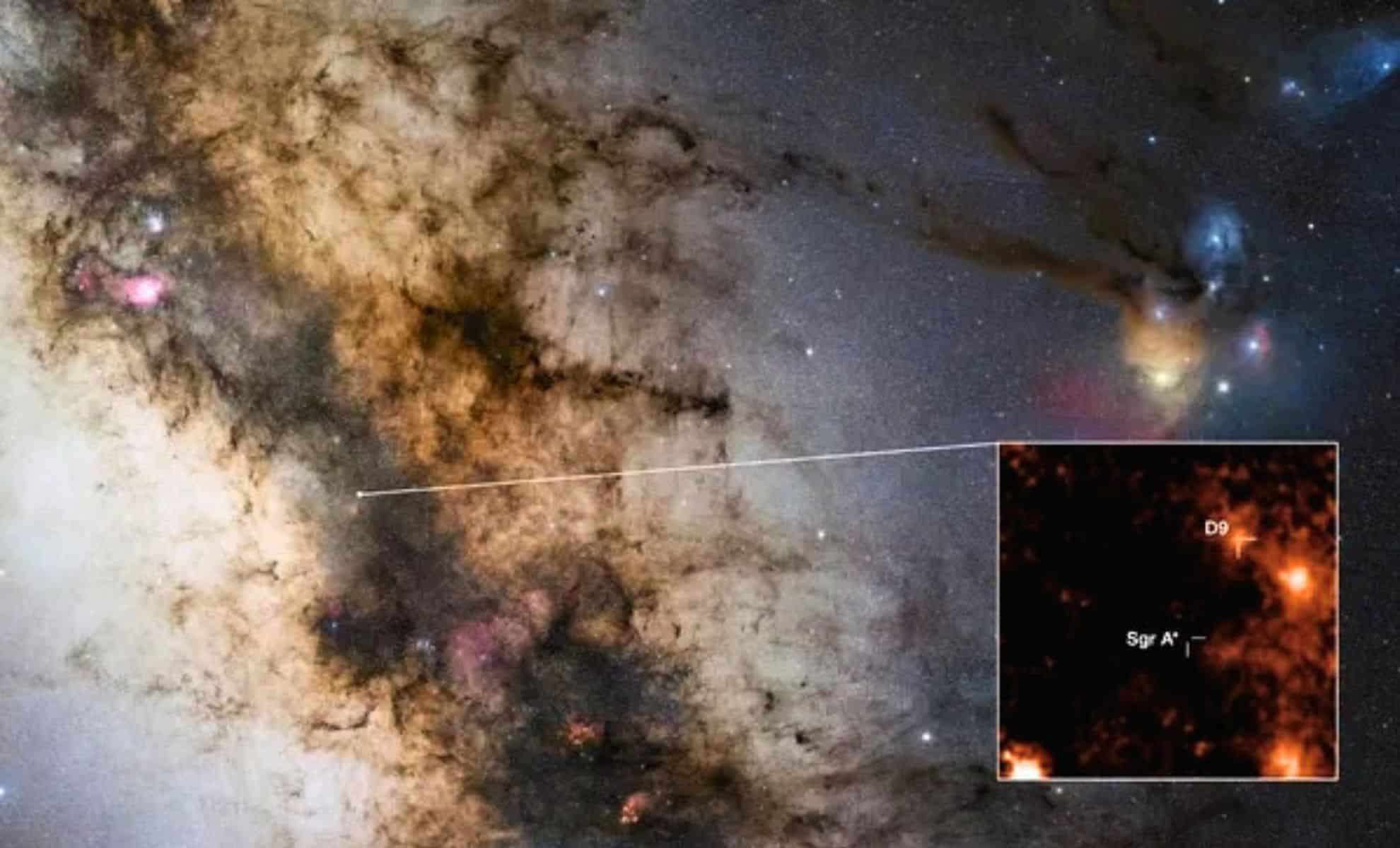
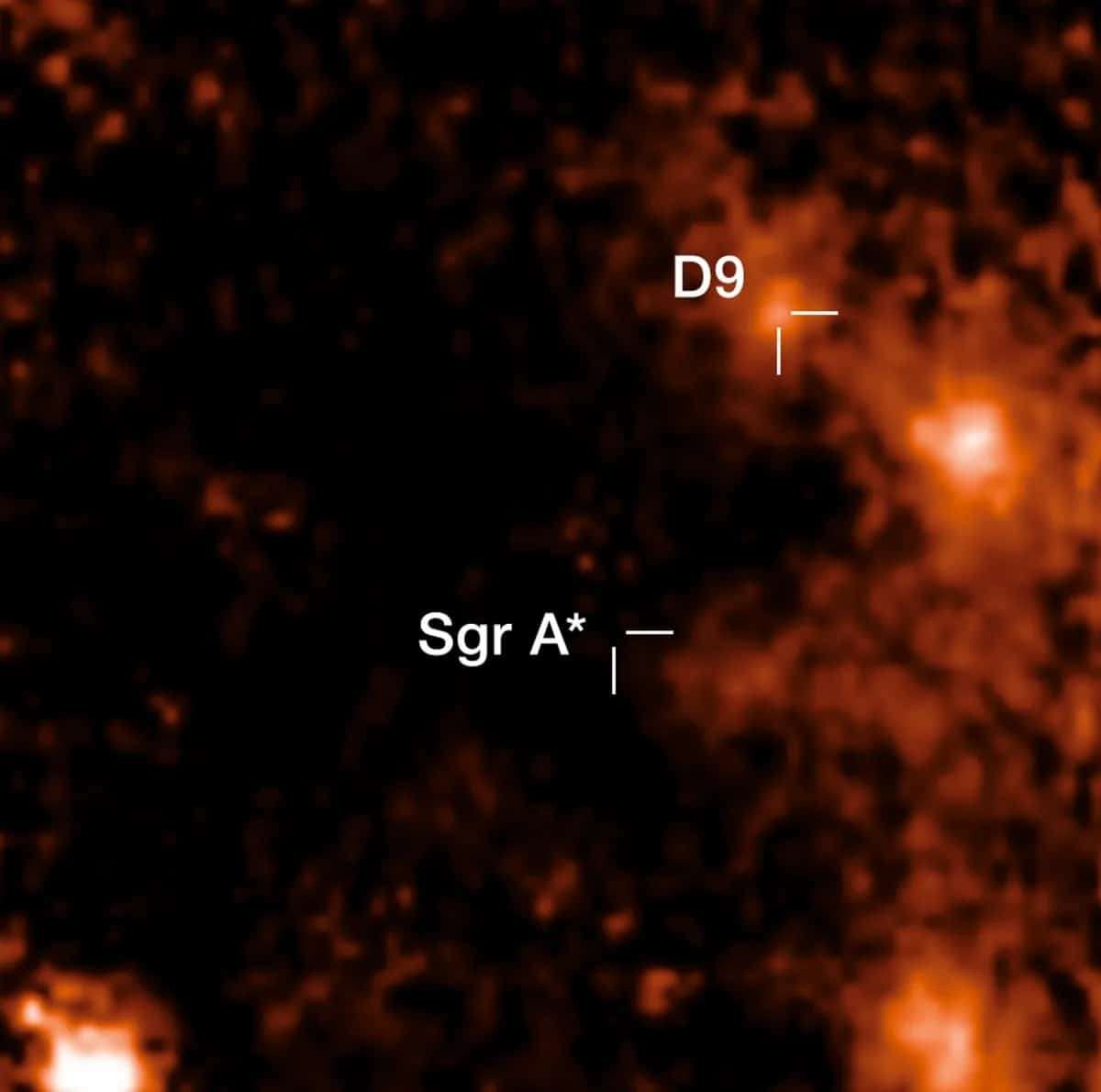
Scientists have identified for the first time a pair of binary stars orbiting the supermassive black hole Sagittarius A* (Sgr A*) at the center of our galaxy. Named D9, this stellar duo was observed with the Very Large Telescope (VLT) situated in Chile’s Atacama Desert. This extraordinary find challenges previous assumptions by suggesting that stars—and even planets—could form in the extreme conditions surrounding a black hole.
Unexpected Binary Stars Close to Sgr A*
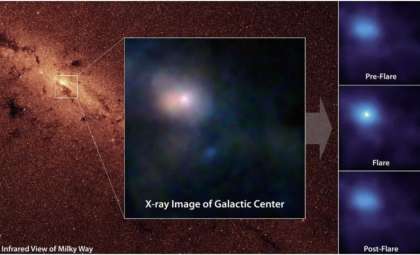
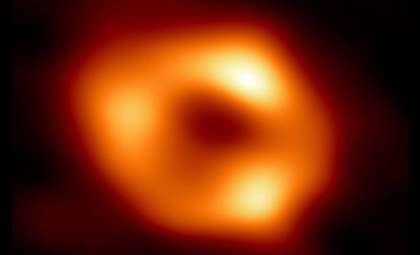
The binary stellar system D9 orbits the massive Sgr A*, whose mass is about 4.3 million times greater than the Sun’s. The presence of a binary star system so near such intense gravitational forces is surprising, since this environment was thought too hostile for stars to form stable pairings. Florian Peißker and his team at the Max Planck Institute for Extraterrestrial Physics (MPE) led the study, which defied their expectation of encountering binary stars in this chaotic region.
Data from the VLT at Paranal Observatory enabled the detection of D9. Known for its cutting-edge technology, the VLT provides some of the most detailed observations of the galactic core, home to Sgr A*.

Reevaluating Star and Planet Formation Near Black Holes
The newly discovered binary stars in system D9 are estimated to be approximately 2.7 million years old and enveloped in typical gas and dust characteristic of young star systems. This indicates that the galactic center may permit stellar and even planetary genesis, challenging previous beliefs that the hostile conditions preclude such formation.
Before this discovery, it was assumed that the powerful gravitational forces and intense radiation from Sgr A* would stop stars or planets from forming or enduring nearby. However, the D9 binary system reveals that young stars can exist and develop in these extreme settings, sparking speculation of possible planets near the galactic core.
Understanding Binary Star Evolution Under Black Hole Influence
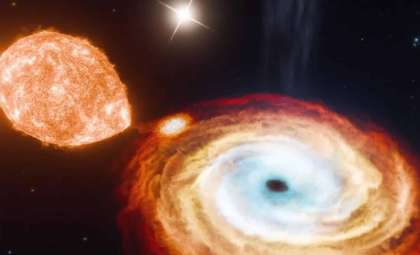
The D9 system offers rare insights into how binary stars develop in extreme gravitational fields. Though these stars will eventually merge due to the overwhelming attraction of Sgr A*, their current state provides valuable information about the dynamics of binaries near supermassive black holes.
On a cosmic timeline, the lifespan of D9 is brief, but its study is critical. According to Peißker, “the immense gravitational pull around Sgr A* ensures that binary stars here ultimately spiral together, leading to a transformative phase for the system.”
Exploring the Nature of Mysterious G Objects
While investigating the dense S-star cluster orbiting Sgr A*, researchers also identified curious entities known as G objects. These display star-like traits but are enveloped in gas and dust clouds, presenting an unusual appearance. One hypothesis is that G objects could be remnants of merged stars, like D9, surrounded by dense material. Unraveling their composition could illuminate the future evolution and fate of systems like D9.
Advancing Galactic Center Research with Next-Generation Tools
The discovery of D9 ushers in a fresh era of exploring the galactic nucleus. With enhancements such as the GRAVITY+ instrument on the VLT and the soon-to-be-operational Extremely Large Telescope (ELT), astronomers are poised to study this region with unparalleled clarity. These advancements promise the detection of additional binary stars and possibly planetary systems near Sgr A*.
Peißker remarks, “It may only be a matter of time before planets are found within the galactic center, revealing a resilience in these systems beyond our expectations.”
- Categories:
- Astronomy ,
- Space






0 comments
Sign in to Comment