
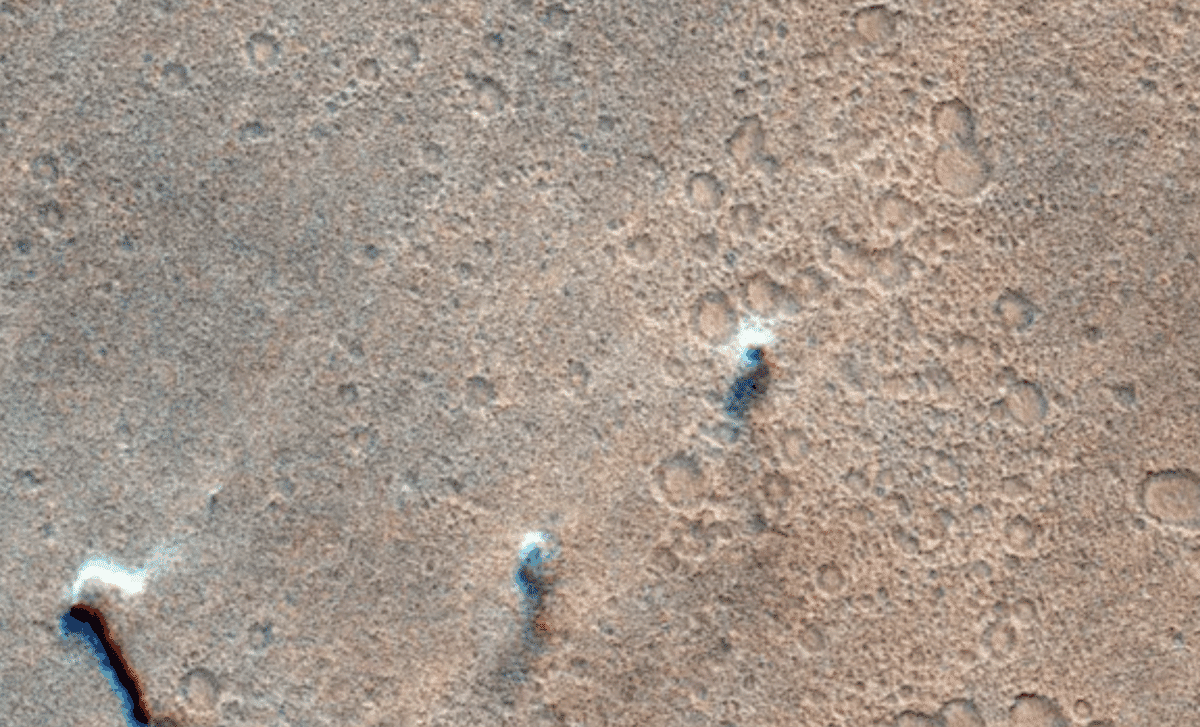
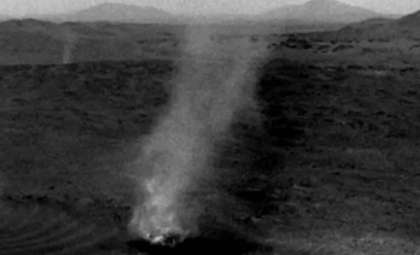
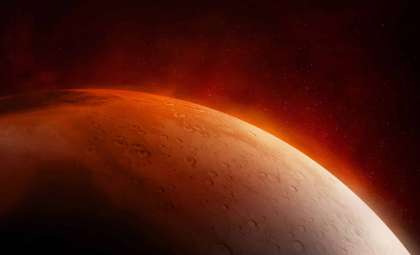
A recent publication in Science Advances has introduced a comprehensive global inventory of dust devils on Mars—small, swirling dust storms traversing the planet’s surface. By analyzing two decades of imagery from ESA’s orbiters, scientists identified more than a thousand of these phenomena, shedding new light on Martian wind dynamics. The results emphasize dust’s impact on Mars’ environment and its implications for upcoming exploration missions.
Charting the Winds Across Mars
Understanding Martian wind patterns has been a longstanding challenge since no orbital instruments were specifically designed to capture them. Valentin Bickel and his team at the University of Bern, Switzerland, developed an innovative method examining images from ESA’s Mars Express and ExoMars Trace Gas Orbiter (TGO). By detecting minor timing discrepancies between camera sensors that produce small offsets in dust devil appearances, they extracted wind speed and direction data typically overlooked as mere noise.
“Our measurements could help scientists build up an understanding of wind conditions at a landing site before touchdown, which could help them estimate how much dust might settle on a rover’s solar panels — and therefore how often they should self-clean,” Bickel explained.
Add Cosmo Herald as a Preferred Source

This innovative technique enabled the team to produce the first-ever global map of Martian wind patterns derived from dust devil motion.
Revealing the Dynamics of Martian Dust Devils
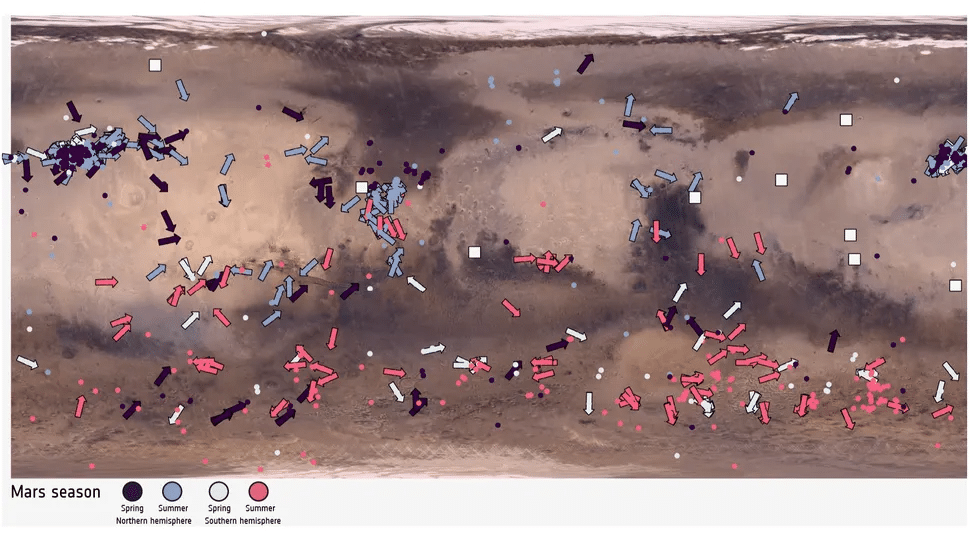
The investigation documented 1,039 dust devils reaching speeds as high as 98 mph (158 kph), surpassing earlier rover and atmospheric model predictions. These whirlwinds predominantly form during Martian spring and summer daylight hours, with each event lasting just several minutes. Activity peaks in the late morning to early afternoon, mirroring Earth’s dust devil behavior, though Mars’ dry atmosphere allows dust to remain suspended for months without precipitation to clear it.
“Dust devils make the normally invisible wind visible,” Bickel said. “By measuring their speed and direction of travel, we have started mapping the wind all over Mars’ surface.”
The dataset offers valuable information about how dust is lofted, aiding in forecasting Martian weather and refining atmospheric models.
Implications for Future Martian Exploration
Grasping how dust moves on Mars is vital for the success and safety of upcoming exploration missions. Dust buildup on solar panels can drastically reduce their efficiency, shortening rover mission durations. Moreover, dust storms and whirlwinds can complicate landing procedures by affecting the spacecraft's descent stability through altered atmospheric conditions. Locating high dust devil activity zones helps engineers plan landings, schedule solar panel maintenance, and select operating periods to minimize dust interference.
“This was impossible before, because we didn’t have enough data to make this kind of measurement on a global scale,” Bickel added.
The extensive catalog of 1,039 dust devils now allows scientists to better understand seasonal wind behavior, dust transport, and environmental hazards, benefiting both robotic missions and future human explorers facing Mars’ dusty conditions.
Decoding Mars’ Atmospheric Mysteries
Dust devils on Mars offer critical clues about the planet’s climate and weather systems. Unlike Earth, where rain clears airborne dust, the Martian atmosphere allows particles to linger for extended periods, influencing surface temperature, atmospheric clarity, and solar radiation exposure. Mapping these natural micro-tornadoes globally gives researchers a rare glimpse into the interplay of wind patterns, temperature changes, and seasonal atmospheric shifts shaping the Red Planet.
- Categories:
- News




0 comments
Sign in to Comment