
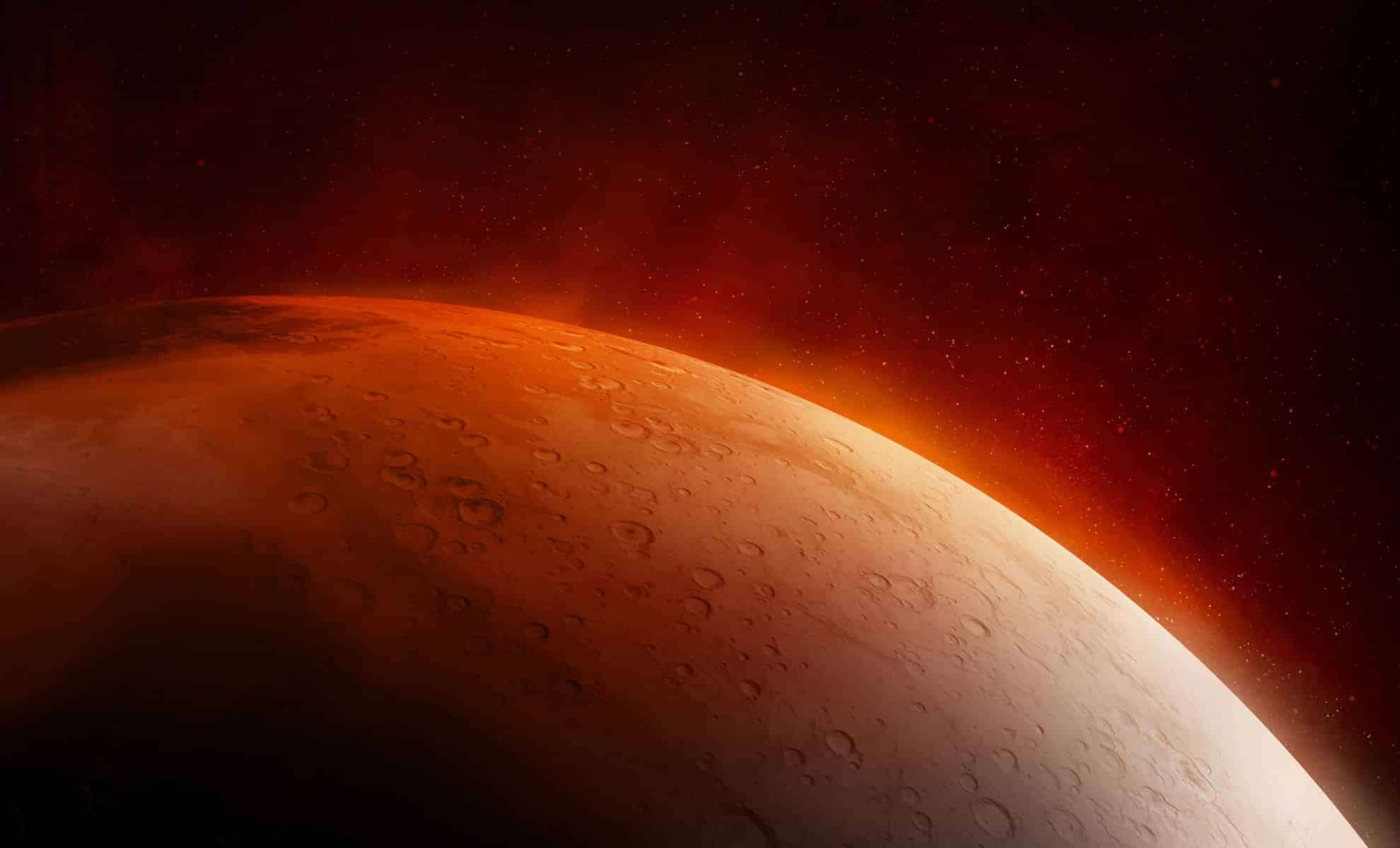
Mars has enchanted humanity for ages, gaining the reputation as “The Red Planet” due to its distinctive hue. However, is Mars genuinely as red as popular belief suggests? While it does appear reddish when observed from Earth, the reality of its coloration is more intricate and subtle than the fiery image commonly portrayed.
How Iron Oxide Shapes Mars’ Appearance
At a glance, Mars may resemble a glowing ember in the night sky, but its surface color isn’t uniformly red. The planet’s characteristic tint results mainly from iron oxide—rust—in the dust and rocks covering much of its terrain. This rusty dust imparts the familiar reddish shade that defines Mars’ look, especially from a distance.
The relationship between Mars and iron oxide is noteworthy since this compound also creates the red coloration of rust on Earth. Just as iron oxidizes with oxygen on our planet, Mars’ surface carries a similar oxidized iron layer, which often appears as rusty browns or muted tans under various conditions.

A Diverse Palette on the Martian Surface
Despite its nickname, Mars exhibits a complex range of colors beyond simple red tones. Imagery from orbiters and surface rovers reveals colors dominated by rusty browns, soft oranges, and patches of tan that diversify the landscape.
Mars’ polar regions add to this variety with expansive white ice caps seen especially during colder periods. These ice formations consist of both frozen water and carbon dioxide—commonly called "dry ice"—which undergo seasonal cycles. As sunlight reaches these poles, dry ice sublimates, diminishing the ice caps, while during colder nights, they expand again, offering scientists vital clues to the planet's changing seasons.
Exploring Mars Beyond Visible Light
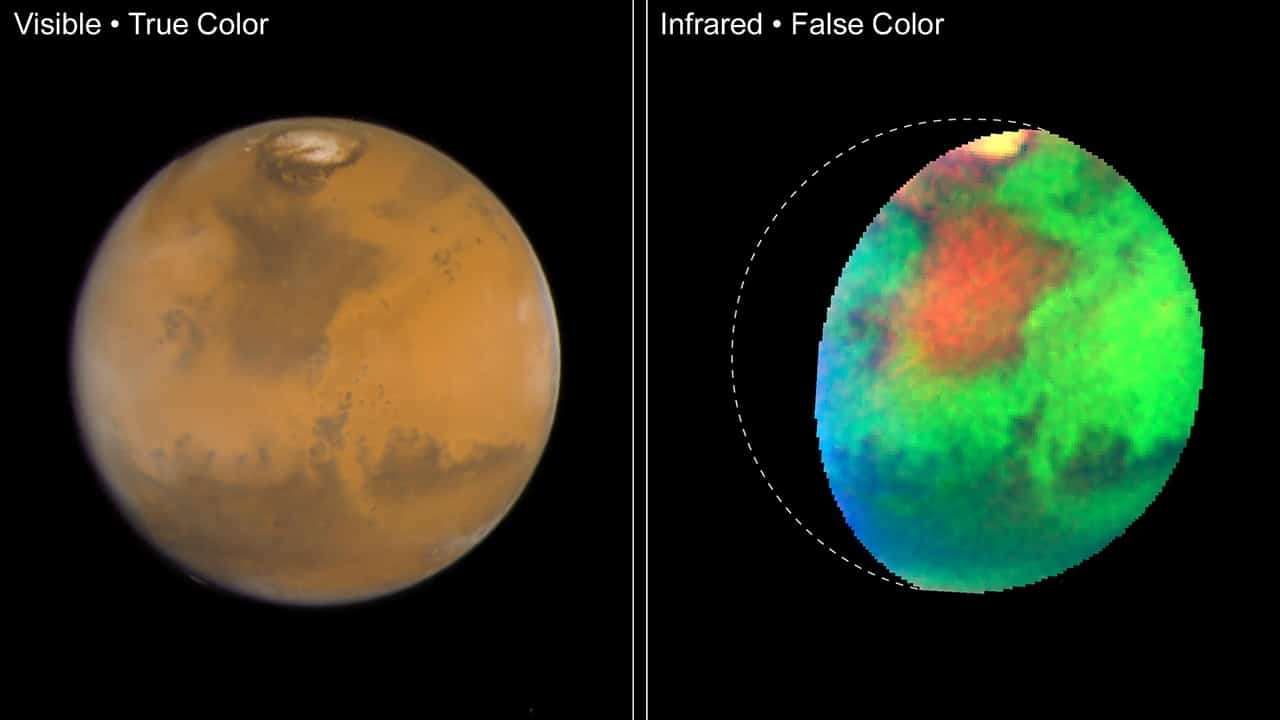
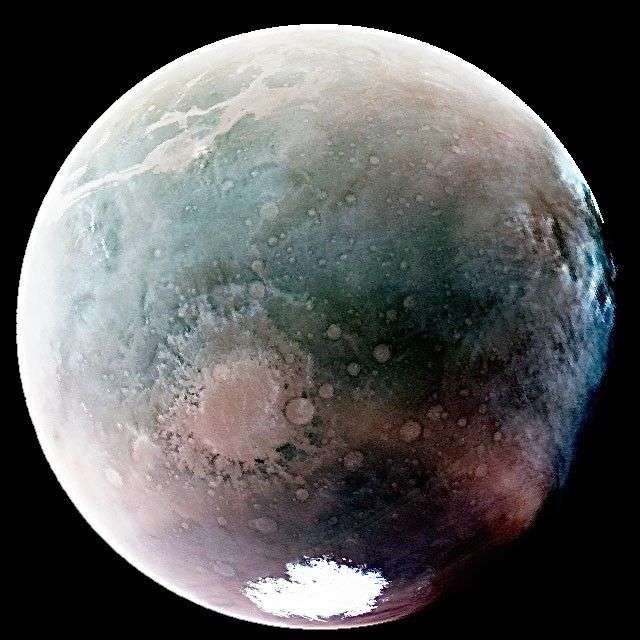
Although Mars' reddish appearance is prominent in typical images, studying the planet using alternate wavelengths uncovers even more intriguing details. Instruments sensitive to ultraviolet (UV) and infrared (IR) light capture features invisible to the naked eye, enabling deeper analysis of Mars’ surface and atmosphere.
Infrared observations display aspects of Mars’ terrain in "false colors," highlighting geographical structures that ordinary photos cannot reveal, aiding scientists in their study of Martian geography.
Additionally, NASA’s MAVEN mission provides ultraviolet images that offer unique insights into Mars’ upper atmosphere. These perspectives are essential for understanding the planet’s evolutionary history and its capacity to have supported liquid water in the past.
Historical Significance of Mars’ Reddish Tint
Though Mars appears red to observers, its authentic coloration is far more complex, a fact modern science continues to unveil with advanced technology. These discoveries allow researchers to perceive the Red Planet in new ways, emphasizing subtle color variations seen in ultraviolet and infrared spectrums that captivate both scientists and enthusiasts.
Throughout history, the reddish glow of Mars in the night sky has been a subject of intrigue. Ancient cultures, such as the Romans, associated the planet’s color with blood and warfare, naming it after their god of war. Interestingly, this connection isn’t too far-fetched since the iron oxide on Mars resembles the iron in hemoglobin, the molecule responsible for the red color of blood.
- Categories:
- News












0 comments
Sign in to Comment