
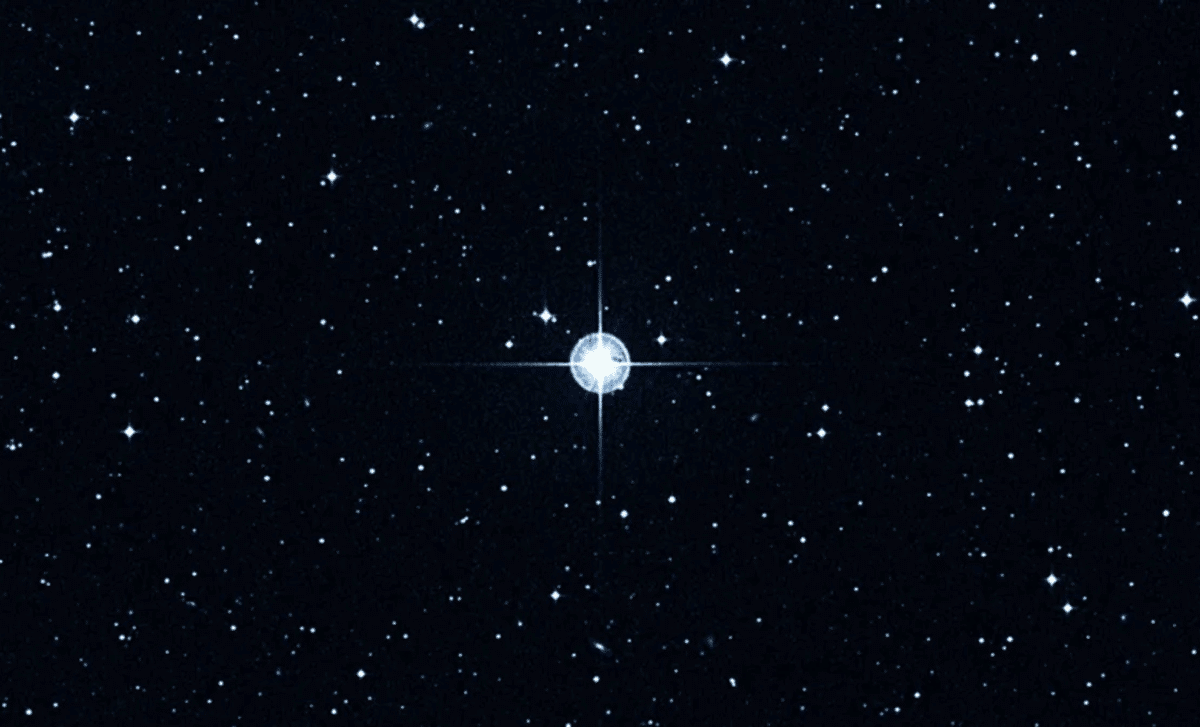
The Methuselah Star, formally called HD 140283, has captivated astronomers for decades due to its extraordinary age, once estimated to surpass the universe’s own timeline. This puzzling claim sparked intense debate and pushed scientists to investigate further. How could a star apparently outdate the cosmos? Recent advancements have provided fresh insights into this celestial enigma.
A Timeless Celestial Neighbor
HD 140283, known as the Methuselah Star, resides roughly 200 light-years away in the Libra constellation. Its close proximity and distinct characteristics make it a star of significant interest. Classified as a fast-moving, metal-poor sub-giant, its composition hints at formation during the universe’s earliest epochs, as metals in stars commonly indicate their generational age. This star’s minimal metal content pointed to its extraordinary antiquity.
Early calculations astonishingly dated the star to about 16 billion years old—older than the current estimation for the universe’s age of 13.8 billion years. This discrepancy posed fundamental challenges to cosmologists and astrophysicists alike, provoking discussions about the accuracy of stellar models and cosmological theories.

Pinpointing Distance with the Hubble Telescope
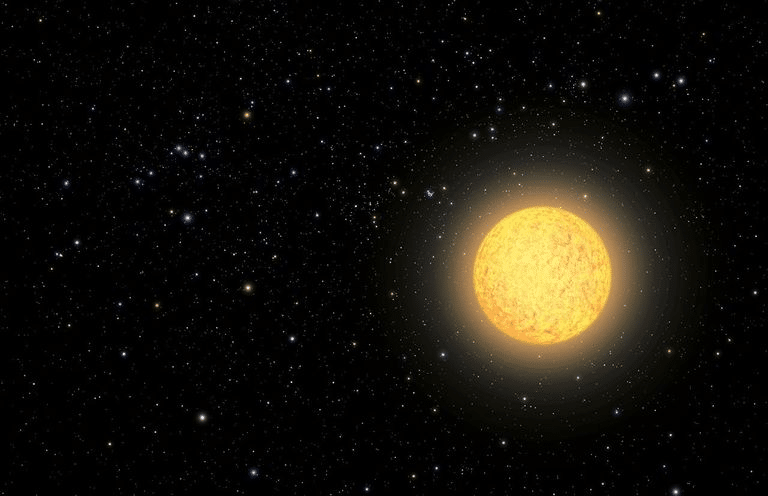
The mystery gradually unraveled when the Hubble Space Telescope team achieved more precise distance measurements. Howard Bond from the Space Telescope Science Institute remarked on the challenges: “Perhaps the cosmological framework is flawed, or stellar physics needs adjustment, or the star’s distance was inaccurately gauged.” To resolve this, the team meticulously reduced measurement uncertainties to better calculate the star’s luminosity and age.
With the updated distance now at 190.1 light-years, the star’s age estimate was corrected, lowering it to approximately 14.5 billion years—close enough to the universe’s age to be plausible within the margin of error. Despite this, the Methuselah Star remains the eldest star measured to date.
Racing Through the Galactic Halo
One remarkable trait of this star is its exceptional speed. As noted by the NASA Hubble Mission team, “The star’s rapid movement suggests it’s merely passing through our stellar environment.” It likely originates from the galaxy’s ancient halo, far from the Milky Way’s disc where it now traverses. Its orbit traces a route looping through the galaxy before eventually returning to the halo region.
This swift, long journey through different galactic zones embodies the star’s extraordinary history. It serves as a living testament to the formation and evolution of our galaxy and the early cosmic conditions in which such stars first emerged.
- Categories:
- News









0 comments
Sign in to Comment