

Stephen Robinson, a veteran NASA astronaut known for his four space shuttle flights and three spacewalks, was left amazed in 2024 when he encountered an audacious satellite initiative. Currently directing the Center for Space Exploration Research at UC Davis, Robinson has witnessed numerous advancements during his 36-year stint in the space sector. Still, when the startup Proteus Space unveiled its satellite concept, he called it "unbelievable."
A Remarkable Breakthrough
Proteus, a relatively new Los Angeles-based company, aimed to deploy a satellite just 13 months after receiving project approval. For someone like Robinson, who has seen many ambitious projects, this schedule seemed nearly impossible. Yet by June 2025, Proteus impressively constructed the satellite in only eight months, claiming it to be the quickest launch-ready satellite ever developed.
Phys.org reports that the swiftness of this project stunned many experts in the field, including Robinson himself. “I’ve spent decades in space technology, and I’ve never encountered a project moving this fast,” he remarked.

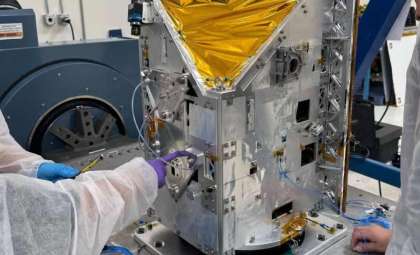
Robinson led the UC Davis division as the principal investigator, collaborating with Proteus on a critical satellite payload designed to forecast the status of the satellite’s power systems. This payload evaluates various parameters to predict the future condition of the satellite's electrical components.
Such technology could revolutionize lengthy space missions, where delayed communications with Earth hinder prompt problem solving. “The concept isn’t new,” Robinson said, “but what’s revolutionary is that it operates directly on the spacecraft.”
Proteus Space's AI-Powered Design Strategy
The breakthrough at Proteus stems from its intensive use of artificial intelligence. Their software examines multiple aspects—such as budget, dimensions, and dependability—and swiftly produces numerous satellite design options. CEO David Kervin noted the AI can evaluate 2,300 configurations within ten minutes, enabling rapid and adaptable satellite development.
This cutting-edge AI application is central to Proteus’ goal to slash satellite production time and cost. Robinson likened the process to home construction: “It’s like deciding where to place a bathroom or garage, which then influences the other rooms’ layout.”
The Experts Driving Innovation
The lab at UC Davis was headed by aerospace engineer Adam Zufall, whose background at NASA infused the team with vital expertise. Zufall, currently pursuing a Ph.D., attributed his NASA experience as instrumental for contributing to the satellite’s mission. “Engineering fundamentally requires hands-on frustration when building products,” Zufall said. “That’s absent if you’re only in the classroom.”
Zufall’s practical knowledge and ability to collaborate across disciplines made him essential to the effort. Robinson commended him as a “remarkable project manager,” praising his knack for rallying the team and handling intricate challenges.
Testing presented one of the toughest hurdles. Zufall’s experience with spacecraft testing streamlined the process, guaranteeing rigorous validation despite being unable to test in actual space conditions.
The combination of Proteus Space’s forward-thinking AI tools and seasoned engineering expertise has driven this satellite initiative to the forefront of innovation in the aerospace sector. Robinson, serving also as an advisor to Proteus, highlighted how merging human skill with advanced technology not only reduces risks but also accelerates satellite production.
- Categories:
- News











0 comments
Sign in to Comment