
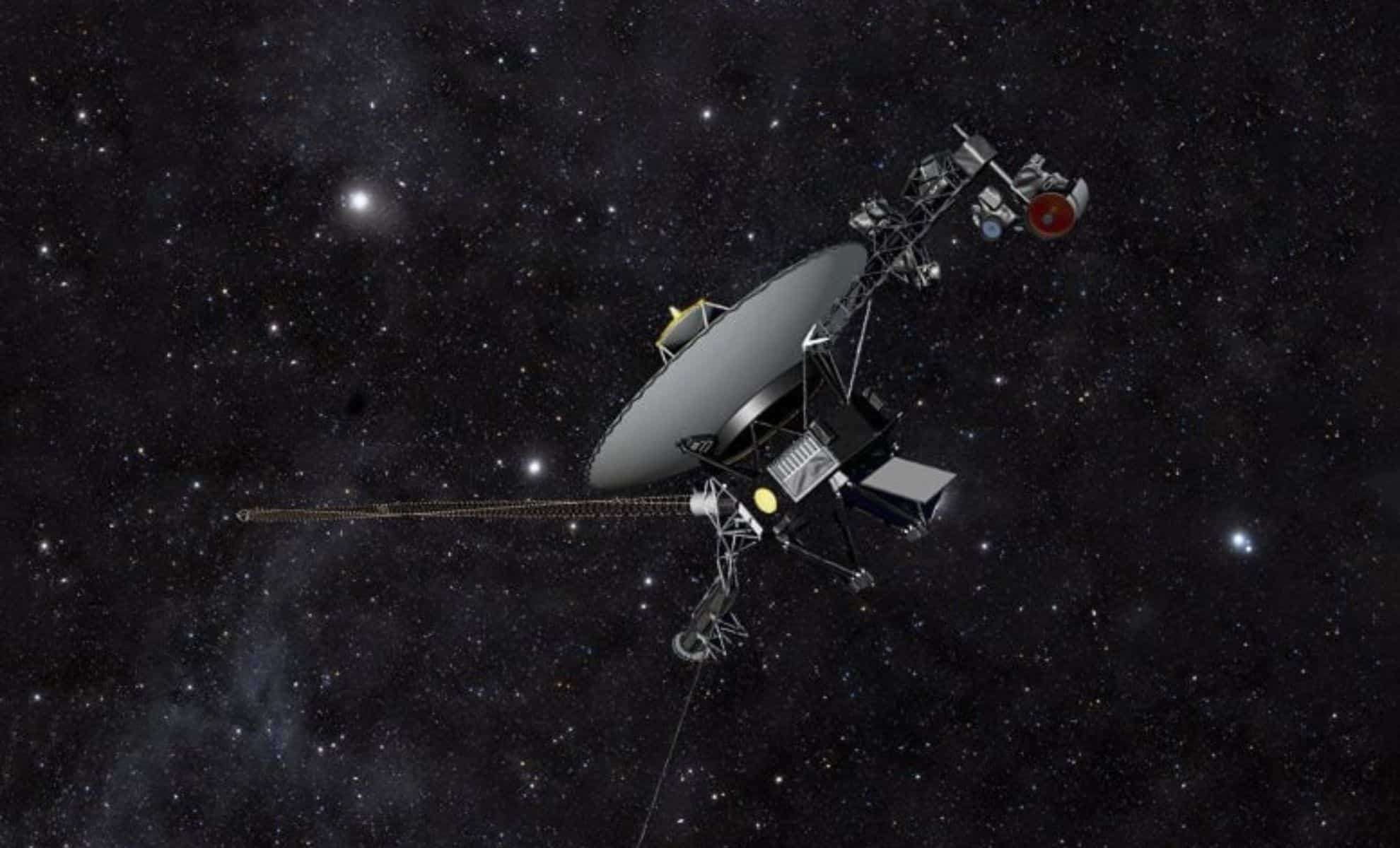
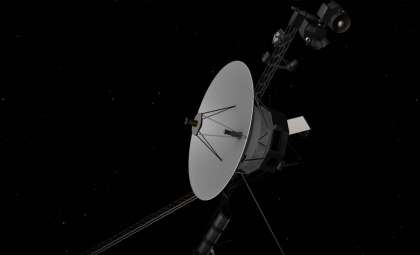
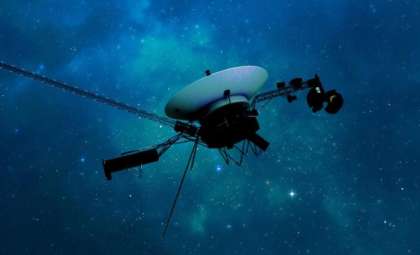
NASA’s iconic Voyager 1 spacecraft, journeying silently through space for nearly five decades, has once more demonstrated its remarkable endurance. Following a significant communication breakdown in October 2023, the venerable probe has successfully reestablished contact, sending vital information back to Earth. Now more than 24.9 billion kilometers (15.4 billion miles) away, Voyager 1 operates on severely limited power yet continues to unveil new discoveries at the outer edges of our solar system. This surprising rebound highlights the masterful engineering behind the spacecraft’s sustained functionality, despite its advanced age and immense distance.
Communication Failure and Ingenious Resolution
On October 19, 2023, Voyager 1 encountered a sudden failure when its main transmission system ceased operation. The spacecraft’s X-band transmitter, responsible for relaying data to Earth, abruptly went offline. This unexpected issue prompted engineers to swiftly work on restoring communications, while the spacecraft continued running on its dwindling power supply. Experts believed the probe’s fault protection system had activated, and as NASA’s Tony Greicius detailed in the Voyager Blog, “The flight team suspected that Voyager 1’s fault protection system was triggered twice more and that it turned off the X-band transmitter and switched to a second radio transmitter called the S-band.”
Although the principal communication link was interrupted, the backup S-band transmitter allowed the team to keep tracking Voyager 1’s position. Detecting this signal, however, was a formidable feat at such a staggering distance. Greicius explained, “While the S-band uses less power, Voyager 1 had not used it to communicate with Earth since 1981. It uses a different frequency than the X-band transmitters’ signal, which is significantly fainter.” Due to the weak nature of the S-band’s transmission, it was uncertain whether Earth-based instruments could detect it. Yet, thanks to the expertise of the Deep Space Network engineers, the faint signal was ultimately captured. “The flight team was not certain the S-band could be detected at Earth due to the spacecraft’s distance, but engineers with the Deep Space Network were able to find it,” Greicius remarked.

Successfully locking onto Voyager 1’s S-band signal—sent from its current position in interstellar space—showcases the extraordinary capabilities of NASA’s Deep Space Network. Once the signal was verified, the team managed to reactivate the X-band transmitter by mid-November, enabling Voyager 1 to resume full communications and continue delivering invaluable scientific observations from the solar system’s distant frontier.
Power Limitations and the Path Forward
Despite the restoration of its communication systems, Voyager 1’s power supply remains a critical constraint. After nearly 50 years in space, well past its planned mission duration, the spacecraft’s energy reserves steadily diminish. Its radioisotope thermoelectric generators (RTGs), which produce electricity through the radioactive decay of plutonium, are gradually losing their effectiveness. NASA’s engineers are carefully managing Voyager 1’s energy consumption, making essential decisions to keep the probe operational and its data stream intact. Several non-essential components have been shut down, and power management is conducted with exacting care. Still, as the RTGs’ output declines further, Voyager 1 faces the inevitable challenge of power depletion, driving efforts to extend its mission life as long as possible.
The ongoing reduction in available power means some instruments and subsystems must be sacrificed. The mission team continually prioritizes which devices remain active, maintaining focus on transmitting the most valuable scientific information. With nearly zero contribution from solar energy at this vast distance from the Sun, the RTGs remain Voyager 1’s sole energy source. Nevertheless, the spacecraft has far surpassed expectations, remaining functional decades beyond its intended operational timeframe.
The Lasting Impact of Voyager 1
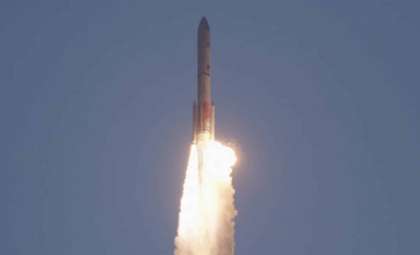
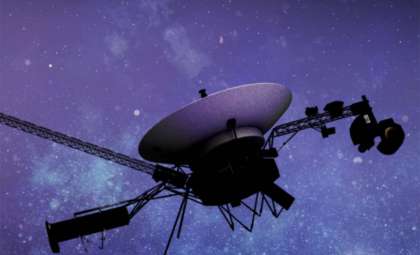
As Voyager 1 ventures deeper into the vast expanse of interstellar space, its impact on space exploration only grows. Launched in 1977 to survey the outer planets, its primary objectives were completed long ago. Yet its extended mission continues to deliver groundbreaking data about deep space. The probe has provided critical information about the interstellar medium, cosmic radiation, and magnetic fields—areas once beyond human reach. These insights have broadened our comprehension of the expansive universe beyond the Sun’s influence, revealing new facets of cosmic phenomena.
Approaching its golden jubilee, Voyager 1 stands as a symbol of human ingenuity and exploration. Despite the spacecraft’s aging components and extraordinary distance from Earth, each successful communication represents a triumph of determination and technical skill. NASA’s engineering team continues to push the boundaries of what is possible, keeping Voyager 1 active and scientific discoveries flowing. As the probe sends back data from the very edge of our solar system and beyond, it embodies humanity’s furthest reach into space, leaving a legacy of technological achievement and cosmic understanding for future generations to build upon.





0 comments
Sign in to Comment