
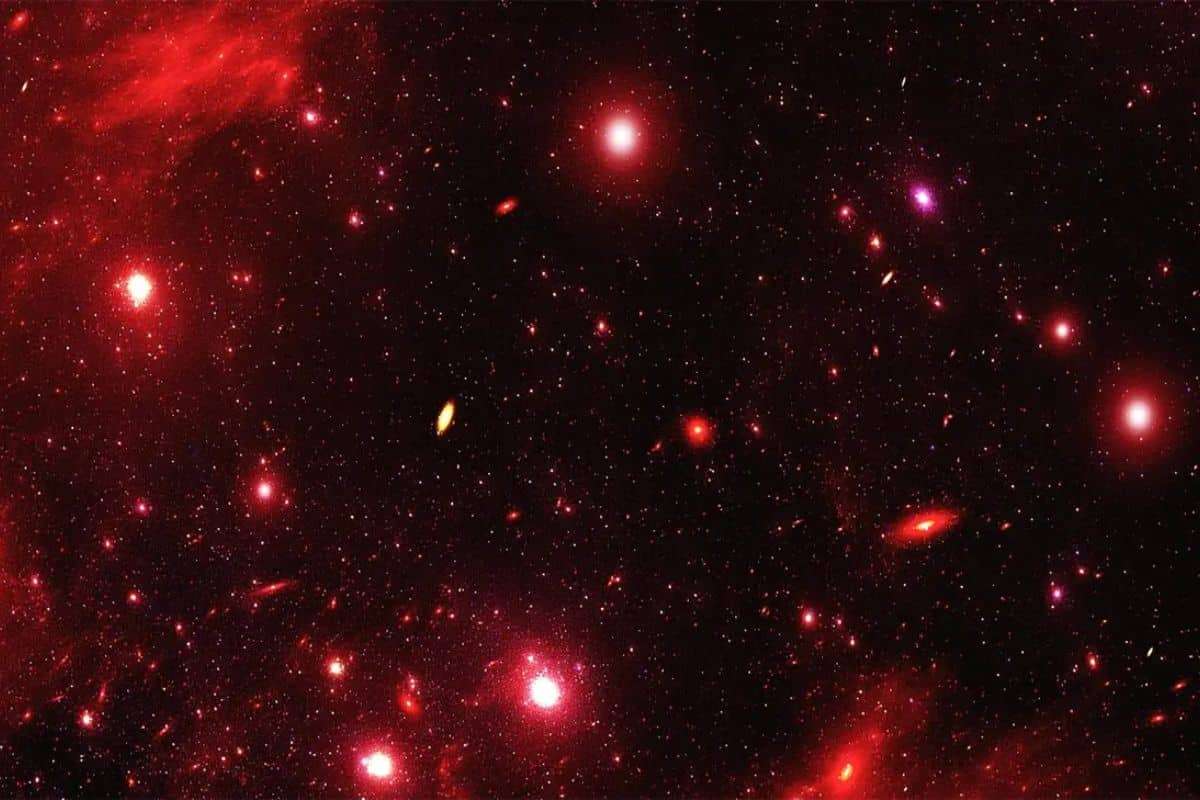
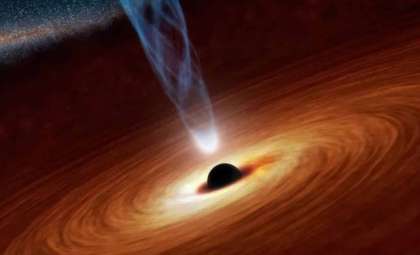
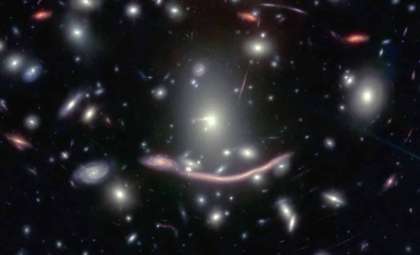
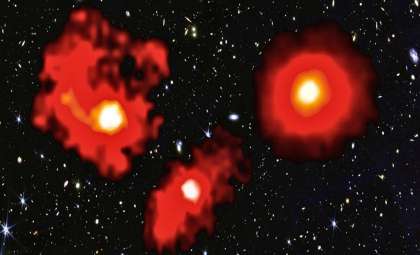
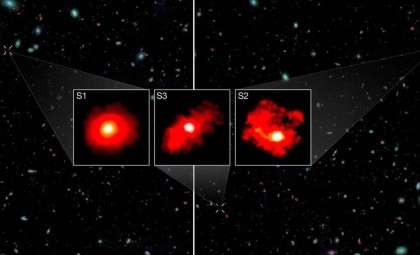
The James Webb Space Telescope has identified peculiar compact red light sources in the far reaches of the cosmos, often referred to as little red dots (LRDs). These may be rapidly growing black holes enveloped by dense, ionized gas clouds.
Intriguing Light Patterns Capture Scientists’ Attention
Using the JWST to observe some of the Universe’s earliest times, astronomers detected unexpected, small red glows scattered in deep field images.
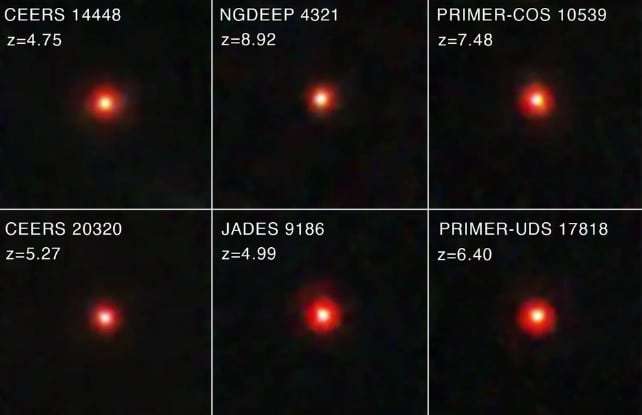
These LRDs show extremely high redshift values, making them some of the oldest light sources visible—likely originating just a few hundred million years after the Big Bang.

While their nature was initially puzzling, scientists found that the spectral features of these dots were significantly broadened due to Doppler effects, signifying gas whirling around these objects at velocities exceeding 1,000 kilometers per second.
This rapid movement strongly suggests the presence of supermassive black holes consuming surrounding matter under immense gravitational forces.
Atypical Active Galactic Nuclei
These LRDs are hypothesized to be a unique variety of active galactic nuclei (AGN), with matter spiraling into black holes and releasing energy. However, they differ from standard AGNs in key ways.
Unlike conventional AGNs, LRDs show minimal emissions in X-ray and radio wavelengths. Their energy is primarily emitted in the infrared spectrum, exhibiting a flat and unusual profile.
To explore this further, astronomers analyzed 12 LRDs via JWST’s advanced spectrographs and compared observations with models of primordial supermassive black holes. They concluded that these black holes are cloaked in thick layers of ionized gas, which blocks most radiation except infrared light that escapes more easily.
Black Holes Feeding at Extreme Rates
To account for the observed brightness, these black holes must be accreting matter close to their Eddington limit, the maximum rate at which mass can be consumed without radiation pressure halting the inflow.
At this threshold, the outward radiation pressure nearly balances the inward gravitational force, so any increase would push matter away faster than gravity can pull it in.
Despite these intense processes, the mass estimates for these black holes remain relatively low, ranging from about 10,000 to 1 million times the mass of our Sun.
Connecting the Dots in Black Hole Growth
Current evidence indicates that these LRDs could represent a previously unobserved early phase of black hole growth. As they accumulate mass, the surrounding dense ionized envelope may eventually dissipate.
When the gas cocoon clears, these objects would transform into typical active galactic nuclei visible across a broad range of wavelengths.
This model also clarifies why no nearby LRD analogs exist; at lower redshifts, the ionized gas would have vanished, leaving mature AGNs and galaxies.
Probing the Universe's Infancy
The discovery of these young, fast-growing black holes wrapped in ionized gas supports the concept that black holes formed and evolved much earlier and more rapidly than formerly believed.
Continued JWST observations aim to detect additional LRDs and improve theoretical models surrounding black hole origins and early galaxy formation.
The researchers behind this groundbreaking study published their results in a preprint titled “JWST’s little red dots: an emerging population of young, low-mass AGN cocooned in dense ionized gas.”
These faint red sources shining through cosmic history may be the earliest signs of black holes growing at nature’s speed limits.
- Categories:
- Astronomy



0 comments
Sign in to Comment