
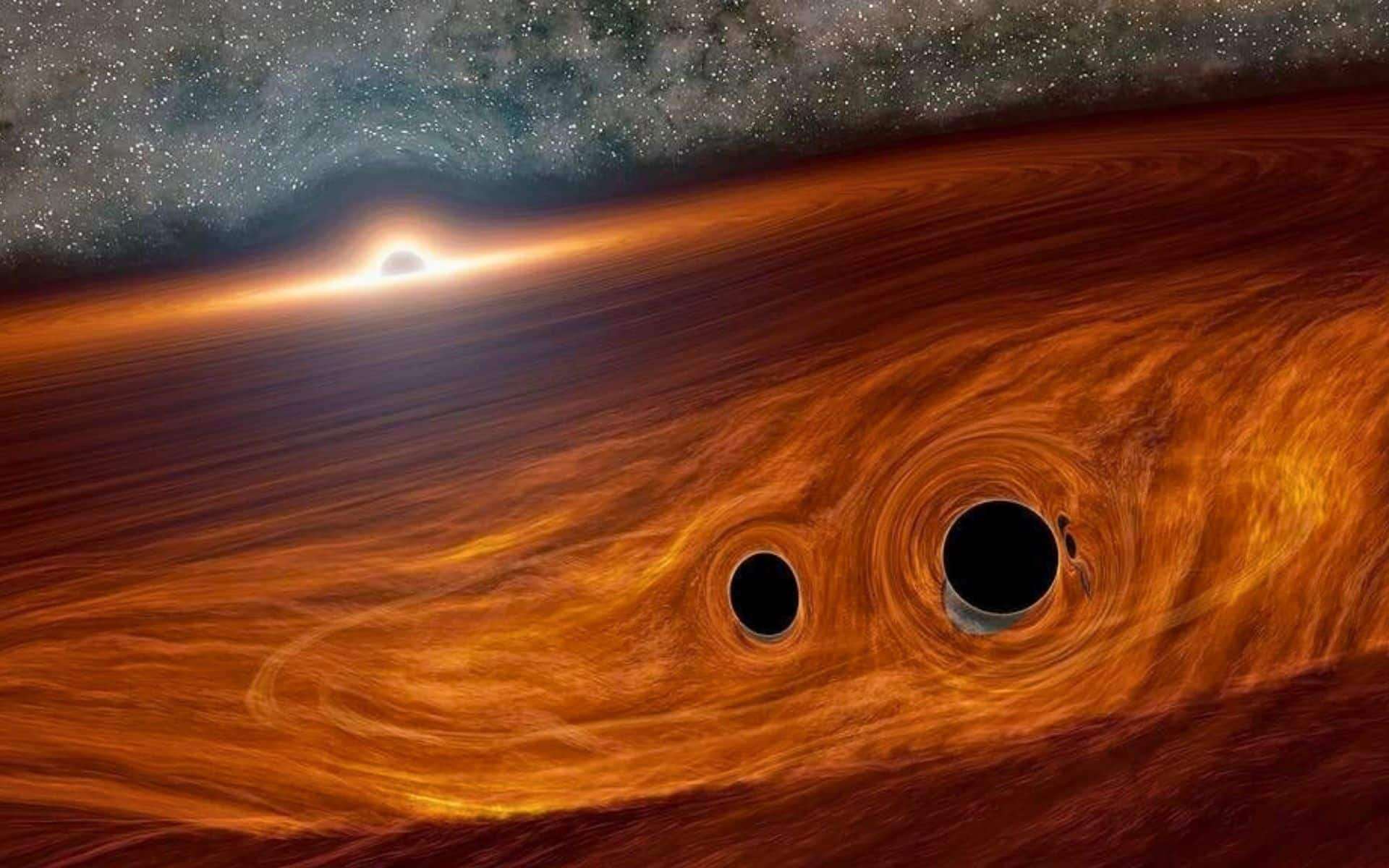
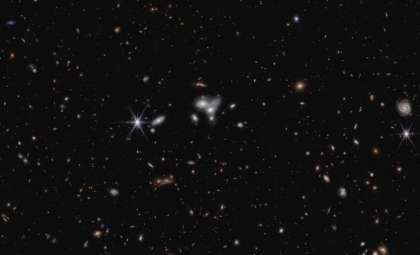
Utilizing NASA’s James Webb Space Telescope, astronomers have identified a primordial black hole that is expanding at an exceptional speed in the ancient universe, challenging current theories about black hole development.
A Cosmic Enigma from the Universe’s Dawn
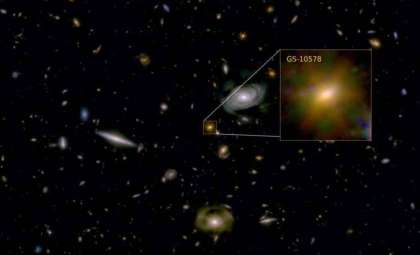
Black holes, known for their immense gravitational pull that even light cannot escape, have fascinated scientists for decades. Usually residing in galactic centers, these objects grow by absorbing matter around them. Now, Webb’s latest observations reveal a remarkable case: a black hole dubbed LID-568 exhibiting extraordinary growth rates during the universe’s infancy.
Formed roughly 1.5 billion years post-Big Bang, when the cosmos was only about 11% of its present age, LID-568 boasts a mass roughly ten million times that of our Sun. This makes it far larger than Sagittarius A*, the supermassive black hole anchoring the Milky Way. The puzzle centers on how such an enormous black hole could accumulate mass so rapidly in such an early epoch.

Surpassing Theoretical Growth Barriers
Scientists including Hyewon Suh from the International Gemini Observatory and Julia Scharwächter of NOIRLab were surprised to find that LID-568’s consumption of matter far exceeded the Eddington limit—a theoretical cap on how fast black holes can grow based on radiation pressure. This black hole’s accretion rate was more than 40 times that threshold, raising new questions about the dynamics behind black hole feeding.
“Observational evidence for such rapid growth has been missing until now,” Suh noted. Their results imply that unknown processes might enable black holes like LID-568 to gain mass at breakneck speeds, forcing us to revisit current black hole formation theories.
Decoding the Origins of Rapid Accretion
Experts suggest primordial black holes might form from either the collapse of the universe’s earliest massive stars at their demise or from gravitational contraction of large gas clouds. LID-568’s intense feeding episodes could shed light on how these early cosmic giants gathered mass so swiftly.
The discovery was made possible by Webb’s infrared detection capabilities, which complemented initial observations from the Chandra X-ray Observatory. Heated material orbiting a black hole emits X-rays, illuminating these enigmatic objects for astronomers.
“We still don’t fully grasp the mechanisms allowing LID-568 to defy expected accretion limits,” Scharwächter said. Ongoing studies aim to unravel this mystery further, with more Webb data expected to deepen our understanding of early universe black holes.
- Categories:
- Astronomy ,
- Space




0 comments
Sign in to Comment