
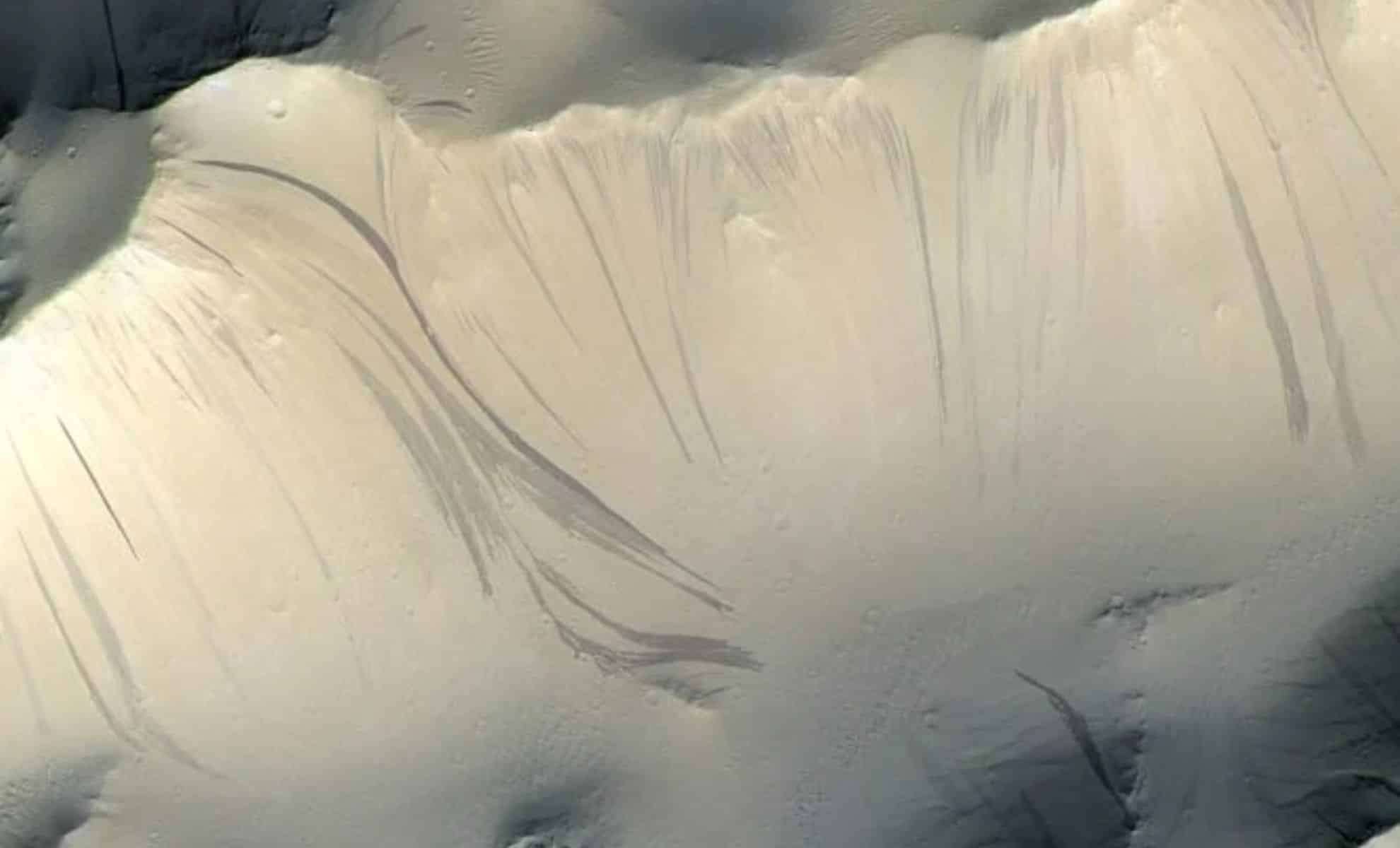
Recent advancements in Martian research have confirmed that the enigmatic dark streaks seen on Mars are caused not by liquid water but by dry dust slides, according to a study featured in Nature Communications. Employing sophisticated artificial intelligence to scrutinize nearly half a million surface features, scientists have overturned longstanding beliefs about Mars’ geology and its habitability potential. This new insight underscores the planet’s active but arid surface dynamics.
Decades of Curiosity About Martian Slope Streaks
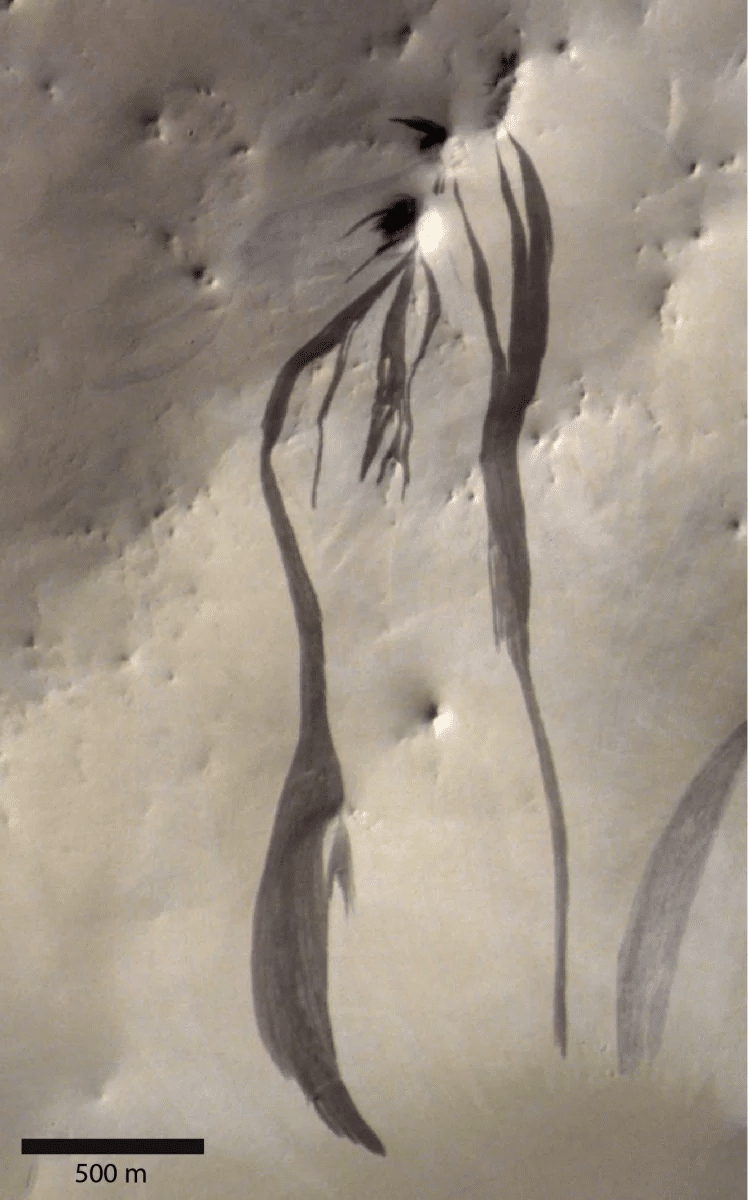
Since their discovery in the 1970s, researchers have been intrigued by thin, elongated streaks descending the slopes of Mars’ massive volcanoes and impact craters, especially in regions like Olympus Mons. Observations from NASA’s Viking orbiters initially recorded these dark and light streaks extending hundreds of meters along steep inclines. The features captured scientific interest because they appeared and faded over varying timescales and were present on both hemispheres. The prevailing theory suggested subsurface briny water flows as the cause, raising hopes for possible microbial habitats. However, the streaks’ behaviors and properties resisted straightforward explanation, keeping their origins a mystery.
Revealing Dry Dust Avalanches with AI Technology
Scientists from the University of Bern and Brown University employed machine learning techniques to analyze over 86,000 images from NASA’s Mars Reconnaissance Orbiter. This extensive dataset culminated in the creation of the most comprehensive global database to date, containing nearly 500,000 Martian slope streaks. Deep learning analysis demonstrated no support for liquid water influencing these features. Instead, the team identified them as phenomena resulting from dry dust avalanches, likely triggered by environmental factors such as wind, meteorite impacts, or rockfalls. This paradigm shift highlights the dominance of dry, physical forces sculpting the Martian landscape rather than wet processes.

Importance of High-Resolution Imaging and Long-Term Monitoring
The investigation utilized ultra-detailed imagery from various orbiters, including the European Space Agency’s ExoMars Trace Gas Orbiter with its CaSSIS camera, alongside NASA’s HiRISE imager. These instruments deliver vivid color images and enable tracking of seasonal and temporal variations in the streaks. The integration of decades of observations with ongoing surveillance was essential to detect reliable trends and dismiss water-based explanations. This research exemplifies how cutting-edge AI and imaging advancements facilitate the discovery of subtle geological activities on Mars, propelling planetary science into a new era.
- Categories:
- News





0 comments
Sign in to Comment