
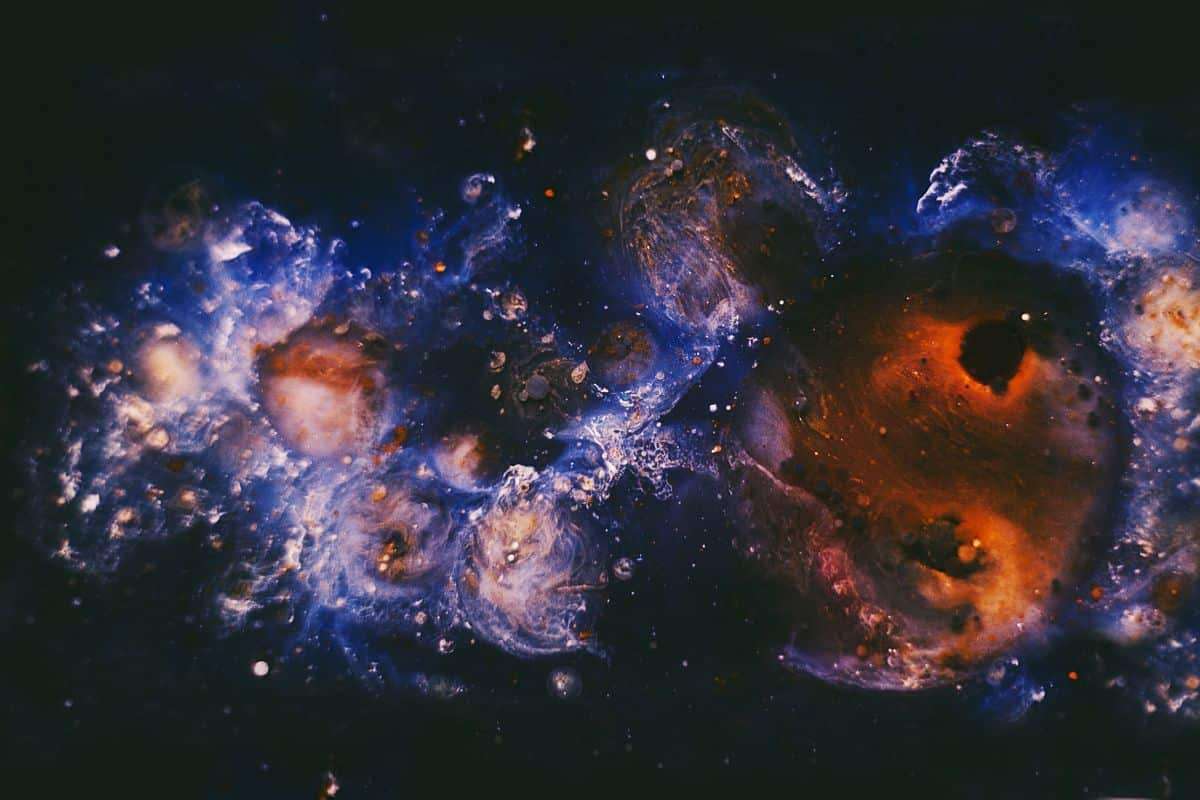
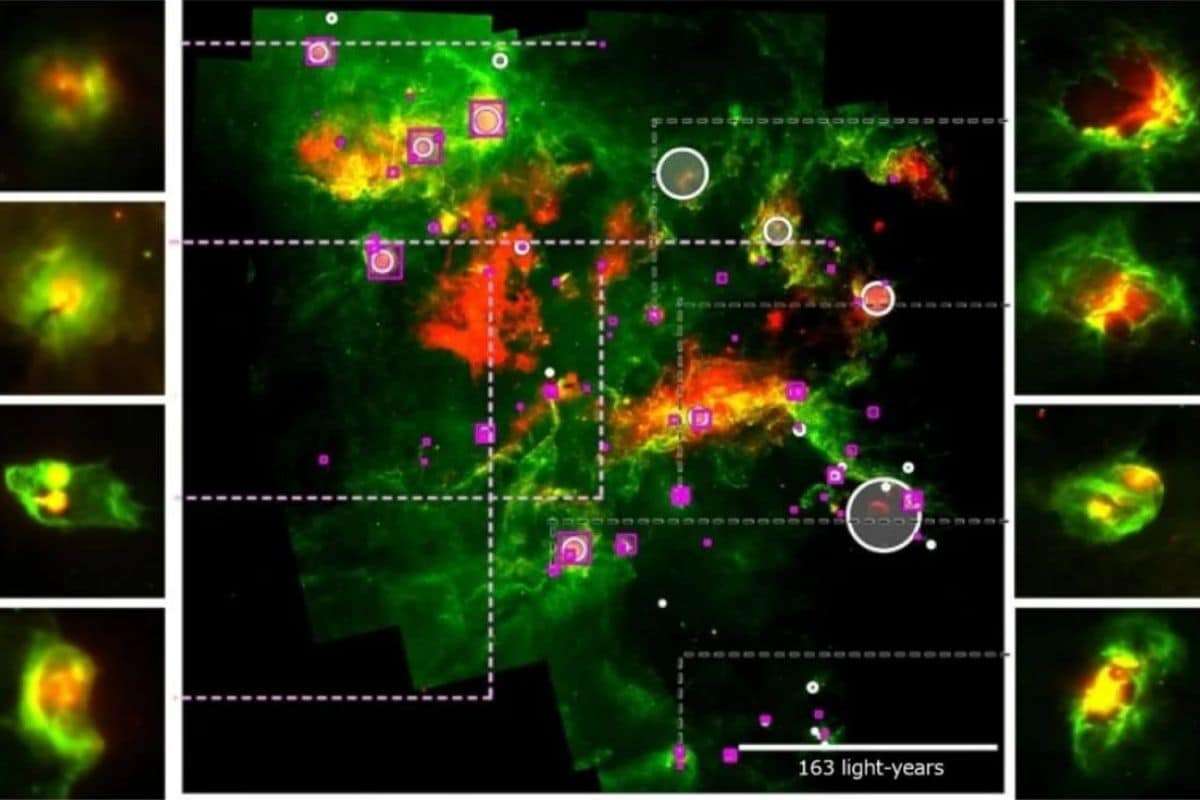
Researchers from Japan have harnessed the power of artificial intelligence (AI) to detect elusive bubble-shaped formations scattered across the Milky Way galaxy. These structures, which relate closely to the processes of star formation and supernova remnants, had previously remained unnoticed due to their faint signatures.
Utilizing advanced deep learning techniques trained on data from space observatories, astronomers are now gaining fresh insights into our galaxy’s dynamic evolution.
Unearthing Galactic Features Beyond Human Capability
Astronomers have historically sifted through vast space images to find Spitzer bubbles associated with young massive stars or supernova debris. Yet, with ever-growing astronomical datasets, conventional manual approaches have become impractical and slow.
As detailed in a recent paper published in Publications of the Astronomical Society of Japan, their team at Osaka Metropolitan University built an AI model capable of analyzing astronomical imagery with remarkable accuracy.
This model was trained using data from both the Spitzer Space Telescope and the James Webb Space Telescope, enabling it to reveal subtle bubble-like structures that had previously escaped detection.

Tracing the Life Story of Stars
These cosmic bubbles serve as lasting signatures of how stars are born and eventually die. When massive stars emerge, their powerful radiation and stellar winds clear out voids in surrounding gas. Equally, supernova explosions generate shockwaves that push away gas, forming expanding shell-like bubbles in space.
Mapping and cataloging these bubbles allows scientists to better understand the forces molding our galaxy. This research not only sheds light on star birth locations but also reveals the long-term impact of supernovas on galactic architecture.
The Expanding Influence of AI in Astronomy
This breakthrough marks an important milestone for AI’s role in astrophysics. While traditional methods involve manual image inspections, deep learning can rapidly analyze enormous datasets, uncovering patterns invisible to the naked eye.
“Our findings demonstrate the potential for detailed studies not only on star formation but also on how explosive galactic events shape their surroundings,” explained graduate student Shimpei Nishimoto, one of the project leads.
Advisor Professor Toshikazu Onishi added that AI advancements will revolutionize our understanding of galaxy evolution, helping astronomers detect even more hidden cosmic features.
Charting Future Galactic Discoveries
The team intends to extend their AI methods to data from upcoming observatories such as the Vera C. Rubin Observatory and the Nancy Grace Roman Space Telescope. These next-generation instruments will deliver deeper and richer cosmic datasets, enabling AI to identify even more subtle structures driving galactic transformations.
Despite being one of the most studied galaxies, the Milky Way continues to reveal unexpected complexities. “We anticipate that future AI enhancements will accelerate uncovering the mysterious mechanisms behind star formation and galaxy evolution,” the researchers concluded.
- Categories:
- Space






0 comments
Sign in to Comment