
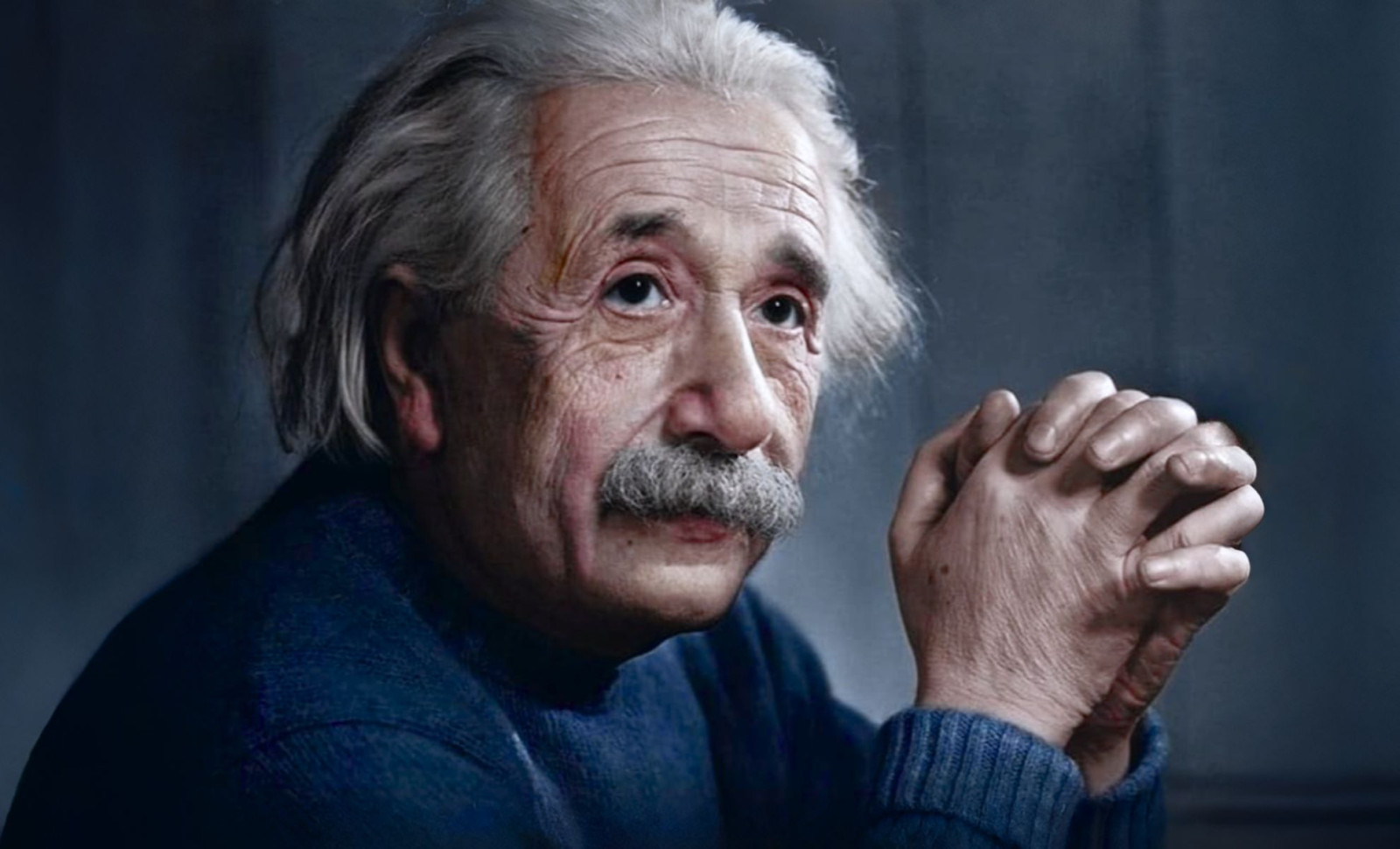
Albert Einstein emphasized that a creative intellect flourishes under conditions many avoid. Through his essays and personal letters, he conveyed that solitude and monotony are not signs of a dull life but vital ingredients for innovative ideas. This perspective, rooted in his 1931 essay The World As I See It and the Einstein Archives at Hebrew University of Jerusalem, has garnered fresh interest as readers consider his insight into the pitfalls of constant interruption.
Einstein’s reflections challenge modern beliefs about collaboration and stimulation. Rather than simply enduring silence, he safeguarded it as essential for his work. In correspondence with a colleague seeking advice, he stated, "I am genuinely a ‘lone traveler’ who has never fully belonged to any country, home, friends, or even family."
This was not a sign of social avoidance but a reflection of his mental process. The archives reveal numerous letters where he counseled young scientists to avoid the trap of endless meetings and superficial busyness that drained energy better devoted to profound contemplation.

How Working at the Patent Office Ignited Breakthroughs
Einstein’s biography offers key proof of his views. In 1905, employed as a technical expert at the Swiss Patent Office in Bern, he authored four groundbreaking papers revolutionizing physics. The repetitive role, reviewing patents for mechanical and electrical devices, occupied his hands but left his mind relatively free.
He later described this job as “my worldly cloister” in letters to his friend Michele Besso. The consistent routine created a mental quiet that allowed him to wrestle with questions that had intrigued him since his youth.
Thanks to these quiet moments during clerical tasks, Einstein developed special relativity, explained the photoelectric effect, and formulated energy-mass equivalence. These achievements were not forged in a bustling academic environment but emerged from a seemingly unremarkable daily existence.
Differentiating Between Isolation and Chosen Solitude
Einstein distinguished between the emotional strain of loneliness and the deliberate embrace of productive solitude. In The World As I See It, he shared that even as his celebrity grew and privacy waned, he never lost his craving for distance and quiet.
He maintained a rich, thoughtful correspondence with peers like Niels Bohr and Max Born. These exchanges, spread out over days or weeks, allowed ample time for reflective, deliberate reasoning.
This method contrasts sharply with today’s rapid-fire communication. Einstein valued dialogue but resisted interruptions that would disrupt the slow, delicate process of constructing a coherent mental framework. According to physicist Abraham Pais, Einstein’s best ideas sometimes arrived not while actively working but during solitary moments, like sailing alone and waiting for the wind to change.
Why These Ideas Matter Today
The recent surge in interest is not due to new findings but changes in how these texts are interpreted. Modern cognitive science increasingly supports Einstein’s lived experience: the brain needs intervals of low stimulation to process information and spark creativity.
A 2012 study in Psychological Science revealed that walking in quiet, natural surroundings significantly boosted creative performance compared to urban ambiances. This outcome aligns with Einstein’s view that mental quietness serves as productive groundwork.
Einstein expressed this plainly in a 1953 letter to a young researcher overwhelmed by distractions: “One must find the time,” he advised, “or rather, one must make the time, by refusing the thousand little claims that others make upon it.” This message reflects decades of defending his focus against constant interruptions.
What the Archives Reveal
The Hebrew University’s Einstein Archives house over 80,000 items, including scientific papers, personal letters, and notebooks. His consistent emphasis on solitude and focused work spans many years, underscoring it as a core principle rather than a fleeting thought.
In a 1930 letter to Queen Elisabeth of Belgium, he praised musicians for achieving the same protected quiet needed for theoretical work, describing it as “the stillness of long concentration.”
Concrete proof is also found in his conditions for joining Princeton University’s Institute for Advanced Study in 1933, where he negotiated minimal teaching duties and exemption from most meetings, recognizing that his productivity depended on an undisturbed mind.
- Categories:
- News












0 comments
Sign in to Comment