
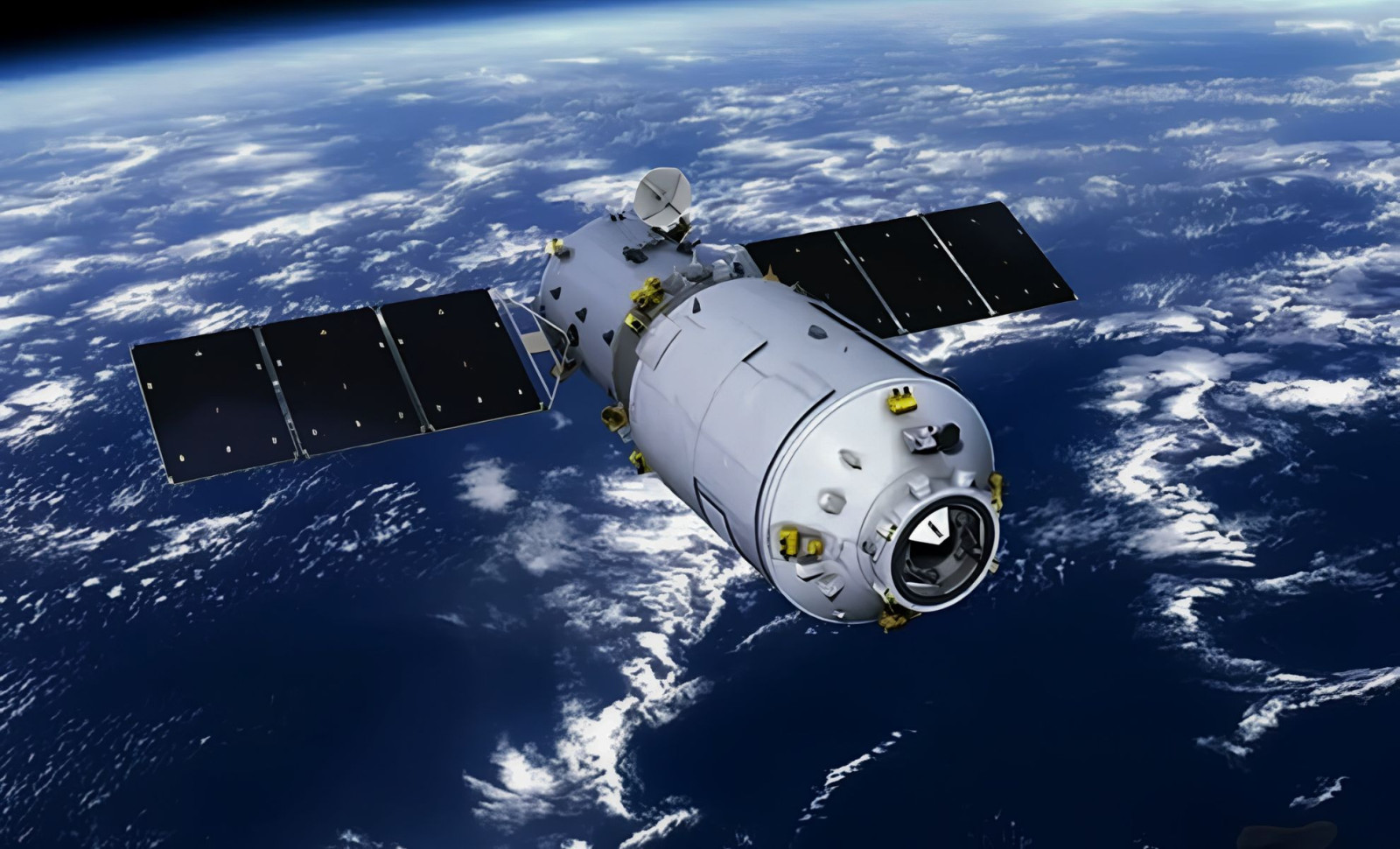
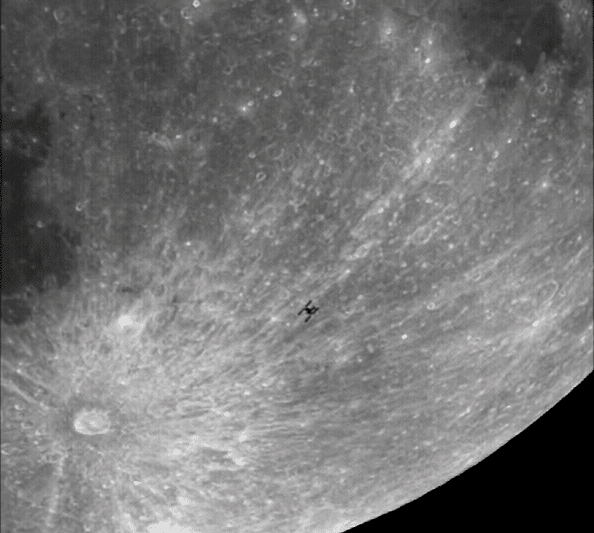
On May 29, a fascinating celestial event enabled amateur astrophotographer Efrain Morales to record China’s Tiangong space station as it zipped across the Moon’s surface. Captured from Puerto Rico, this fleeting alignment lasted less than a second and showcased the space station’s silhouette against one of the Moon’s distinctive regions. According to Space.com, this rare transit occurred at 11:33 p.m. EDT on May 29, just one day before the May Blue Moon.
Transits of spacecraft across the Moon present some of the toughest challenges in astronomical photography. Due to the precise positioning needed between the observer, the Moon, and the orbiting station, such events are visible from a very narrow ground track and vanish almost instantly. Successfully capturing these moments demands meticulous planning, precise predictions, and specialized high-speed imaging equipment.
This transit also offered a unique glimpse of Tiangong’s recognizable design. As the station’s silhouette briefly traversed well-known lunar features, it created a stunning juxtaposition of a cutting-edge space lab against ancient lunar terrain.

A Seamless Capture in Less Than One Second
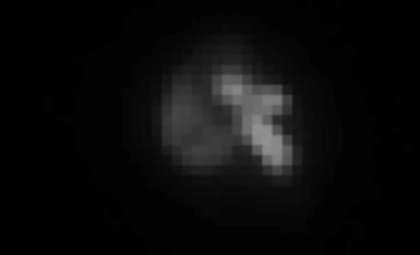
Efrain Morales used a 12-inch telescope paired with an astrophotography camera to record this rapid event. The footage distinctly reveals Tiangong’s large solar arrays and habitation modules as it crossed the bright lunar disk.
Morales emphasized the immense challenge of documenting such a brief transit, noting the need for exact preparation. In correspondence with Space.com, he discussed the difficulty of capturing this fleeting alignment.
“It is a challenge in less then a second to capture this event. Using a program the ISS Transit Finder helps in giving information to capture the space station. Adjusting the FOV and at times calculating last minute deviations in time and positions in which makes it more challenging.”
The software was key for forecasting the transit, although last-minute corrections were required to factor in slight timing and positioning shifts ahead of the station’s pass.
Tiangong’s Path Over Notable Lunar Features
The video makes it appear as though Tiangong is heading directly toward Tycho Crater, one of the Moon’s most prominent impact features. This crater measures about 53 miles (85 kilometers) across and is surrounded by bright rays of ejected material, which become especially vivid around the full Moon.
Additional recognizable landmarks are evident in the footage, including Mare Nubium (the Sea of Clouds) to the left of the transit and Mare Nectaris (the Sea of Nectar) visible near the upper right.
Formed billions of years ago by ancient volcanic flows, these dark basaltic plains provide familiar reference points and highlight the swift motion of the orbiting station across the lunar surface.
Current Status of Tiangong and Its Crew
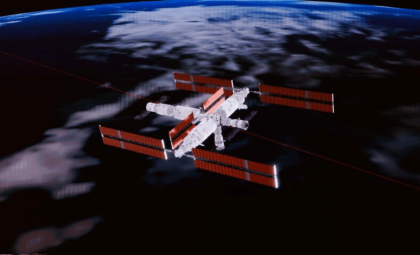
Meaning "Heavenly Palace" in Mandarin, Tiangong is comprised of the Tianhe core module along with the Wentian and Mengtian laboratory modules. These aboard form China’s permanent crewed space station, orbiting Earth between 217 and 280 miles (340 to 450 kilometers) altitude and completing multiple orbits daily.
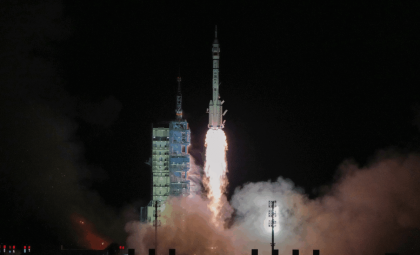
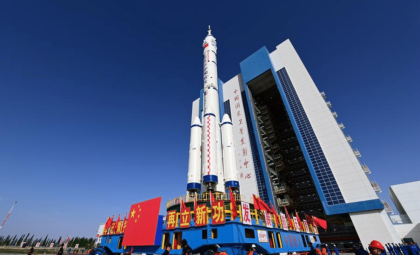
According to Space.com, the station currently hosts the three-person crew of the Shenzhou 23 mission: commander Zhu Yangzhu, pilot Zhang Zhiyuan, and payload specialist Lai Ka-ying. The trio reached orbit aboard a 203-foot (62-meter) Long March 2F rocket on May 24 and are now conducting operations aboard the station.
🇨🇳 Breathtaking Earth Views from China’s Tiangong Space Station
— GeoPaul626 (@Paull626) June 27, 2026
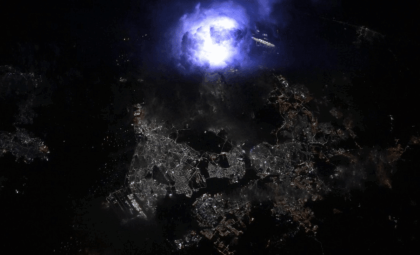
Orbiting high above Earth, the Shenzhou-23 crew aboard China’s Tiangong space station has been capturing stunning footage of our blue planet. Using both handheld cameras and external station cameras, they’re…
- Categories:
- News








0 comments
Sign in to Comment