
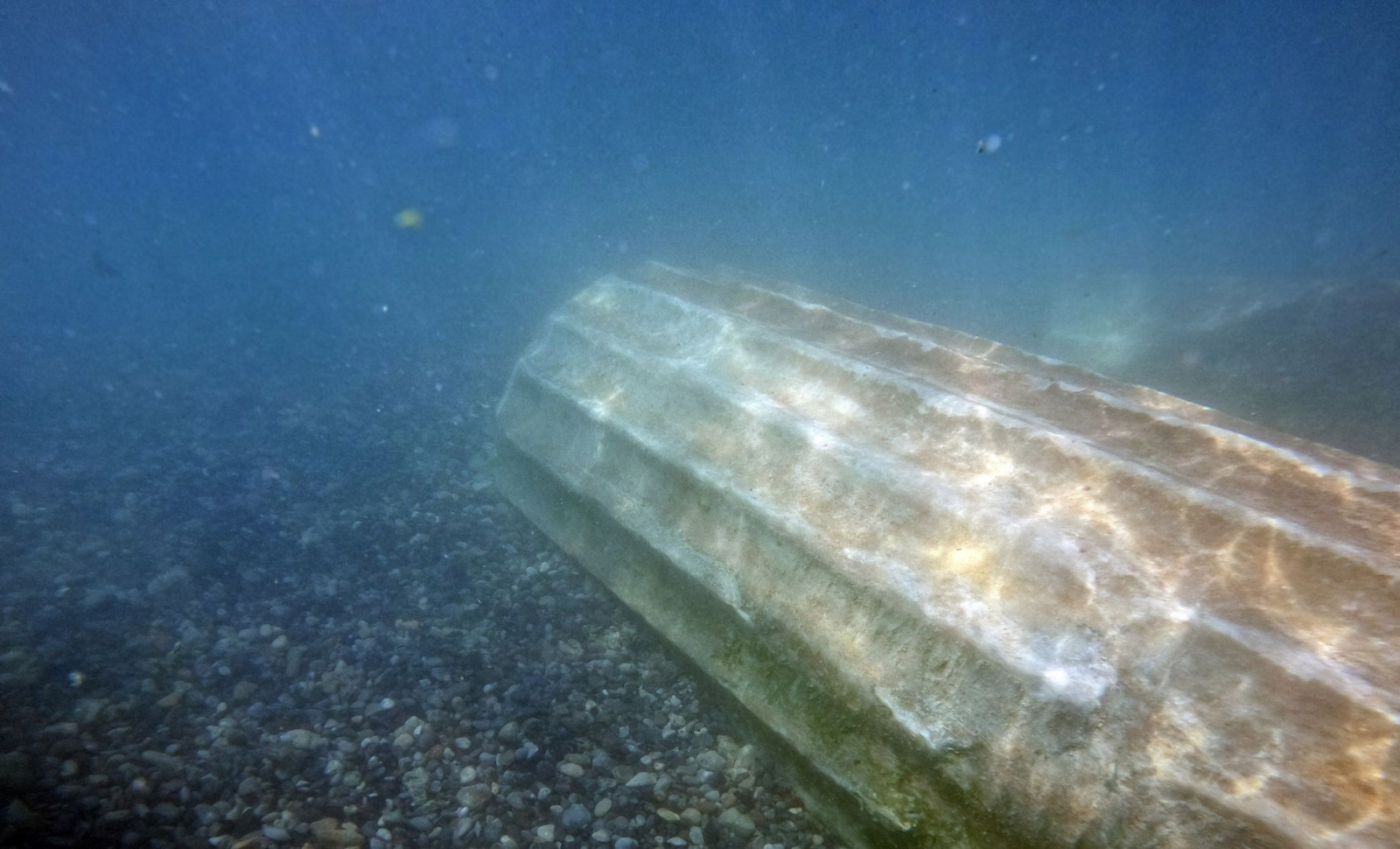
Scientists have uncovered a substantial hidden structure beneath the historic city of Buto in Egypt’s Nile Delta, believed to be a temple built some 2,600 years ago. This groundbreaking discovery was achieved by merging satellite radar observations with innovative underground detection methods to expose concealed archaeological formations.
The breakthrough came as a result of combining satellite radar analysis with geophysical scanning tools designed to spot subsurface remains. Early excavations revealed the presence of mudbrick walls and religious artifacts, with the full findings shared in the journal Applied Geophysics in March 2026.
Satellite Imagery Guided Excavation Efforts
The project began with close inspection of radar data collected by the Sentinel-1 satellite. The research team focused on images from May 5, 2018, scanning for irregularities suggesting buried architectural remains.

These areas of interest were then examined through electrical resistivity tomography (ERT), a technique measuring how electric currents travel through underground layers to reveal hidden structures without physical disturbance.
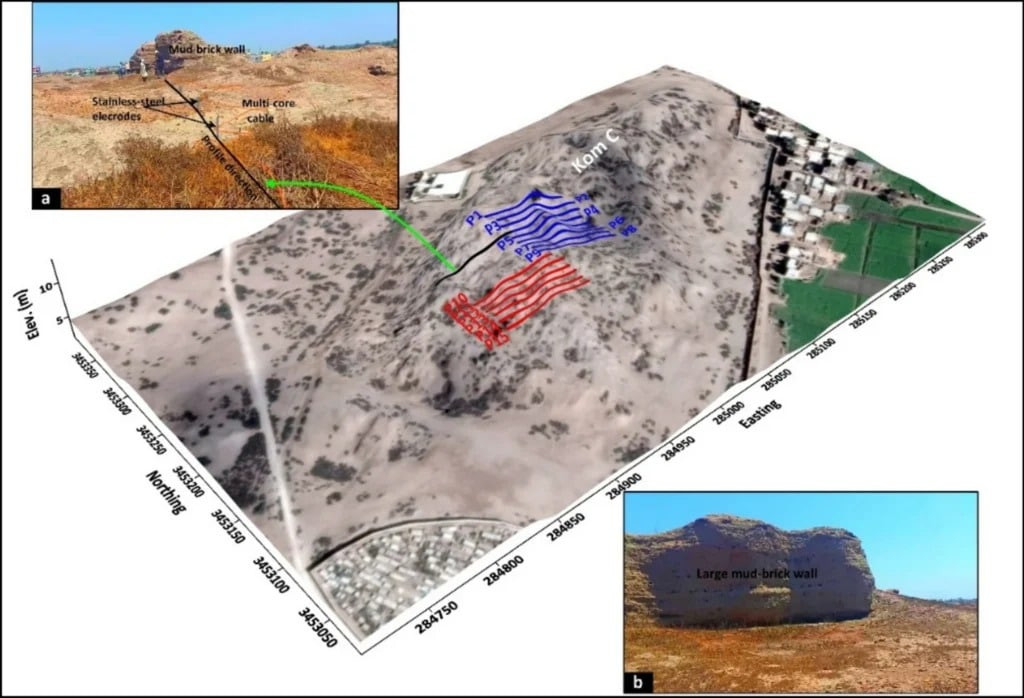
The research team selected the ERT survey spots based on anomalies detected from previously analyzed satellite images. This targeted approach enhanced the efficiency and success of their investigation, leading to the revelation of several subsurface irregularities and a comprehensive understanding of the site’s concealed elements.
Enormous Structure Located Six Meters Below Surface
Multiple occupation layers were identified by the surveys. The top three meters contained fragments such as broken pottery and debris likely dating from Roman times. Notably, a much larger feature lay deeper beneath the surface. At approximately six meters underground, the team detected a vast buried edifice.
Published results in Applied Geophysics revealed this significant structure positioned around six meters below ground. The depth and style suggest it originates from the Saite era, about 2,600 years ago. While the exact purpose is still uncertain, hypotheses range from a temple to a tomb.
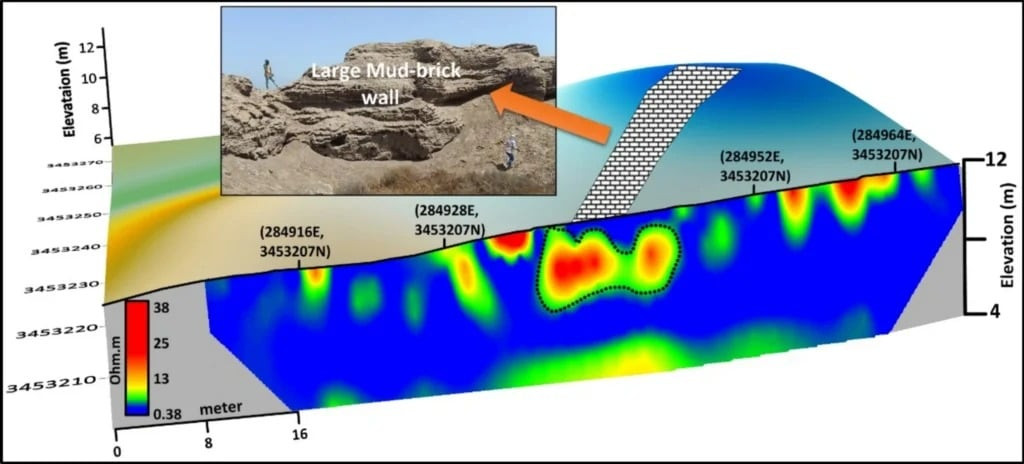
To validate these findings, the team carried out initial digs over a 10-by-10-meter zone. Excavations revealed mudbrick walls aligning well with the anomalies shown in geophysical scans, confirming that the imaging accurately pinpointed archaeological structures.
Artifacts Confirm Religious Significance
Excavators uncovered numerous objects linked to ancient religious rituals. A key discovery was a small offering basin accompanied by many amulets depicting Egyptian gods.
“The presence of a small offering basin along with numerous religious amulets depicting Egyptian deities such as Isis, Horus, Taweret, and Wadjet further supports the temple hypothesis,” said the authors.
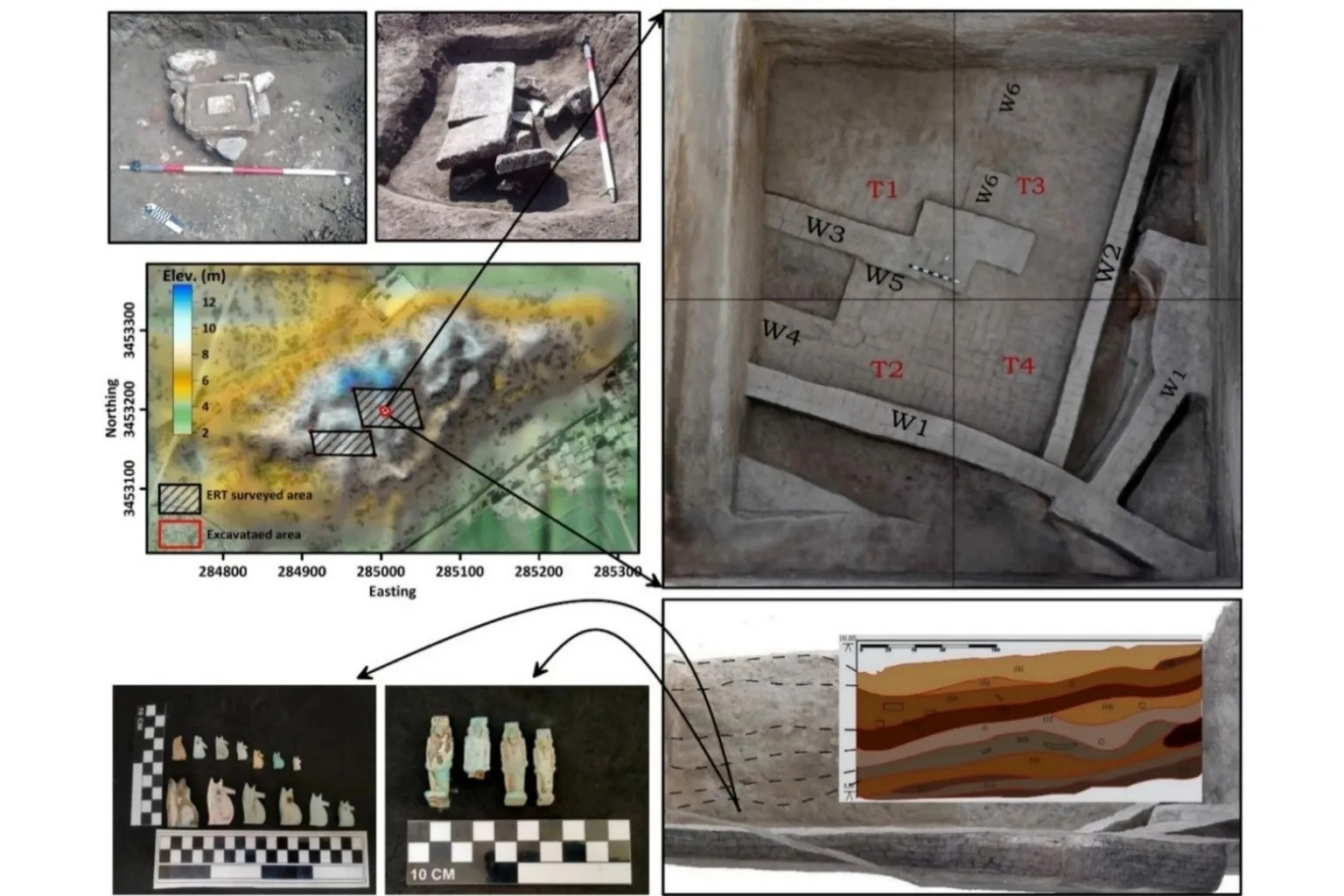
Among the artifacts found were a bronze amulet representing Horus the Child, a lion-shaped amulet, and one portraying Anubis. Additional findings included limestone statue fragments and a faience plaque engraved with Hathor images on both sides. A standout piece was a steatite scarab engraved with the name of King Thutmose III, possibly serving as either an amulet or seal.
“Collectively, these artefacts indicate the presence of a religious site with strong cultic and ceremonial associations, further reinforcing the interpretation of the structure as a temple from the 26th Dynasty,” they noted.
The researchers also mentioned the potential existence of an additional temple concealed beneath a dense clay layer elsewhere at Buto, which they intend to explore in future surveys.
- Categories:
- News











0 comments
Sign in to Comment