
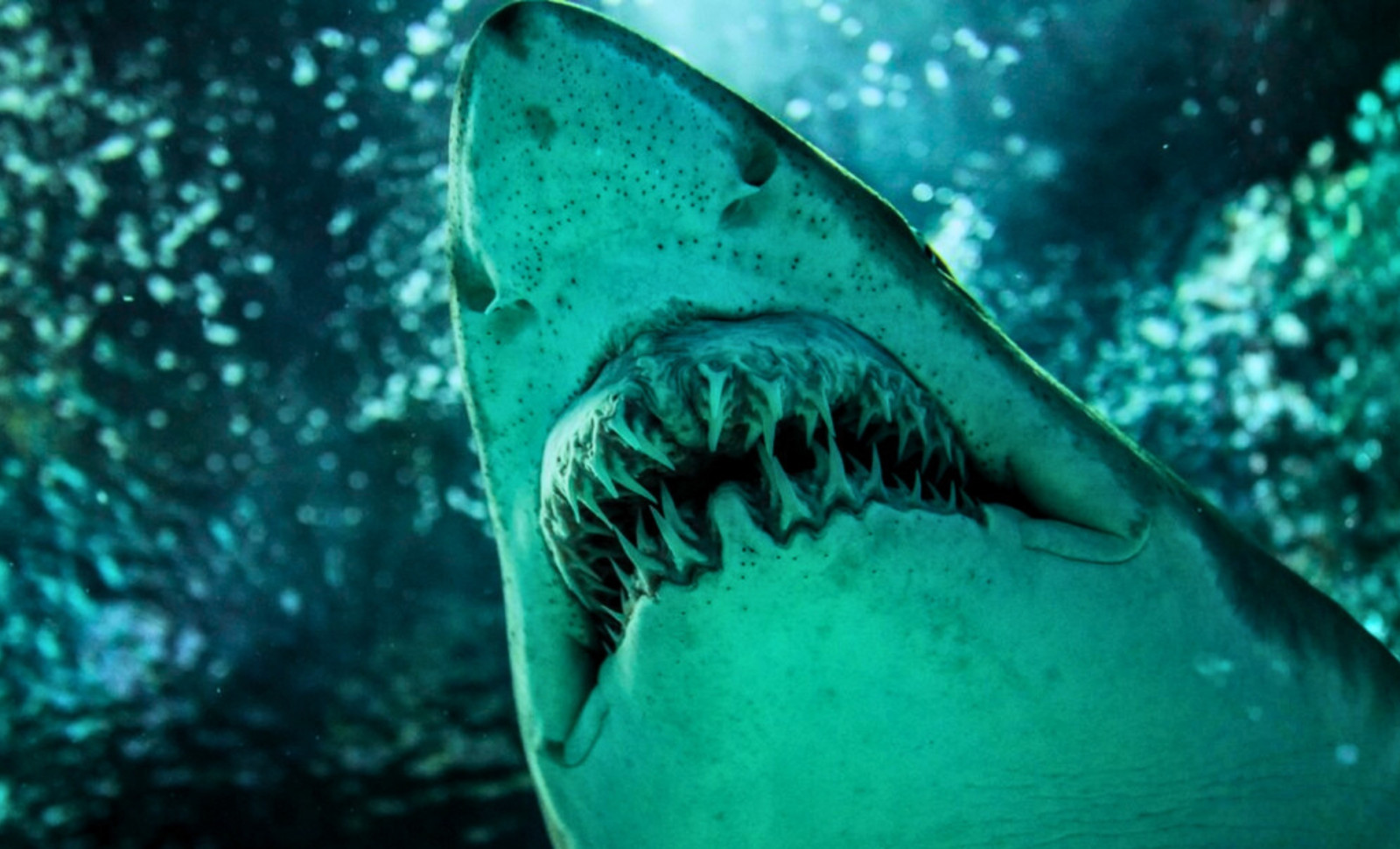
The elusive great white shark has left researchers puzzled by its tangled evolutionary background. For years, scientists have debated which extinct species gave rise to the modern great white, often relying solely on isolated teeth for clues. Recently, a significant discovery in Peru has added fresh insight.
In early 2025, a team in Lima revealed a nearly intact fossil of Cosmopolitodus hastalis from the Pisco Basin, located roughly 235 kilometers south of Peru’s capital. This shark dated back approximately 9 million years and lived in ancient seas that once covered today’s arid coastal region. Reuters highlighted that the fossil contained a substantial jaw and even traces of its last meal—sardine remains preserved inside its stomach.
This find is particularly noteworthy because full shark fossils are extremely uncommon. Since shark skeletons are made of cartilage rather than bone, they seldom fossilize well, leaving researchers to piece together ancient sharks largely from loose teeth. Mario Urbina commented during the unveiling, "Complete shark fossils are exceptionally rare worldwide."

Adapted for Life in Open Seas
The fossil from Peru belongs to an extinct type of mackerel shark closely related to today’s great whites, according to Reuters. These creatures could grow up to nearly seven meters long, with individual teeth reaching lengths of 8.9 centimeters (3.5 inches). The specimen's excellent preservation and near completeness provide researchers with a wealth of information beyond isolated tooth fragments.
Cesar Augusto Chacaltana of Peru’s geology and mining institute, INGEMMET, noted the "exceptional fossilization" of the remains. Reuters also reported that this shark primarily feasted on sardines, predating the appearance of anchovies in the southern Pacific, as Urbina pointed out.
Adding context, the Pisco Basin is now a desert but is renowned as one of South America's richest marine fossil sites. According to Reuters, Peruvian scientists have previously uncovered other notable fossils in the region, including a juvenile crocodile dating over 10 million years old and remains of a giant river dolphin living some 16 million years ago.
Peru’s Past Discovery Redefined Understanding
Peru's fossil finds have previously stirred debate about the great white's origins. In 2009, the Florida Museum of Natural History described a 4- to 5-million-year-old Peruvian fossil with a fully intact jaw containing 222 teeth and 45 vertebrae. Such well-preserved specimens are rare and vital since most ancient shark species are known only from scattered teeth. This specimen allowed scientists to examine how tooth shapes varied depending on their position within the jaw.
By analyzing tooth size and vertebral growth patterns, the Florida Museum team estimated the shark was about two decades old and measured roughly 5.49 meters (17 to 18 feet), comparable in size to today’s great whites. Lead researcher Dana Ehret stated, “This specimen will help clarify evolutionary relationships.” He added that isolated teeth alone made conclusions challenging.
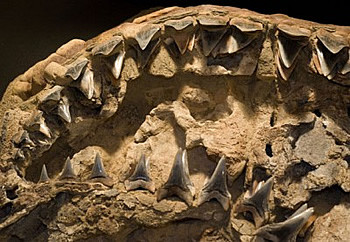
This 2009 discovery took a stance in a long-standing debate. One side argued the great white descended from the massive Carcharodon megalodon, while another believed it evolved from the broad-toothed mako shark, historically called Isurus hastalis. The Florida Museum’s findings supported the latter, suggesting a more distant relationship between great whites and megalodon than previously thought.
Tooth Features Reveal Evolutionary Pathway
The significance lies not only in the shark’s size but in its unique dental characteristics. The Florida Museum’s research highlighted coarse serrations on the teeth, typical of great whites, combined with traits reminiscent of broad-toothed makos. Ehret described the specimen as transitional, “a shark developing serrations, evolving toward a white shark but not quite there.”
This discovery helped map out the evolutionary route. The museum explained that a shift from megalodon-like giants to modern great whites would require extensive changes in body size, tooth serration, thickness, and enamel. Conversely, the lineage from broad-toothed makos to great whites demanded fewer alterations, primarily developing serrations and changing tooth orientation.
The newly discovered 9-million-year-old Cosmopolitodus hastalis fossil doesn’t resolve all taxonomic debates alone, and naming conventions vary between sources. However, combined with the younger Florida Museum fossil, these finds suggest Peru hosts shark species positioned on the evolutionary branch leading to today’s great white.
The Importance of These Exceptional Fossils
Reconstructing shark evolutionary history is difficult due to a patchy fossil record. For this reason, Peru’s nearly complete shark remains are highly valuable. The Florida Museum described its specimen as "the only partial white shark skull fossil ever discovered," while Peruvian researchers stressed how rare such nearly intact shark fossils are globally.
Rather than revolutionary theories, these fossils provide compelling physical evidence: teeth preserved in place, vertebrae arranged in sequence, and even stomach contents fossilized. At a time when isolated teeth have often dominated shark paleontology, Peru’s discoveries offer a more comprehensive glimpse at how the great white lineage evolved.
- Categories:
- Science




0 comments
Sign in to Comment